"France-Brazil Alliance Overtakes TKMS in Argentina Submarine Bid, Local Construction Package Proves Decisive Over Financing"

Authored On
Modified
Argentina Advances Next-Generation Submarine Program Through France-Brazil Partnership
Leveraging Brazil’s Production Infrastructure, France Takes Design and Technology Support Role Amid Capacity Constraints
Package-Based Strategies Emerging as the Decisive Weapon in a Rapidly Shifting Global Submarine Market
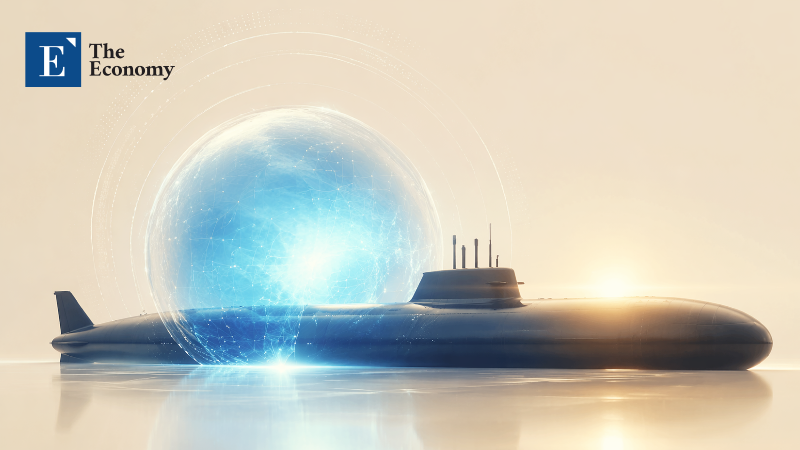
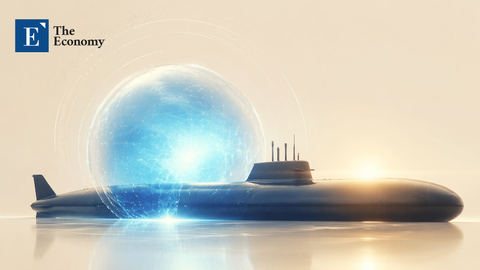
Argentina is moving forward with plans to acquire a next-generation submarine fleet through a partnership with France and Brazil. Despite an aggressive financing proposal from Germany’s Thyssenkrupp Marine Systems (TKMS), Buenos Aires has thrown its weight behind a France-Brazil alliance offering a local South American construction package. The submarines are expected to be built in Brazil, while France will serve as the original designer and technology provider rather than directly delivering completed vessels. This package-based procurement model is increasingly becoming a new standard across the global submarine market.
The Direction of Argentina’s Submarine Program
According to a June 22 report by Spanish media outlet Vozpópuli, the Argentine Navy plans to establish a trilateral defense partnership with France and Brazil as part of its effort to acquire three next-generation submarines. Naval Group’s Scorpène-class submarine has emerged as the leading candidate, surpassing Germany’s TKMS, which had long been considered a strong contender. The project represents Argentina’s attempt to rebuild its submarine force nine years after the 2017 disappearance of the TR-1700-class submarine ARA San Juan, an incident that left the country without an operational submarine capability.
The competition has effectively become a direct contest between financing, technological capability, and industrial reconstruction support. Last year, the German government examined a proposal to approve a sovereign credit guarantee worth $4.27 billion to facilitate the export of three Type 209 submarines from TKMS to Argentina. South Korea also expressed interest in the project, promoting HD Hyundai Heavy Industries’ HDS-1500 entry-level submarine, which offers high automation levels and competitive pricing. Ultimately, however, Argentina’s political and economic priorities aligned more closely with the France-Brazil package, which promised local job creation and long-term maintenance capabilities. Neither Germany’s substantial financing package nor South Korea’s technological strengths proved as compelling as the jointly developed local construction model.
Argentina’s future submarines are expected to be built at the Itaguaí Naval Base in Rio de Janeiro, Brazil. Unlike Argentina, which lost the ability to independently operate major dock facilities amid its economic crisis, Brazil possesses the infrastructure and expertise acquired through technology transfer agreements with France and has successfully constructed four Scorpène-class submarines. While joint local construction models may reduce short-term profit margins due to technology transfer expenses and initial infrastructure investments, they offer significant long-term advantages through exclusive access to maintenance, repair and overhaul (MRO) services and spare-parts supply revenues over the next two to three decades.
France Prioritizes Technology Partnerships Over Direct Deliveries
France, one of the three pillars of the alliance, currently faces practical limitations in providing direct construction capacity. Its critical industrial infrastructure and skilled workforce are heavily committed to domestic modernization programs. The Cherbourg shipyard, the centerpiece of France’s submarine industry, is simultaneously producing Barracuda-class nuclear attack submarines and the next-generation SNLE 3G strategic nuclear submarine program. These projects form the backbone of France’s effort to preserve its sea-based nuclear deterrent well into the second half of the 21st century. Export commitments are also placing pressure on production schedules. In 2024, Naval Group secured a contract to build four Barracuda-derived diesel-electric submarines for the Netherlands, and those vessels will also be constructed at Cherbourg.
Facing growing constraints on large-scale new orders, France has begun shifting the center of its submarine export strategy from direct vessel delivery toward technology and industrial cooperation. The approach relies on leveraging partner nations’ shipbuilding and defense-industrial capabilities while contributing expertise in design, systems integration, maintainability assessments, safety evaluations, and training. The model allows France to expand the global influence of its submarine technologies without further burdening domestic production infrastructure.
One of the most notable examples of this strategy is South Korea’s nuclear-powered submarine program. South Korea already possesses powerful shipbuilding capabilities and extensive experience constructing conventional submarines. It maintains substantial indigenous capacity in hull construction, module production, and program management. Nuclear-powered submarines, however, present fundamentally different challenges. Areas such as reactor-platform integration, radiation shielding and cooling systems, maintenance accessibility, crew safety, land-based testing infrastructure, and nuclear safety culture require specialized expertise accumulated over decades. This is where French cooperation becomes relevant. France remains one of the few Western nations with extensive operational experience in naval nuclear propulsion systems and possesses expertise in low-enriched uranium naval reactors, an area that overlaps with South Korea’s concept for a conventionally armed nuclear-powered attack submarine. Defense analysts increasingly view France as a complementary partner capable of reducing development risks in non-nuclear weapons aspects of the program.
Package Competition Intensifies in Canada’s Submarine Procurement
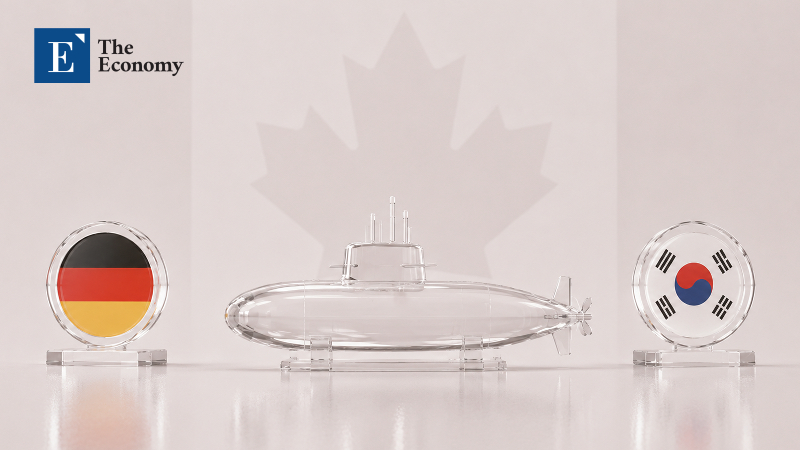
The trend toward offering comprehensive procurement packages tailored to customer requirements is no longer limited to France and is increasingly visible throughout the global submarine market. Canada’s future submarine program serves as a prominent example. In August of last year, the Canadian government selected South Korean shipbuilders, including Hanwha Ocean, along with TKMS as qualified suppliers for the Canadian Patrol Submarine Project (CPSP), a program valued at approximately $43.5 billion. Final bids were submitted in March, and the evaluation process is currently underway ahead of a winner announcement expected in the second half of this year. The competition extends well beyond submarine performance. Canada seeks vessels capable of sustained operations in the Arctic and North Atlantic, while also placing significant emphasis on strengthening its domestic defense industry, ensuring rapid delivery schedules, and establishing a long-term maintenance and operational ecosystem.
In response, Hanwha Ocean proposed delivering four submarines before 2035 if a contract is signed in 2026, followed by one submarine annually for the remaining eight vessels, allowing all 12 submarines to be delivered by 2043. The company has also expanded its industrial cooperation package through a memorandum of understanding (MOU) with Canadian steelmaker Algoma Steel covering steel supply as well as submarine construction and maintenance infrastructure collaboration. The initiative aims to integrate steel demand generated by submarine construction and MRO activities into Canada’s domestic industrial base. Hanwha Ocean also signed an MOU with Canadian real estate developer PCL Construction to cooperate on submarine infrastructure development, while Babcock Canada has emerged as a potential long-term operational support partner.
Cooperation extends into the defense sector as well. Hanwha Systems, a defense subsidiary of Hanwha Group, is pursuing low-Earth-orbit satellite communications cooperation with Canadian satellite operator Telesat. The plan would link Telesat Lightspeed with South Korea’s K-LEO satellite network to support communications requirements for submarine and maritime operations. The company is also discussing next-generation satellite platform and defense-space cooperation with Canadian aerospace technology firm MDA Space and exploring artificial intelligence collaboration with Canadian AI company Cohere to improve submarine operations and shipyard efficiency.
TKMS, meanwhile, has centered its campaign on cooperation with Norway. The Type 212CD submarine proposed to Canada is a next-generation conventional submarine jointly being procured by Germany and Norway. Germany argues that Canadian participation would elevate Ottawa from a simple customer to a strategic partner sharing operational, maintenance, training, and modernization frameworks with Germany and Norway across the North Atlantic and Arctic regions. The proposal is designed to appeal to Canada’s emphasis on interoperability as a member of the North Atlantic Treaty Organization (NATO). Germany has also introduced production-slot transfers to strengthen its delivery timeline. During the CANSEC defense exhibition in Ottawa, German Defense Minister Boris Pistorius stated that Canada could receive four Type 212CD submarines by 2036 if it selects TKMS. The plan would involve Germany and Norway adjusting portions of their existing production allocations to give Canada priority access to available construction slots.
Similar Post