“From Trade Dispute to Wartime Posture” China Retaliates Against U.S. Blacklisting With Precision Strikes on Rare Earths and Defense Sector

Authored On
Modified
China counters U.S. designation of 188 Chinese firms as military companies with export and procurement restrictions
Government-to-government clash over corporate blacklists erupts just one month after U.S.-China summit
Technology rivalry driven by national security logic intensifies as both sides target each other’s strategic chokepoints
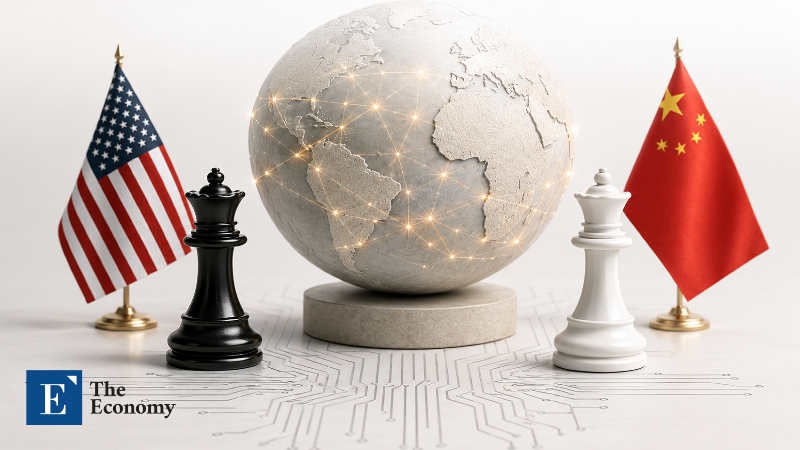
China has launched retaliatory measures targeting both the United States’ rare earth supply chain and defense contractors. As Washington has sought to block China’s access to advanced technologies centered on semiconductor equipment and artificial intelligence (AI), Beijing has responded by leveraging rare earths and strategic materials. The latest move is being viewed as another flashpoint in a broader trend of both countries progressively locking down each other’s critical bottlenecks and separating their technological ecosystems. The two sides continue to expand sanctions aimed at each other’s core industries and supply chains, while controls surrounding semiconductors and AI have effectively moved beyond the realm of trade negotiations and become embedded within national security strategy.
China’s Ministry of Commerce Imposes Comprehensive Export Ban on Dual-Use Items for 10 U.S. Companies
China’s Ministry of Finance also took action. On the same day, it announced that products manufactured by 46 U.S. companies would be barred from government procurement activities conducted by all central budget units, provincial finance departments and bureaus, autonomous regions, municipalities, and cities designated under the national development plan. The measure effectively prohibits public-sector purchases throughout China. Companies included in the list comprise Lockheed Martin and affiliated entities, Raytheon Missiles & Defense, General Atomics Aeronautical Systems, General Dynamics Land Systems, Boeing Defense, and Boeing Space & Security. Beijing’s move appears to be a response to recent efforts by the U.S. government to add more than 100 Chinese companies, including DeepSeek and ChangXin Memory Technologies (CXMT), to blacklists.
Growing Capacity for Retaliation Amid Intensifying U.S. Pressure
The latest measures came shortly after Washington added major Chinese technology firms to its list of “Chinese military companies.” On July 8, the U.S. Department of Defense placed more than 100 Chinese companies—including Alibaba, Baidu, BYD, Tencent, CXMT, and Unitree—on the roster of entities deemed to support the Chinese military. Although the designation does not itself impose direct sanctions, it can affect participation in U.S. government procurement and increases the likelihood of eventual placement on the Entity List, which carries more substantive restrictions.
Washington’s pressure campaign extends far beyond military company designations. Since 2024, the United States has continuously expanded export controls focused on semiconductor equipment, advanced semiconductors, and AI technologies. More recently, legislative efforts aimed at incorporating allied nations into the export-control framework have gained momentum. On April 22, the U.S. House Foreign Affairs Committee overwhelmingly approved a series of bipartisan bills designed to strengthen export controls on advanced technologies destined for China, including semiconductors and semiconductor manufacturing equipment. The package consists of 20 bills and is widely regarded as the most significant legislative effort to overhaul U.S. export-control policy since 2018.
The centerpiece legislation, the Multilateral Alignment of Technology Controls on Hardware Act (MATCH Act), requires the administration to identify advanced semiconductor manufacturing equipment and related facilities that should be subject to export restrictions to countries of concern and obligates it to pursue diplomatic efforts encouraging allied nations to adopt export-control measures similar to those of the United States. The objective is to prevent China from obtaining advanced semiconductor manufacturing equipment indirectly through third countries such as the Netherlands and Japan. Additional bills strengthening civil penalties for export-control violations and establishing whistleblower incentive programs also passed committee review.
China responded swiftly to the proposed U.S. legislation. On April 25, the Ministry of Commerce stated that if the MATCH Act and related bills are ultimately enacted, they would “seriously undermine the international economic and trade order and inflict severe damage on the stability of the global semiconductor industrial and supply chains.” The ministry added, “China will closely monitor the legislative process, carefully assess its impact on China’s interests, and resolutely take necessary measures to firmly safeguard the legitimate rights and interests of Chinese enterprises.”
Industry observers argue that China’s progress in localizing its semiconductor supply chain has become one of the factors behind its recent expansion of retaliatory measures against the United States. During the prolonged period of U.S. export controls, China steadily increased domestic production of semiconductor equipment and key components. China’s semiconductor equipment self-sufficiency rate rose from approximately 25% in 2024 to 35% by the end of 2025, while authorities have encouraged new production lines to maintain a minimum domestic equipment utilization rate of 50%. The increasing frequency of export-control measures targeting U.S. firms also reflects a perception that China now faces a smaller burden from sanctions than in the past.
Normalization of Great-Power Competition
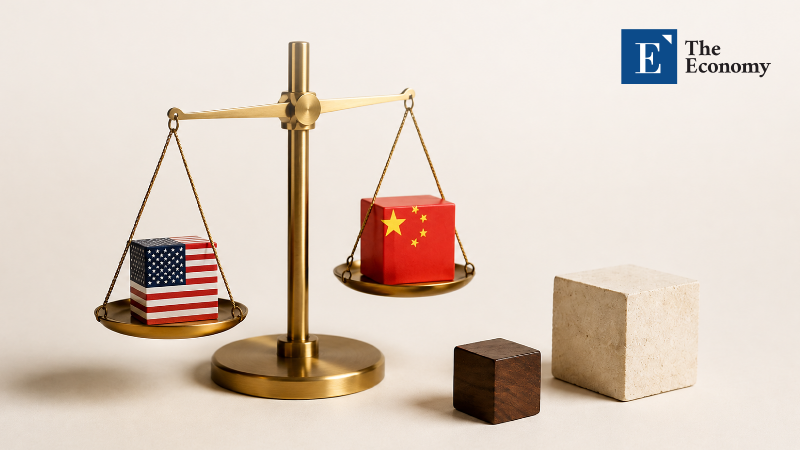
The U.S.-China confrontation is increasingly hardening into a security conflict wrapped in the veneer of a trade dispute. Washington’s export controls on China are focused less on trade balances or market access and more on severing pathways through which China’s acquisition of advanced technologies could contribute to military modernization. The U.S. Commerce Department’s Bureau of Industry and Security (BIS) has repeatedly stated that the purpose of advanced semiconductor controls is to slow China’s development of cutting-edge AI capabilities and military modernization efforts.
Restrictions on AI services are expanding within the same framework. On July 12, U.S. AI company Anthropic disclosed that the Trump administration, citing national security authorities, had ordered the company to halt access by all foreign nationals to its high-performance AI models, Fable 5 and Mythos 5. Because the directive would have prevented even Anthropic’s own foreign-national employees from using the models, the company ultimately decided to suspend both services entirely.
A source familiar with the matter said the White House viewed potential Chinese access as a national security risk, particularly out of concern that the models could be reverse-engineered or replicated through distillation techniques. However, it remains unclear how the White House obtained the relevant information, which organizations were involved, or the specific methods through which access was allegedly pursued.
The fact that semiconductor export controls have effectively been separated from broader U.S.-China negotiations reflects the same reality. Following high-level bilateral talks on June 15, U.S. Trade Representative Jamieson Greer stated in an interview with Bloomberg Television that “semiconductor export controls were not a major topic of discussion during the Beijing meetings.” Unlike tariffs or purchase commitments, which remain negotiable trade issues, semiconductor and AI controls continue to be treated as core components of U.S. national security strategy.
China is fully aware of this trajectory. As the United States blocks access to advanced semiconductor equipment and AI models, Beijing is increasing domestic equipment adoption rates while expanding its policy toolkit through rare earths, dual-use materials, and government procurement markets. Both countries are raising pressure by progressively locking down each other’s strategic chokepoints, and the latest export-control measures against U.S. companies fit squarely within that pattern. Consequently, the issue is best understood not as a renewed trade dispute but as the permanent operation of a long-term technological containment campaign. The United States has shown no intention of granting China access to advanced technologies, while China is accelerating efforts to reduce external dependence and build an independent ecosystem. The costs China must bear in this process remain substantial, but the pace of localization and the intensity of future U.S. pressure are likely to determine the outcome of the contest.
- Previous "Power, Land and Water Savings" AI Infrastructure Heads Offshore as China Launches Underwater AI Data Center, Signaling Start of New Competition
- Next Qatar LNG Hub Hit by Another Explosion During Post-Iran Strike Recovery, Undermining Energy Price Stabilization Amid Supplier-Dominated Market
Similar Post