“From EVs to Hybrids” EU Raises Trade Barriers Against China, Risking Retaliation and Erosion of Industrial Competitiveness

Authored On
Modified
EU Considers Tariffs on Chinese Hybrids Following EV Measures
Risk of Protracted Trade Conflict Grows as China Poised to Retaliate
Europe’s Auto Industry Losing Ground as Chinese Competition Intensifies
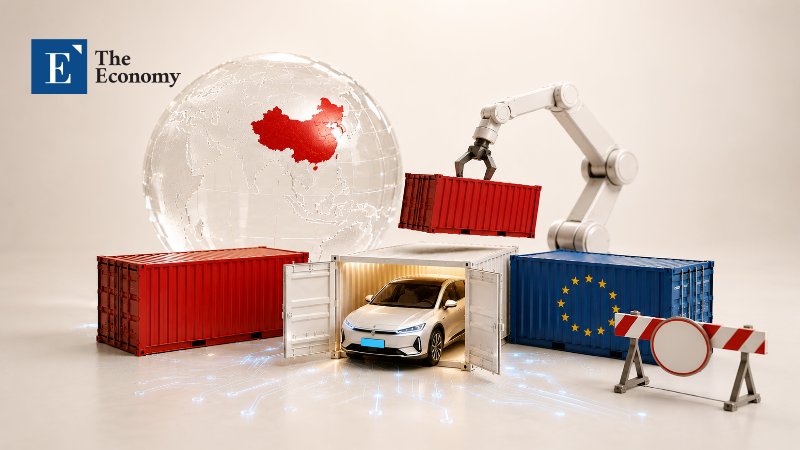
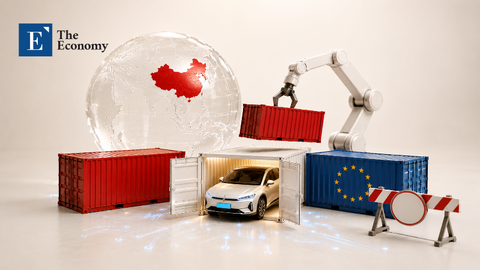
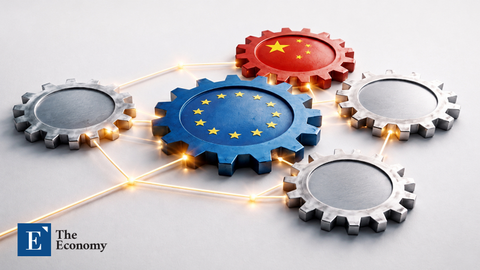
The European Union (EU) is preparing to impose countervailing duties on Chinese plug-in hybrid vehicles (PHEVs), escalating its efforts to shield domestic manufacturers from Chinese competition. After years of maintaining stringent trade restrictions on Chinese electric vehicles, Brussels is once again moving to raise barriers in defense of its automotive sector. Market observers, however, warn that Europe’s auto industry is already losing much of its traditional competitive edge, raising the possibility that the EU could ultimately face significant blowback from a forceful Chinese response.
Escalation of EU Measures Against China
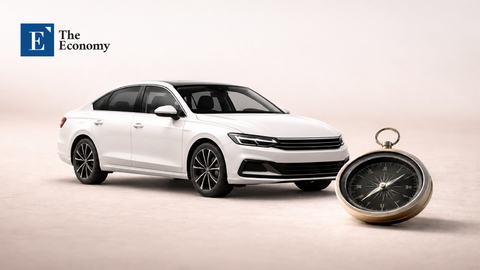
According to a report by German business daily Handelsblatt on June 19, the European Commission is preparing to levy countervailing duties on Chinese-made plug-in hybrid vehicles. The Commission has reportedly completed preparations to implement the measures immediately upon approval by EU member states. Manufacturers expected to be affected include BYD, Chery Automobile, and SAIC’s MG brand. As Chinese automakers have increasingly shifted toward hybrid vehicle sales to expand their presence in Europe, the EU has begun tightening trade barriers once again.
The EU has already imposed substantial trade restrictions on Chinese electric vehicles. The process began in 2023 with an anti-subsidy investigation into Chinese EVs. After approximately one year of inquiry, Brussels concluded that Chinese government subsidies were distorting competition within the European market and imposed provisional countervailing duties on Chinese EVs in July 2024. The move marked the first major trade sanction targeting Chinese electric vehicles. In October of the same year, the EU formally approved additional tariffs of up to 35.3% on Chinese EVs following ratification by member states. While both sides are currently discussing a framework under which tariffs could be partially eased if Chinese manufacturers commit to minimum sales prices, no substantive agreement has yet been reached.
The EU increasingly views Chinese electric and hybrid vehicles as a strategic security concern. Low-cost vehicles supported by Chinese government subsidies are undermining the competitiveness of European automakers, while supply chains for critical inputs such as battery materials and rare earth elements remain heavily concentrated in China. Handelsblatt noted that Europe fears a new “China Shock,” a term referring to the severe damage inflicted on U.S. and European manufacturing industries during the rapid expansion of Chinese industrial production in the 2000s.
Potential for Firm Chinese Retaliation
The broader consequences of the EU’s measures remain uncertain. A powerful Chinese trade response could trigger significant unintended consequences for Europe. The U.S.-China trade conflict offers a prominent example of such risks. In February of last year, the United States imposed an additional 10% tariff on Chinese imports, citing efforts to curb fentanyl inflows. The Trump administration subsequently raised the tariff rate to 20% in March and announced an additional 34% tariff on Chinese goods in April under its so-called “Liberation Day” initiative. The measure combined China-specific duties with a baseline 10% tariff applied to global trading partners.
China responded swiftly. In February last year, Beijing imposed additional tariffs of 15% on U.S. coal and liquefied natural gas (LNG), along with 10% duties on crude oil, agricultural machinery, and large automobiles. In March, it introduced further measures targeting American agricultural products and food exports. Following the Liberation Day announcement, China retaliated with an additional 34% tariff on all U.S. imports while simultaneously deploying non-tariff measures, including export controls on selected rare earth products, the addition of U.S. companies to export-control lists, and restrictions on certain American agricultural imports. The two countries subsequently escalated tariffs beyond 100% before eventually agreeing to partial reductions after multiple summits and high-level negotiations. Even today, U.S. tariffs on Chinese goods remain around 30%, while Chinese tariffs on American products remain near 10%, both significantly above pre-conflict levels.
China also pursued legal avenues. Beijing formally challenged Washington’s tariffs at the World Trade Organization (WTO), arguing that the measures violated international trade rules. The two sides initiated WTO dispute proceedings in February last year, with additional complaints continuing thereafter. The episode carries important implications for Europe’s own trade actions. Even when tariffs are introduced to protect domestic industries or address perceived unfair competition, policy effectiveness can be substantially weakened if the targeted country responds through a combination of tariff and non-tariff barriers. As demonstrated by the U.S. experience, sanctions do not automatically translate into negotiating leverage and can instead generate prolonged trade conflicts and supply-chain disruptions. China has already imposed retaliatory measures targeting European alcoholic beverages and agricultural products in response to EU tariffs on Chinese electric vehicles.
Decline of Europe’s Automotive Champions
The competitiveness of Europe’s automotive sector itself represents another major vulnerability. While Chinese EV manufacturers continue to expand at an extraordinary pace, European automakers are steadily losing ground. The global automotive industry has entered a period of rapid power realignment around 2024, with Chinese EV manufacturers overtaking European producers that dominated the market for decades through internal-combustion-engine expertise. Chinese automakers have aggressively expanded market share not only domestically but also across Southeast Asia and Europe. Increasingly, industry observers argue that technological leadership itself has begun shifting toward China.
The trend is clearly visible in sales and market-share data. According to the International Energy Agency (IEA), global electric vehicle sales exceeded 20 million units last year, with Chinese automakers accounting for approximately 60% of total deliveries. European manufacturers, by contrast, represented only around 15% of global EV sales during the same period. The production gap is equally striking. The IEA reported that global EV production reached roughly 22 million units last year, with China accounting for approximately 75% of output. The figures indicate that the center of gravity for both electric vehicle manufacturing and the broader global EV supply chain has shifted decisively toward China.
Europe’s automotive challenges are also evident at the brand level. German luxury sports-car maker Porsche faced criticism after introducing the fully redesigned Macan exclusively as an electric vehicle. Mercedes-Benz’s flagship EQS sedan, part of the company’s EQ electric lineup, was similarly criticized for sacrificing the traditional prestige associated with the S-Class through its aerodynamic one-bow design. Mercedes-Benz ultimately decided to discontinue the EQ branding strategy in future models. More recently, Mercedes-AMG’s new AMG-GT four-door electric vehicle was criticized for abandoning the distinctive elegance traditionally associated with the AMG marque. Ferrari’s first electrified model, Luce, has also encountered skepticism, with critics describing it as a design “that even Chinese manufacturers would not imitate,” while longtime enthusiasts have largely turned away from the vehicle.
Against this backdrop, European automakers increasingly find themselves dependent on Chinese companies for survival. According to reports published on June 19 by Bloomberg and other international media outlets, Stellantis’ plant in Rennes, France, is scheduled to begin producing vehicles for Dongfeng Motor’s Voyah brand starting in 2028. Stellantis has also partnered with Chinese EV and smart-mobility startup Zhejiang Leapmotor, adopting a strategy of incorporating Chinese technologies into key brands including Opel, Citroën, and Fiat. Industry observers view these developments as evidence that Europe’s automotive sector is becoming increasingly dependent on Chinese technology and production capacity, reflecting a deeper erosion of the foundations that once underpinned the continent’s automotive leadership.
Similar Post