Kia Squeezed by Low-Cost Chinese Buses, Europe Also Sounds Alarm Over Erosion of Manufacturing Base

Anne-Marie Nicholson is a fearless reporter covering international markets and global economic shifts. With a background in international relations, she provides a nuanced perspective on trade policies, foreign investments, and macroeconomic developments. Quick-witted and always on the move, she delivers hard-hitting stories that connect the dots in an ever-changing global economy.
Authored On
Modified
Chinese Competition Undermines Domestic Bus Manufacturing Industry
European Industry Pushes Back With Protection Measures
Chinese Electric Buses Emerge as a National Security Issue
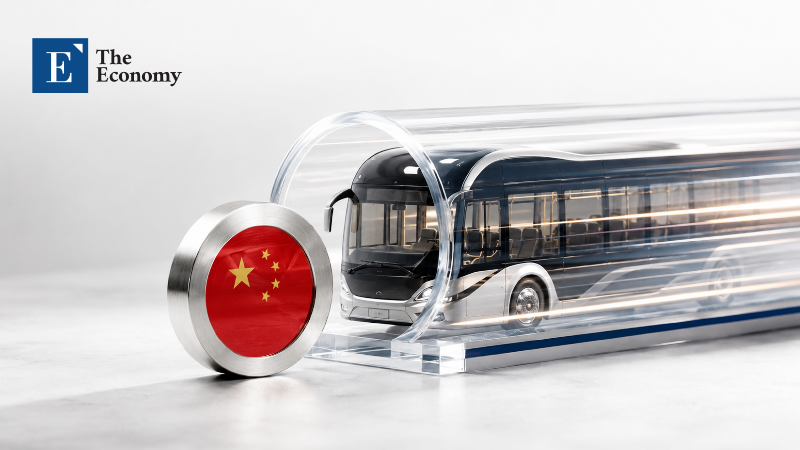
As Chinese-made electric buses continue to encroach on the domestic market, Kia’s large bus business, which has been in operation for more than three decades, is moving toward an eventual exit. Across Europe, concerns over industrial protection and security risks tied to the aggressive expansion of Chinese manufacturers are also intensifying. As electrification accelerates, the commercial vehicle manufacturing bases of both South Korea and Europe are coming under mounting pressure.
Kia Officially Announces Plan to Halt Granbird Production
According to Kia’s labor union on June 17, management informed union representatives during the second working-level session of the labor-management employment stability committee that it intends to discontinue production of the large bus model Granbird. The production halt is expected to occur in one to two years once existing orders have been fulfilled. Kia has manufactured buses since its predecessor, Asia Motors. Granbird, introduced in 1994 as a diesel-powered model, is the only bus currently produced by Kia and enjoyed strong popularity after its launch. Demand has steadily weakened, however, as rail-centered transportation systems became established and bus-based tourism and commuting culture declined. Annual sales have reportedly remained at only 1,300 to 1,400 units for several years. Granbird production totaled just 1,403 units last year.
In particular, the company appears to have struggled to maintain its position against the recent surge of low-cost Chinese electric buses dominating the domestic market. Electric buses produced by Chinese automaker BYD expanded their share of South Korea’s large bus market with support from government and local government subsidies. Backed by South Korean subsidy programs, Chinese electric buses surpassed a 50% market share in 2023. President Lee Jae-myung also criticized the situation, stating, “We ended up giving subsidies to Chinese products, enriching Chinese companies while domestic electric bus manufacturers collapsed.”
Granbird serves a different market segment from city buses and intercity or tour buses that Chinese manufacturers currently dominate. However, Chinese companies have recently expanded their product portfolios into intercity and tourism-focused buses as well. Through their own subsidy programs and other support measures, they are offering vehicles at prices approximately $20,000 to $67,000 lower than Kia’s Granbird, which sells for around $133,000 per unit. For Kia, competing effectively requires simultaneous electrification and price reductions, creating a significant burden.
The union immediately opposed the decision to halt Granbird production. In an emergency statement released the same day, the Gwangju branch of the Kia Motors chapter under the Korean Metal Workers’ Union stated, “Management has failed to present any plan regarding post-production operations, future investment, or employment stability measures affecting workers’ futures and livelihoods.” The statement added, “We cannot accept the suspension of bus production without employment protection measures, and we will not participate in any discussions until a responsible mid- to long-term operational plan is presented.”
European Industry Calls for Subsidy Investigation Into Chinese Electric Buses
Pressure on industrial foundations resulting from the expansion of Chinese electric buses is not unique to South Korea. Europe, home to many of the world’s leading automotive industries, is also struggling under the competitive pressure. In 2024, Europe’s electric bus industry urged the European Commission to launch a subsidy investigation into Chinese-made electric buses. Industry groups argued that Chinese manufacturers were expanding their presence in Europe’s public procurement market through extensive government support and aggressive pricing. At the time, Chinese-made electric buses had already captured roughly one-third of the European electric bus market. According to a report by Dutch financial institution Rabobank, the combined market share of Chinese manufacturers including BYD and Yutong in Europe’s electric bus market increased from 13% in 2017 to 24% in 2023. European bus manufacturers warned that continued reliance on the current procurement system could weaken regional production capacity and employment.
France has also intensified efforts to counter the spread of Chinese electric buses. Last year, the French government began revising public procurement rules to move beyond evaluations focused solely on vehicle prices and incorporate carbon emissions, production processes, and supply chain considerations. As Chinese companies expanded their market share through low-price strategies, concerns grew over procurement structures in which contract awards were determined primarily by cost competitiveness. Domestic manufacturers including Alstom and Iveco Bus warned that continued subsidy-driven competition from Chinese companies could weaken investment capacity across Europe’s commercial vehicle industry.
A similar trend emerged in Germany. After DB Regio, the transportation subsidiary of Deutsche Bahn (DB), selected BYD and Chinese manufacturer Zhongtong Bus as suppliers in a major electric bus tender late last year, labor unions and some political figures criticized the decision for undermining the country’s manufacturing base. Even in Germany, where the automotive industry has long been a pillar of national competitiveness, Chinese buses gained traction through advantages in pricing and delivery schedules. Calls subsequently grew for industrial protection principles to be incorporated into public procurement. Some German policymakers even advanced an “industrial patriotism” argument, asserting that domestic and regional manufacturers should receive preference when European-made products can compete effectively. Finance Minister Lars Klingbeil stated in a media interview, “Our cities have long been served by excellent electric buses from Mercedes-Benz and MAN,” adding, “I would like to see a healthy sense of patriotism regarding our industrial base.”
Norway Reveals Security Risks in Chinese Electric Buses
Controversy surrounding Chinese electric buses has also expanded into the security realm. Last summer, Ruter, Oslo’s public transportation operator, concluded through testing that Chinese manufacturer Yutong’s electric buses contained a backdoor enabling hidden access. The company operated both Chinese-made and Dutch-made electric buses inside a mountain tunnel facility where external digital signals were blocked, yet only the Yutong buses demonstrated wireless software update capabilities.
According to Ruter, the Chinese manufacturer possessed the ability to remotely install software updates through Romanian SIM cards. Furthermore, the company was able to access battery and power supply control systems during the process. This raised concerns that remote access could potentially be exploited for data theft or sudden service disruptions that threaten public safety. Norway currently operates approximately 1,300 electric buses nationwide, of which around 850 are Yutong vehicles.
Around the same period, Movia, Denmark’s largest public transportation operator, also received guidance from authorities warning that Yutong electric buses could potentially be controlled remotely. According to reporting by The Guardian, Denmark’s Emergency Management Agency informed Movia that “electric buses are equipped with internet connectivity systems, cameras, microphones, GPS, and other sensors that could be exploited as vulnerabilities capable of disrupting bus operations.” Movia currently operates 469 Chinese-made electric buses, including 262 manufactured by Yutong.
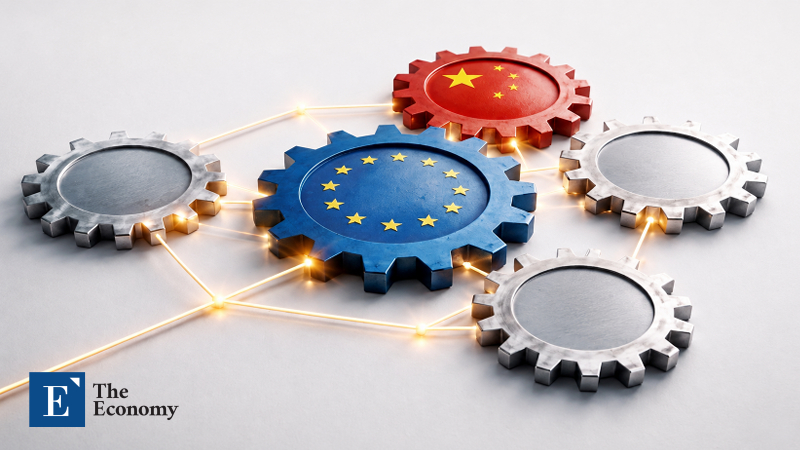
European countries have begun implementing countermeasures. Norway is attempting to address vulnerabilities through signal transmission delays and firewall development. Denmark and the United Kingdom have also launched investigations into Chinese-made vehicles. Across Europe, the issue is increasingly viewed not merely as a vehicle security concern but as a transportation infrastructure risk. Electric buses function as mobile networks that integrate batteries, communications equipment, software, and location-tracking systems. As concerns over potential remote vehicle control become more tangible, security assessments are expanding from the vehicles themselves to operating systems and charging infrastructure. Following earlier measures excluding Huawei and ZTE from 5G equipment supply chains, Europe is now extending security evaluations to electric buses and charging management systems. This has prompted speculation that the current controversy could ultimately accelerate the localization of Europe’s public transportation networks.
Anne-Marie Nicholson is a fearless reporter covering international markets and global economic shifts. With a background in international relations, she provides a nuanced perspective on trade policies, foreign investments, and macroeconomic developments. Quick-witted and always on the move, she delivers hard-hitting stories that connect the dots in an ever-changing global economy.
Similar Post