Gold Allocations Rise as Central Banks Accelerate De-Dollarization, China Pushes Yuan-Led Alternative Order

Oliver Griffin is a policy and tech reporter at The Economy, focusing on the intersection of artificial intelligence, government regulation, and macroeconomic strategy. Based in Dublin, Oliver has reported extensively on European Union policy shifts and their ripple effects across global markets. Prior to joining The Economy, he covered technology policy for an international think tank, producing research cited by major institutions, including the OECD and IMF. Oliver studied political economy at Trinity College Dublin and later completed a master’s in data journalism at Columbia University. His reporting blends field interviews with rigorous statistical analysis, offering readers a nuanced understanding of how policy decisions shape industries and everyday lives. Beyond his newsroom work, Oliver contributes op-eds on ethics in AI and has been a guest commentator on BBC World and CNBC Europe.
Authored On
Modified
Central Banks Reduce Dollar Exposure, Increase Gold Holdings
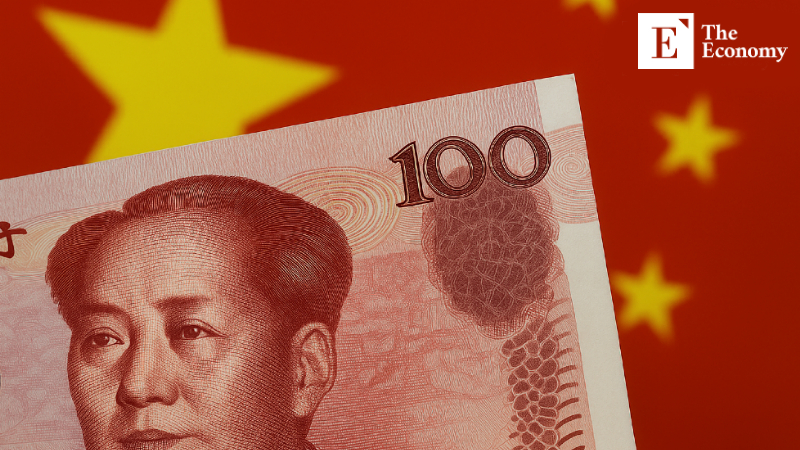
China Accelerates Yuan Internationalization Amid Global Financial Market Turbulence
Euro's Position Weakens as Cracks Emerge in Bretton Woods 2.0

Central banks around the world are reducing the share of U.S. dollar-denominated assets within their total reserve holdings, including foreign exchange reserves. As prolonged conflict in the Middle East has sharply intensified geopolitical risks, monetary authorities have increasingly sold U.S. Treasuries and other dollar assets while significantly expanding their holdings of gold, the traditional safe-haven asset. China is moving in tandem with these shifts, redoubling efforts to strengthen the yuan’s global influence and reshape a financial order that has long been centered on the U.S. dollar.
Declining Preference for Dollar-Denominated Assets
According to a June 16 report by Nikkei Asia, the World Gold Council (WGC) recently conducted its annual survey of 76 central banks worldwide. The survey found that 84% of respondents expect gold to account for a larger share of total central bank reserves within the next five years, up 8 percentage points from 76% in the previous year's survey. Meanwhile, 74% of respondents said they expect holdings of U.S. dollars to decline over the same period. Given that the survey was conducted largely after the outbreak of the Iran war in late February, the findings underscore the extent to which geopolitical uncertainty has influenced reserve management strategies among central banks.
This de-dollarization trend is already evident in hard data rather than remaining a forward-looking expectation. According to the European Central Bank’s (ECB) international reserve assets report released earlier this month, gold accounted for 27% of total global central bank reserve assets at the end of last year, up from 20% a year earlier. Global central bank gold holdings were found to have exceeded 36,000 metric tons. That figure approaches levels last seen during the peak of the dollar-gold standard era, when the value of the U.S. dollar was formally linked to gold.
By contrast, the share of U.S. Treasury securities in total global central bank reserve assets declined from 25% to 22% over the same period. The foundations of dollar-denominated assets also showed signs of weakening across multiple fronts. The dollar’s share of foreign-currency-denominated bond and loan issuance fell to roughly 60%, while its share of the green and sustainable international bond market dropped approximately 10 percentage points to 32%. Commenting on these developments, the ECB stated that “both exchange-rate effects and bond valuation effects worked in a direction that reduced the share of dollar assets, while reserve managers’ net purchases of dollar-denominated assets made only a marginal contribution.”
China’s Push to Expand Yuan Influence
China is seeking to capitalize on these emerging gaps by intensifying efforts to internationalize the yuan. One prominent example is the recent launch of the Cross-Border Electronic Yuan Transfer Service (CBETS), an integrated digital-yuan settlement platform linking global financial institutions. CBETS was created by consolidating previously fragmented service modules under the Digital Yuan International Operations Center established by the People’s Bank of China in September of last year. The platform also serves as a domestically developed alternative designed to mitigate risks associated with potential exclusion from the Society for Worldwide Interbank Financial Telecommunication (SWIFT) network.
Going forward, China plans to expand the yuan’s international footprint through a dual-track framework consisting of the existing Cross-Border Interbank Payment System (CIPS), which specializes in large-scale interbank settlements, and CBETS, which enables rapid small-value and trade-related transactions through advanced digital-currency infrastructure. Banks participating in this ecosystem can connect directly to cross-border digital-yuan networks without relying on intermediary institutions, significantly reducing both dependence on traditional Western payment channels and transaction costs.
In addition, the People’s Bank of China recently announced plans to establish repurchase agreement (repo) facilities aimed at advancing yuan internationalization. The initiative is intended to make it easier for central banks, financial regulators, international financial institutions, and sovereign wealth funds to access yuan liquidity using Chinese government bonds and other assets as collateral. The central bank also disclosed plans to pilot offshore yuan foreign-exchange trading within the Shanghai Free Trade Zone and grant trading authority to six financial institutions, including the Industrial and Commercial Bank of China. The move is widely viewed as part of a broader strategy to integrate offshore and onshore yuan markets while positioning Shanghai as a global hub for yuan asset management and risk management.
The Twilight of the Bretton Woods 2.0 Era?
At present, China’s advances pose a more immediate challenge to the euro than to the dollar, particularly as Europe grapples with prolonged economic stagnation. Chinese analysts argue that the yuan could surpass the euro’s international standing within a relatively short period. While the yuan’s share of global payments remains modest according to SWIFT data, they contend that the metric fails to capture the currency’s true influence. The limitation stems from the inherently U.S.-centric nature of the SWIFT system. Transactions conducted through CIPS, bilateral currency swap arrangements, and direct settlement mechanisms between China and countries such as Russia and Iran are not reflected in SWIFT statistics. Russian authorities have previously acknowledged that nearly 100% of bilateral trade between China and Russia is now settled in local currencies, with the yuan accounting for the overwhelming majority. This serves as evidence that countries seeking to avoid Western financial sanctions are increasingly relying on yuan-based settlement mechanisms outside the SWIFT framework.
Against this backdrop, the “Bretton Woods 2.0” framework that emerged after the 2008 global financial crisis—under which the United States and China effectively exchanged goods for Treasury securities—has begun to show signs of strain. The core of the system was a cycle in which China generated massive trade surpluses by exporting low-cost goods to the United States and then reinvested those dollar earnings into U.S. government debt. China compensated for weak domestic demand through exports, while the United States benefited from inexpensive Chinese goods and low borrowing costs. In recent years, however, concerns over the hollowing-out of U.S. manufacturing have intensified, while the second Trump administration has aggressively pursued tariff barriers and supply-chain decoupling policies. As a result, the foundations of the previous order have started to erode. China’s excess industrial output is increasingly being redirected toward Europe and emerging markets rather than the United States, while Washington has grown more wary of a system that exchanges low interest rates for continued dependence on Chinese imports.
One of the defining characteristics of the emerging “Bretton Woods 3.0” era is expected to be a new pattern of Chinese capital recycling. Rather than channeling trade-surplus proceeds into U.S. Treasury securities, China is increasingly deploying capital into strategic mineral development, port and logistics infrastructure, and manufacturing hubs across Southeast Asia and Latin America. The shift represents a strategic transformation aimed at expanding a China-centered economic sphere rather than merely diversifying investment destinations. Commenting on the trend, one market specialist said, “The U.S. dollar continues to maintain its position as the dominant reserve currency, and Bretton Woods 3.0 should not be interpreted as an era in which dollar hegemony collapses overnight,” adding, “What is emerging is a new phase in which the influence of the yuan and Chinese capital expands structurally within a global order that remains centered on the dollar.”
Oliver Griffin is a policy and tech reporter at The Economy, focusing on the intersection of artificial intelligence, government regulation, and macroeconomic strategy. Based in Dublin, Oliver has reported extensively on European Union policy shifts and their ripple effects across global markets. Prior to joining The Economy, he covered technology policy for an international think tank, producing research cited by major institutions, including the OECD and IMF. Oliver studied political economy at Trinity College Dublin and later completed a master’s in data journalism at Columbia University. His reporting blends field interviews with rigorous statistical analysis, offering readers a nuanced understanding of how policy decisions shape industries and everyday lives. Beyond his newsroom work, Oliver contributes op-eds on ethics in AI and has been a guest commentator on BBC World and CNBC Europe.
- Previous From Advanced Materials to AI and Semiconductors: U.S. Sanctions Accelerate China’s Technological Self-Reliance, Emerging as a Key Variable in the AI-Era Battle for Dominance
- Next [Warsh Fed] “From a Predictable Fed to a Market-Responsive Fed”: A Price Stability Doctrine Unshaken by Short-Term Shocks
Similar Post