“The Paradox of China’s EV Boom” Roads Wear Out, Gas Stations Empty, and Charging Networks Hit Bottlenecks

Authored On
Modified
Accelerating road deterioration driven by heavier battery packs
Mounting pressure on the profitability of refining and fuel distribution networks
Charging infrastructure bottlenecks and power grid strain emerging as key challenges
China’s electric vehicle adoption rate has surpassed 60%, bringing a range of unforeseen consequences to the surface. Road maintenance funding is shrinking even as road wear accelerates, while gas stations and the refining sector face mounting demand erosion. Charging infrastructure and power grids are also struggling to keep pace with the rapid increase in vehicle numbers, exposing the hidden costs of the transition to electric mobility.
Road Damage Surges as Vehicles Grow Heavier While Fuel Tax Revenues Dry Up
According to the China Passenger Car Association (CPCA) on June 23, new energy vehicles (NEVs), including electric and hybrid models, accounted for more than 60% of all new vehicle sales in China last month. As the center of gravity in the automotive market shifts rapidly, the Chinese government—which has pursued resource security and supply chain self-sufficiency strategies—is confronting unexpected fiscal burdens. While portions of China’s expressway network generate toll revenue, the overwhelming majority of ordinary roads do not produce direct income. For decades, Beijing has relied on fuel consumption taxes, collected by the central government and redistributed to local authorities, to finance road maintenance. Data from the China Transport Planning and Research Institute show that gasoline taxes funded more than 80% of annual maintenance costs for China’s ordinary roads as of 2021.
The problem is that China’s aging road network is struggling to withstand the weight of electric vehicles. By the end of 2020, China’s total road network extended approximately 5.2 million kilometers, of which roughly 5 million kilometers required regular maintenance. That represented a 60.9% increase compared with 2008. At the same time, EVs equipped with large-capacity battery packs are accelerating pavement deterioration.
Electric vehicles are significantly heavier than comparable internal combustion engine vehicles due to battery weight. At an event in April, William Li, chief executive officer of Chinese automaker Nio, stated that “every 20% increase in vehicle weight more than doubles the intensity of damage inflicted on road surfaces.” According to China’s Ministry of Industry and Information Technology, the average weight of domestically produced passenger vehicles increased from approximately 1.3 metric tons in 2012 to 1.7 metric tons in 2024, a gain of 400 kilograms over 12 years.
As roads deteriorate more rapidly while maintenance funding evaporates, public debate across China is intensifying. Drivers of gasoline-powered vehicles have voiced strong frustration, arguing that EV owners—whose vehicles contribute heavily to road wear—are effectively free-riding by paying nothing toward repair costs. The widening gap in road maintenance funding also provides authorities with justification for considering tax reforms. In a recent paper, researchers led by Zhang Yuling of the Highway Science Research Institute under the Ministry of Transport estimated that annual funding shortfalls for ordinary road maintenance in China amount to roughly 50% of actual demand. With total road mileage continuing to expand, the fiscal burden is expected to worsen in the years ahead.
The Petroleum Ecosystem Comes Under Pressure
The rapid spread of electric vehicles is also undermining the foundations of the gas station industry. In a report released on June 19, energy analytics firm Kpler projected that China’s expanding EV fleet would displace 540,000 barrels of gasoline demand this year. The firm also forecast a decline of 33,000 barrels per day in China’s gasoline consumption during 2026. Although battery electric vehicle (BEV) sales growth is expected to slow from 31% last year to 14% this year, analysts believe the cumulative EV fleet has already entered a phase in which it is materially eroding petroleum demand.
This represents a profound structural shift for gas station operators. China’s fuel retail industry expanded for decades on the assumption that vehicle ownership growth would translate directly into rising gasoline consumption. However, with EV penetration surpassing 60%, the longstanding equation linking new vehicle sales to fuel demand has broken down. Traffic volumes continue to increase, yet fuel purchases are falling. Mobility demand remains robust, but gas station revenues are declining. Fuel retailers are gradually shifting from beneficiaries of road network expansion and mass motorization to stranded assets burdened by the costs of transition.
Pressure is also mounting on refiners. S&P Global Commodity Insights projects that China’s gasoline demand will peak this year at roughly 3.8 million barrels per day, while the International Energy Agency (IEA) estimates that demand already peaked in 2025 and began declining in 2026. Although opinions differ regarding timing, the direction is clear. China’s road fuel demand has entered a post-peak phase as electric vehicles and natural gas-powered trucks gain market share, leaving refiners to navigate a demand environment fundamentally different from the one that justified years of capacity expansion.
This transformation creates a dual-edged challenge even for China as a major oil importer. Reduced dependence on crude oil imports strengthens energy security, but accumulated investments in refining, petrochemicals, and fuel distribution infrastructure inevitably face profitability pressures. China has long viewed expanding refining capacity as a cornerstone of industrial development and energy security. Yet as transportation fuel demand declines, refinery utilization rates fall, while gas stations, storage facilities, and transportation networks face cascading margin compression. The EV transition simultaneously reduces oil import costs and increases the risk of stranded assets across the existing petroleum infrastructure.
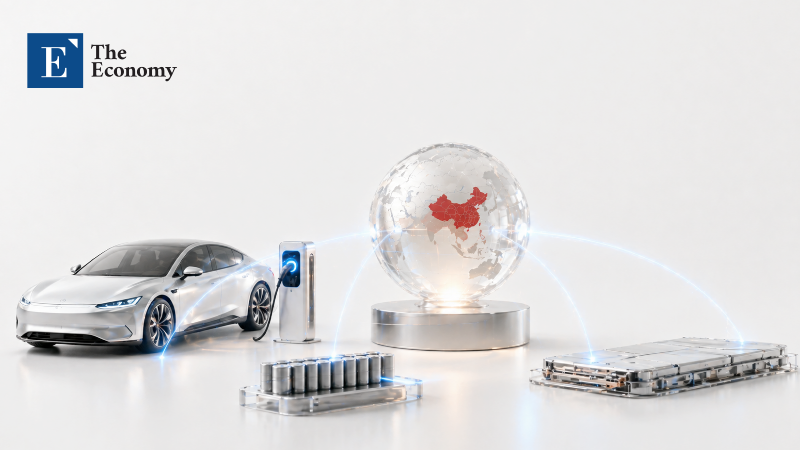
A Mismatch Between EV Sales Growth and Charging Infrastructure Expansion
Insufficient charging infrastructure is also emerging as a major challenge in the EV era. According to China’s National Energy Administration (NEA), the country had more than 20.09 million charging points by the end of last year, enough on paper to support over 40 million NEVs. At first glance, this suggests a dense network with roughly one charger for every two vehicles. However, only 4.72 million units were public charging facilities, while the remaining 15.38 million were privately owned chargers concentrated in residential settings. Vehicle sales are expanding rapidly nationwide, but the publicly accessible charging network available for long-distance travel, urban commercial districts, apartment complexes, and highways remains far more limited.
The limitations of highway charging infrastructure are even more pronounced. According to the NEA, EV charging volumes at highway charging stations reached 149.77 million kilowatt-hours (kWh) during the Lunar New Year holiday period from February 15 to February 23 this year. Average daily charging demand rose 52% year-over-year to 16.64 million kWh. The monitored highway network included approximately 53,300 charging units. As charging demand became concentrated on specific travel dates and routes, some service areas were forced to assign queue numbers, impose charging time limits, and cap battery charging levels at around 80% to manage turnover rates.
Highway charging congestion extends well beyond inconvenience for EV owners. As EV adoption accelerates, charging demand is becoming concentrated during specific periods and along particular routes, placing mounting pressure on service areas and transportation infrastructure. The number of fast chargers continues to increase, yet expansion is failing to match the pace of vehicle growth. Charging queues are beginning to strain parking capacity and traffic flows at highway entrances and exits. This challenge cannot be resolved simply by increasing the total number of chargers. As EV sales rise, demand for electrical capacity and physical space grows in tandem. Analysts increasingly argue that the principal bottleneck of the EV era is no longer vehicle production but charging infrastructure itself.
Pressure on the power grid represents another dimension of the charging challenge. Ultra-fast charging technology is often presented as a solution for reducing waiting times, but it also places substantial strain on electricity networks. A study published in the academic journal Nature Communications, based on real-world public charging data from Beijing, Shanghai, and Guangzhou, found that installing 2,000 ultra-fast charging stations per city could widen the daily peak-to-trough gap in public charging loads by as much as 31.61%. Faster charging improves vehicle turnover rates, but it also concentrates electricity demand into shorter time windows. As competition over charging speeds intensifies, the instantaneous load that power grids must absorb rises accordingly.
Similar Post