Women and Political Corruption: Why Representation Is Not an Anti-Corruption Shortcut

Working across research, policy, and data-driven analysis, the Editorial Board ensures that published pieces reflect a consistent institutional perspective grounded in quantitative reasoning and long-term structural assessment.
Authored On
Modified
Women’s representation does not automatically reduce corruption
Evidence from Brazil and India points instead to experience, incentives and institutional control
Political equality and anti-corruption reform should advance together, but through separate policies

In 2012, women occupied 18.6% of seats in national parliaments. In 2008, the share was 14.1%. If women’s representation in legislatures has at times grown slowly, in 2004, the share was 11.8%. In 2011, it was, on average, more than twice what it had been in 1995; however, it remained strongly male. Often, when women’s presence in office increases, another positive expectation has increased: that where women go, corruption will decline. This promise appeals, but it also relies on an assignment of responsibility that institutions actually bear for corruption onto the presence of women. Evidence shows that women and corruption are not linked by an immutable moral element but by access to institutions, experience, monitoring and incentives and the influence that those in charge have over public money. The examples of Brazil and India demonstrate how this similarity takes various forms: a woman can enter office with the same opportunities, or potential for manipulation, as a man; a woman can enter and be just as inexperienced because existing regimes have systematically excluded them. The implication of policy, then, is not to restrict involvement of women, but to desist from promoting their involvement as an alternative to auditing, monitoring, transparent reporting, investments in public services and workplaces and effective institutions.
The Reason the Traditional Perspective Gained Acceptance
The conventional story started out with a bang. Cross-country studies in the early years found that countries where more women sat in parliament seemed to report less corruption. Evidence from surveys indicated that women were less willing to accept bribes and, more surprisingly, that they were less likely to agree that corrupt practices were justifiable. Both findings contributed to a tidy story. Women, it was claimed, were more public-minded, less risk-prone and less beholden to officeholders and other old-fashioned patronage networks. Given that bribery and other corrupt alliances had historically been male-dominated, bringing women into politics seemed to be an obvious way to challenge those networks. As a result, the literature was soon translated into political rhetoric. It accomplished two agendas, as a means of achieving equal representation of women in parliament and a cleaner government. This was of value to modernizers seeking political support.
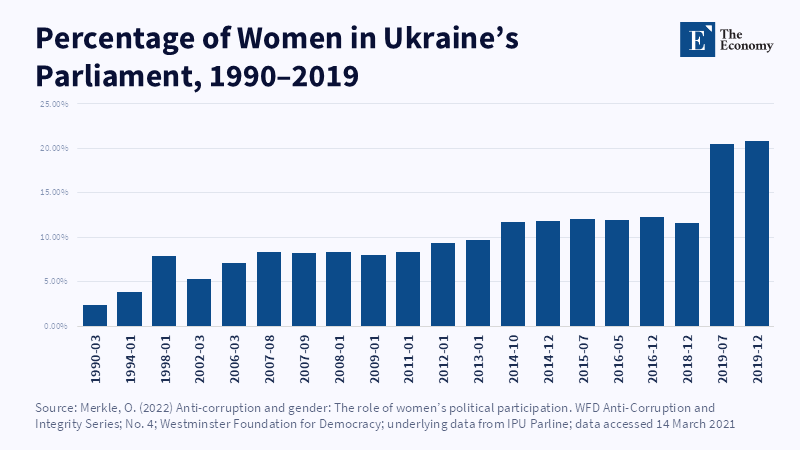
But the pattern never proved that female officeholders brought corruption down. Countries that choose more women often have freer journalism, more independent courts, more competitive elections, better public services and more gender equality. All those things may also help drive corruption down. The same set of institutions might deliver both. A fairer system may broaden democracy to women and make theft and extortion more difficult for all. Further analysis revealed that the association between women's presence and greater integrity was most pronounced where the prospect of being caught and punished stood a high chance of being realized and faltered where public accountability was weak. This reinterpreted the initial evidence. Rather, gender might influence the way politicians and other officials interpret risk, public accountability, or public opinion. It cannot, however, serve as a default gendered bulletproof vest.
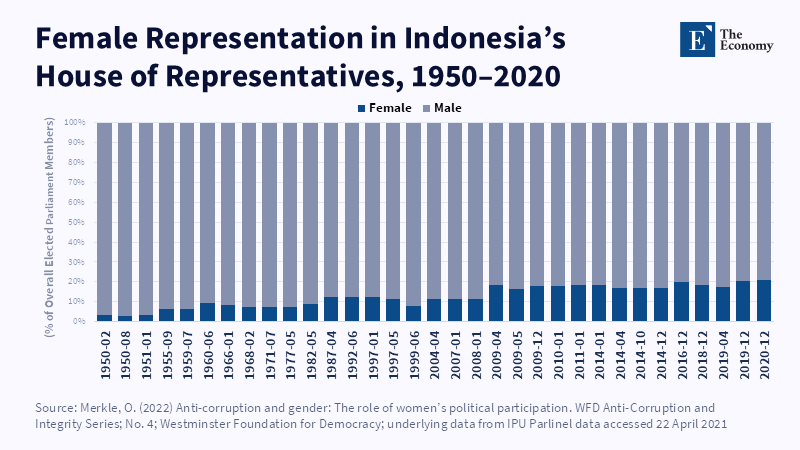
The traditional view of women also placed an unfair burden on women seeking political office. Men running for president are seldom asked to demonstrate that being male will redeem the moral standing of government. Women have long been typecast as political janitors in this country. And although that role may facilitate the triumph of women, such expectations can imprison women in office. Such a female leader has governed badly, which is evidence of women's collective failure as an enterprise; a male leader's ineptitude is an individual failure. This double standard is characteristic of a policy judgment and rational analysis. Equal representation has to be a matter of equal citizenship, not an assertion that women are essential 'better people.' The analysis should examine the effects that elected officials can realize, hide away, expect to get out and face.
Women and Political Corruption in Brazil
Brazil provides a stiff challenge because its 5,570 municipalities share responsibility over considerable portions of local public service delivery and spending. A recently published paper studied close city hall races in five Brazilian election years (2000, 2004, 2008, 2012 and 2016), covering 20 years. Close races strengthen the comparison because the winning sex alters its margin of victory at a very fine threshold, while many local features stay similar. It merged six proxies drawn from three data sets, testing for various forms of budget-related corruption risk, anomalies flagged in random federal audits and criminal sanctions. The result was not a simple absence of evidence. It was a highly precise estimate: the election of a woman did not favor or hinder any of the six outcome variables. In terms of the broad indicator of budgetary effect, a reduction of more than about 3% and a rise of more than about 5% could be rejected.
That result is interesting because previous work in Brazil had found something different. When two election cycles and municipalities audited during the first two election cycles were examined, women mayors had shown up less often in association with administrative irregularities. That more recent paper replicated that finding on the small, early sample, then tested whether something else caused that difference when more elections and more municipalities were incorporated. The gender effect turned insignificant. That other X factor is explained by incumbency. Among the earliest 2 election samples, narrowly elected women were much less often also incumbents than narrowly elected men. Incumbency meant broader networks, greater attachments to the state and after a first term, a lack of electoral discipline because they couldn't run again. Holding all of that constant, second-term mayors were about 50% more likely than first-termers to be corrupt. With political status in the model, the gender effect was statistically insignificant.
A clearer conclusion than praise or blame based on gender, then, is the machinery of corruption. There is something to be said for the fact that time in office produces both policy expertise and cultivated contacts-suppliers, go-betweens, frequent-flyer staff and lax controls-working to a mayor’s advantage. Two mayors married to the same corrupt advantages can draw on the same experience without penalty or benefit; the longer they stay in office, the more incentives are laid bare for both. The office and its character and its ad hoc networks, rather than a universal tendency of women, are the components that widen exposure to incentives. A policy response to corruption on these lines would investigate term limits, procurement procedures, audit schedules, public financing and the career progression of local public officials.
Likewise, Dilma Rousseff's presidency demands extreme caution. She held the office of the first woman in Brazil from 2011 until her impeachment in 2016. Her impeachment protest took place during a large-scale scandal and a formal case against her focused on budget decrees and fiscal accounting matters; it was not a judicial acknowledgment that she accepted a bribe. The process is still politically contested and cannot be used to bring the general debate on women and political corruption to valid conclusions. A woman leader of the State remains subject to fiscal law, legislative struggle, administrative measures and institutional sources of power, regardless of reasons lying in her sex or not. Sex does not make a woman a leader any more innocent or guilty. Using it as a true story about women in power would make one more mistake that facts had the right to avoid.
India Demonstrates That Experience Defines Integrity
India gave a second assurance about simple claims. One-third of village council presidencies were randomly reserved for women and this gave a unique opportunity to observe what would happen when women took local office through rule change rather than voter choice alone. By studying the implementation of the National Rural Employment Guarantee program in Andhra Pradesh from the beginning of the 2006 term to 2010, researchers found that the early stages induced more inefficiency and leakage in council heads through reserved seats. The finding did not support the a priori assumption that females would lead to cleaner administration in office, but it did not suggest that women were inherently less able or more corrupt. The chief cause was administrative and political inexperience, which rendered them more vulnerable to capture by officials who simply knew the system.
The pattern changed over time. Women leaders learned easily and gained parity with men in unreserved councils. They did not statistically surpass them, but the beginning record fared better. This matters for policy. A quota can alter who takes office in a given election, but it cannot wipe out years of limited access to parties, public finance, training in the bureau and informal networks. New reps may inherit staff who know much more than they do. They may be dependent on clerks, contractors, or local political figures. Thus, one- term rise in leakage may be a measure of the price of exclusion before the quota, not a shortcoming of the quota itself. The better response is induction, legal counsel, an impartial financial commission and increased oversight of local operators who run the programs.
Evidence from Mexico echoes the same institutional explanation. Using nearly two decades of municipal audits, the authors find that the recent revelations of corruption increased the likelihood of electing women. Voters and parties using female candidates sought a clean break from a dirty past. However, the audits show that female-led municipalities did not have cleaner executives. The clean outsider image shaped political selection, but not the landscape of office. This explains why women and corruption can be positively correlated in public polls without corresponding differences in gross municipal outcomes. Female candidates are recruited after corruption scandals because they signal change. But in the absence of new controls, resources and enforcement, the signal remains symbolic.
One possible counter-argument is that evidence from municipalities in Brazil, village councils in India and local government in Mexico cannot be used to determine what occurs in individual cabinet or parliamentary seats. That is true, but local-level studies do not prove the female factor is irrelevant. A study done in 2024 of 128 districts in ten European Countries and areas correlates more progress in overall women's political representation to greater reductions in perceived incidences of public-service corruption, an effect most pronounced in nations where the proportion of women was initially lower. The evidence remains mixed, highly complex and dependent on the circumstances. Local causation research only shows we cannot assume that the presence of women in particular office structures will consequently reduce corruption acts across the board. The safer inference is that gender matters, but the type and office of corruption matter, too, as does institutional strength.
Equal Representation Requires Sound Institutions
Policy should separate two goals that can and should reinforce each other without melding into one. The first is political equality. In 2025, women occupied only 27.2% of parliamentary seats and 22.9% of ministerial positions in all countries in the world. Only 25 countries had a woman as head of state or government. These representation gaps are difficult to justify, but alone can suffice to organize candidate selection, party finance, harassment, distortion of the media, labor of care and electoral system reforms. Doing all that does not require arguing that women are less corrupt. The second goal is clean government. It counsels free procurement, asset transparency, protected auditors, open-budget data, conflict-of-interest legislation, independent courts, as well as sanctions, all without exception.
Public administrators should also cease to view having no experience as a private fallibility. Threshold or incremental reform should have a different starting point when new faces come to power. Any mandatory tutorials prescribed to follow budget authority can increase the leverage of new faces away from the legacy incumbents. Basic procurement dashboards would spot a ‘red flag’ on underpriced deals. Rotating key transitional positions could also help end the legacy of entrenched collusive partnerships. The continuation of random auditing, perhaps long after a pilot, also prevents findings from being fossilized around a myth of the initial impact. The analysis of first-term and second-term, elected and staff, petty leak and grand corruption data would be preferable. Better statistics are important because the mean may dominate, concealing territory where incumbent survival explains part of the variance, where the civil service improved, where local parties generated a more or less cordon sanitaire, where legal foot soldiers were cheaper or more abundant and where cursory financial data obscured a tougher overall picture.
Anti-corruption agencies should also consider that they do not fixate on the elected head of state alone. Corruption is a chain, not a solo. Suppliers, party brokers, civil servants, banks and legal advisers might all determine the extent of opportunities to skim public money. Replacing a man with a woman at the top will preserve this chain unless rules, institutions and incentives are altered. The Indian example reveals how effective civil servants cement the control of a novice representative. The Brazilian example shows how incumbency can increase the number of channels for cheating. The Mexican example reveals how women candidates are reduced to symbols of moderation and change, without substantive reforms of power. These are not counterarguments to female leadership but a critique of superficial reform.
So the starting picture must be read analytically. Even among the world's lowest levels of women’s parliamentary representation, the participation of women in assembly politics is composed of more than a single figurr of 0.272. At that ratio, we still have significant work to do. To raise that share is a democratic obligation, not a knock-on answer to anti-corruption questions. Women and political corruption are interconnected by the institutions that tie us to new and old elements of power, knowledge, risk and protection. Peeling away medieval, postcolonial and other jurisdictions that may be part of the problem can help put women in office and make corruption less accessible. Rebuilding such systems can include previous women frontrunners in the same closed political networks as earlier political bosses, then. Further, we have the following blueprint: struggle for inclusion on political decision-making, because absolute gendered citizenship mandates that too and combat amorphous malpractice where rules should curb everyone equally, so as not to spike an unfair but commonly supposed personal and group guilt upon them.
The views expressed in this article are those of the author(s) and do not necessarily reflect the official position of The Economy or its affiliates.
References
Afridi, F., Iversen, V. and Sharan, M.R. (2013) Women political leaders, corruption and learning: Evidence from a large public program in India. IZA Discussion Paper No. 7212. Bonn: Institute for the Study of Labor.
Afridi, F., Iversen, V. and Sharan, M.R. (2017) ‘Women political leaders, corruption, and learning: Evidence from a large public program in India’, Economic Development and Cultural Change, 66(1), pp. 1–30.
Bauhr, M. and Charron, N. (2021) ‘Will women executives reduce corruption? Marginalization and network inclusion’, Comparative Political Studies, 54(7), pp. 1292–1322.
Bauhr, M., Charron, N. and Wängnerud, L. (2019) ‘Exclusion or interests? Why females in elected office reduce petty and grand corruption’, European Journal of Political Research, 58(4), pp. 1043–1065.
Brazil, Federal Senate (2016) Resolução do Senado Federal No. 35, de 31 de agosto de 2016. Brasília: Senado Federal.
Brollo, F. and Troiano, U. (2016) ‘What happens when a woman wins an election? Evidence from close races in Brazil’, Journal of Development Economics, 122, pp. 28–45.
Dollar, D., Fisman, R. and Gatti, R. (2001) ‘Are women really the “fairer” sex? Corruption and women in government’, Journal of Economic Behavior & Organization, 46(4), pp. 423–429.
Esarey, J. and Schwindt-Bayer, L.A. (2018) ‘Women’s representation, accountability and corruption in democracies’, British Journal of Political Science, 48(3), pp. 659–690.
Ferraz, C. and Finan, F. (2011) ‘Electoral accountability and corruption: Evidence from the audits of local governments’, American Economic Review, 101(4), pp. 1274–1311.
Goetz, A.M. (2007) ‘Political cleaners: Women as the new anti-corruption force?’, Development and Change, 38(1), pp. 87–105.
Inter-Parliamentary Union (2025) Women in Parliament 1995–2025. Geneva: Inter-Parliamentary Union.
Inter-Parliamentary Union and UN Women (2025) Women in Politics: 2025. Geneva and New York: Inter-Parliamentary Union and UN Women.
Merkle, O. (2022) Anti-corruption and gender: The role of women’s political participation. WFD Anti-Corruption and Integrity Series, No. 4. London: Westminster Foundation for Democracy.
Peveri, J. and Tricaud, C. (2026a) Do female leaders reduce corruption? New evidence from Brazil. CEPR Discussion Paper No. 21568. Paris and London: Centre for Economic Policy Research.
Peveri, J. and Tricaud, C. (2026b) ‘Electing women does not reduce corruption: Evidence from Brazil’, VoxEU, 20 June.
Sung, H.-E. (2003) ‘Fairer sex or fairer system? Gender and corruption revisited’, Social Forces, 82(2), pp. 703–723.
Swamy, A., Knack, S., Lee, Y. and Azfar, O. (2001) ‘Gender and corruption’, Journal of Development Economics, 64(1), pp. 25–55.
Wikipedia contributors (2026) ‘Dilma Rousseff’, Wikipedia, The Free Encyclopedia.
Working across research, policy, and data-driven analysis, the Editorial Board ensures that published pieces reflect a consistent institutional perspective grounded in quantitative reasoning and long-term structural assessment.