[Warsh Fed] Amid Trump-Fueled Independence Controversy, Warsh Opts for a “Smaller Fed,” Curtailing Central Bank Intervention to Distance It From Markets and Politics

Oliver Griffin is a policy and tech reporter at The Economy, focusing on the intersection of artificial intelligence, government regulation, and macroeconomic strategy. Based in Dublin, Oliver has reported extensively on European Union policy shifts and their ripple effects across global markets. Prior to joining The Economy, he covered technology policy for an international think tank, producing research cited by major institutions, including the OECD and IMF. Oliver studied political economy at Trinity College Dublin and later completed a master’s in data journalism at Columbia University. His reporting blends field interviews with rigorous statistical analysis, offering readers a nuanced understanding of how policy decisions shape industries and everyday lives. Beyond his newsroom work, Oliver contributes op-eds on ethics in AI and has been a guest commentator on BBC World and CNBC Europe.
Authored On
Modified
“Just one conversation with Warsh”: Trump denies allegations of infringing on Fed independence
Warsh signaled commitment to independent decision-making even before Senate confirmation
Could the Warsh Fed’s “smaller Fed” vision lay the groundwork for greater independence?
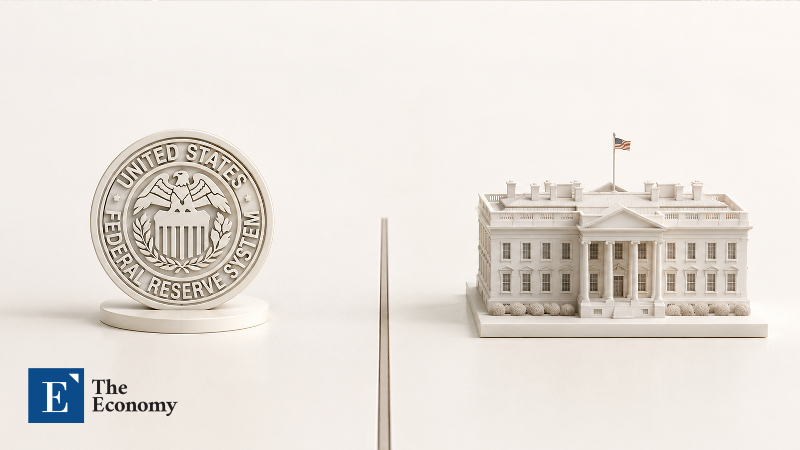
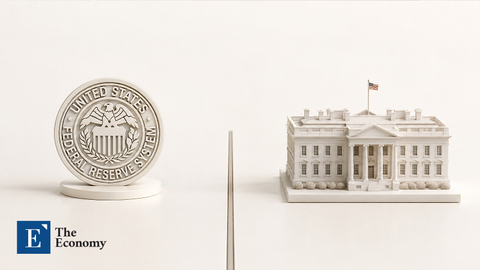
U.S. President Donald Trump has denied allegations that he has sought to influence monetary policy through his appointee, Federal Reserve Chair Kevin Warsh. Trump maintained that his conversations with Warsh were merely consultations on the broader economy and that he had not intervened in the Fed’s interest-rate decisions in any way. Since his confirmation, Warsh has also sought to establish an independent policy course centered on scaling back the Fed’s remit, signaling an effort to keep his distance from both political circles and financial markets.
Questions Over Fed Independence Resurface
According to Bloomberg on Aug. 11, Trump was asked by reporters at the White House the previous day how frequently he had been in contact with Warsh. “I spoke to him briefly just once a few days ago,” Trump replied. “It was just a conversation.” His remarks appeared to be an attempt to clarify recent comments by a senior White House economic adviser. Kevin Hassett, director of the White House National Economic Council (NEC), said on Aug. 7 that Trump and Warsh frequently discussed the economy. “I don’t listen in on their calls,” Hassett said, while emphasizing that he was “certain President Trump is not pressuring Chair Warsh over interest-rate decisions.”
Bloomberg previously reported that Trump had spoken with Warsh several times since his confirmation in May, seeking his views on the economic outlook. Other people familiar with their conversations, however, said the calls were neither regular nor frequent. White House spokesperson Kush Desai also said Trump was “giving Chair Warsh ample space to restore the Federal Reserve’s credibility and capabilities.” Another White House official explained that the president merely regarded Warsh as one of several people whose advice he sought and was not directly pressuring him to cut interest rates.
Warsh Reaffirms Commitment to Independent Judgment
Warsh had repeatedly underscored the importance of Fed independence even before taking office. The issue began drawing serious attention in Washington during his Senate Banking Committee confirmation hearing in April. Trump had already publicly expressed his expectation that interest rates would fall once Warsh became Fed chair. Senators pressed Warsh on whether he had promised Trump that he would cut rates during the nomination process. “The president never asked me to promise interest-rate cuts,” Warsh said. “No such request was made, and I would not have made such a commitment.” He also rejected the possibility that the Fed would act on political directives from the president. When Republican Sen. John Kennedy asked whether he would become the president’s puppet, Warsh replied, “Absolutely not,” adding, “If confirmed as Federal Reserve chair, I will act independently.”
Congressional doubts resurfaced during the Senate Banking Committee’s semiannual monetary policy hearing last month. Democratic Sen. Chris Van Hollen pressed Warsh on his conversations with Trump since his confirmation, particularly whether the president had attempted to influence interest-rate decisions. Warsh declined to disclose the details of their discussions but drew a clear line, saying, “I do not make monetary policy at the direction of the White House.” He added, “They—the Trump administration—chose someone who would act independently, and that is exactly how I intend to operate. The policy decisions I have made over the past several weeks demonstrate that commitment in practice.” Warsh continued, “President Trump has never attempted to influence the conduct of monetary policy. Even if such an attempt were made, I would remain unmoved and continue to perform my duties.”
A Smaller Mandate for the Warsh Fed
Warsh’s drive to reduce the Fed’s institutional footprint and policy remit has reinforced that position. During his April confirmation hearing, he criticized the Fed’s “mission creep” and argued that the central bank should refocus on its core responsibilities. He said bond purchases during the global financial crisis could be justified, but warned that the subsequent normalization of large-scale asset purchases as a routine policy instrument had become problematic, highlighting the need to shrink the balance sheet. At a European Central Bank (ECB) forum last month, Warsh reiterated that his view had not changed that the Fed’s current $6.7 trillion balance sheet was excessively large. “I want interest-rate policy to be the central bank’s primary instrument,” he said.
Institutional reform is already proceeding gradually. Last month, the Fed launched five task forces to conduct a comprehensive review of its monetary policy operating framework. A dedicated balance-sheet task force is examining the ample-reserves regime, asset composition and alternative frameworks. Communications policy has also been designated as a separate area for reform. Warsh believes that excessively detailed guidance on the future path of interest rates can cause market expectations to become a constraint, impeding rapid policy adjustments. At last month’s Federal Open Market Committee (FOMC) press conference, he rejected the practice of signaling policy decisions to markets in advance. He argued that the Fed should refrain from “spoon-feeding” information or preannouncing its decisions, allowing markets to assess economic conditions and determine the appropriate level of interest rates on their own.
Table 1. Chair Warsh’s “Smaller Fed” Vision
| Area of Reform | Principal Proposal |
|---|---|
| Fed mandate | Refocus on core responsibilities, including price stability and monetary policy |
| Balance sheet | Scale back routine large-scale asset purchases and restore interest-rate policy as the primary instrument |
| Communications | Reduce detailed rate-path guidance and advance signaling of policy decisions to preserve policy flexibility |
| Market role | Enable markets to assess economic conditions and appropriate interest-rate levels independently, without relying on Fed signals |
Implications for U.S. Financial Markets
A reduction in the monetary policy information supplied by the central bank could heighten short-term market volatility. Reuters reported on Aug. 7 that Warsh’s retreat from forward guidance had created a form of “uncertainty premium” in the bond market. With no clear indication of the direction of interest rates, investors have begun demanding higher yields to compensate for policy uncertainty. Following last month’s FOMC meeting, the yield on the 30-year U.S. Treasury surged to its highest level since 2007, while the 10-year yield climbed to its highest point since January last year.
Over the longer term, however, a narrower Fed role could encourage investors to price assets according to underlying economic fundamentals. Responsibility for policy decisions would rest with the Fed, while responsibility for price discovery would naturally return to the market. Balance-sheet reduction follows the same logic. When the Fed maintains large holdings of Treasury securities and mortgage-backed securities during normal periods, its decisions exert broad influence over long-term interest rates, asset prices and government borrowing costs. If market intervention is confined to crises and policy is centered on interest rates during normal periods, authority over long-term rates and asset prices would shift back to the market, strengthening its inherent price-discovery function.
Prospects for Easing Market Anxiety
These changes could reinforce the Fed’s independence. A central bank with broad powers and an expansive remit gives the president and Congress stronger incentives to intervene in its decisions. If the Fed controls the scale of Treasury purchases, asset composition and financial-market support in addition to interest rates, each decision carries a greater risk of colliding with political interests. Confining the Fed’s role to the narrower domains of price stability and monetary policy would reduce the channels through which external pressure could be exerted.
Experts say such measures could also partially ease the controversy surrounding Warsh, Trump and the Fed’s independence. “If the mere question of whether a central bank governor has spoken with the president can evolve into a matter of policy credibility, the most reliable way to safeguard independence may be to minimize the channels through which contact can translate into policy,” one market expert said. “Even if the president demands interest-rate cuts, the effect of personal communication on actual policy diminishes when the Fed operates within clearly defined inflation criteria and a limited set of policy instruments.”
Oliver Griffin is a policy and tech reporter at The Economy, focusing on the intersection of artificial intelligence, government regulation, and macroeconomic strategy. Based in Dublin, Oliver has reported extensively on European Union policy shifts and their ripple effects across global markets. Prior to joining The Economy, he covered technology policy for an international think tank, producing research cited by major institutions, including the OECD and IMF. Oliver studied political economy at Trinity College Dublin and later completed a master’s in data journalism at Columbia University. His reporting blends field interviews with rigorous statistical analysis, offering readers a nuanced understanding of how policy decisions shape industries and everyday lives. Beyond his newsroom work, Oliver contributes op-eds on ethics in AI and has been a guest commentator on BBC World and CNBC Europe.
Similar Post