Southeast Asia’s Renewable Energy Push to Cut Middle East Dependence Stalls as Grid Bottlenecks Derail Half of Projects, Putting Data Center Drive at Risk

Anne-Marie Nicholson is a fearless reporter covering international markets and global economic shifts. With a background in international relations, she provides a nuanced perspective on trade policies, foreign investments, and macroeconomic developments. Quick-witted and always on the move, she delivers hard-hitting stories that connect the dots in an ever-changing global economy.
Authored On
Modified
Middle East supply shock accelerates renewable energy transition
Grid expansion delays derail half of projects
Advanced-industry investment hinges on power delivery timelines
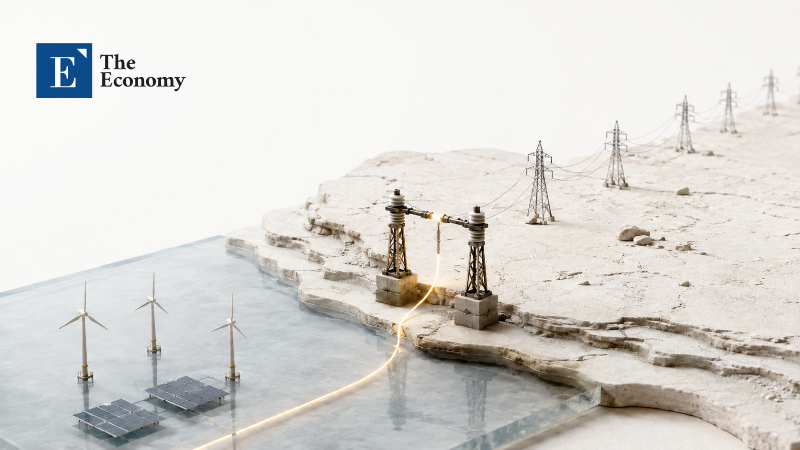
The Middle East energy shock accelerated Southeast Asia’s transition to renewable energy, but projects have ground to a halt amid the region’s fragile transmission infrastructure. Between 50% and 60% of renewable energy projects pursued in Vietnam, Thailand and Indonesia have been canceled or suspended, while 35% of announced green capital expenditure remains uncommitted. Competition to attract semiconductor and battery factories and artificial intelligence (AI) data centers is expected to generate more than 100 terawatt-hours (TWh) of additional electricity demand by 2030, turning grid congestion into a mounting threat to industrial growth.
Middle East Shock Accelerates Southeast Asia’s Renewable Energy Clock
According to energy industry publication OilPrice.com on Aug. 9, major Southeast Asian economies are accelerating the expansion of renewable energy sources, including solar and wind power. Vietnam incorporated plans to expand solar, onshore and offshore wind, battery storage and pumped-storage capacity into its revised Power Development Plan VIII (PDP8) last April. Indonesia also included additional renewable energy and storage capacity in its 2025–2034 Electricity Supply Business Plan (RUPTL). The Philippines plans to expand its green energy auctions and raise renewables’ share of electricity generation to 35% by 2030 and 50% by 2040. The strategy aims to reduce dependence on Middle Eastern oil and gas while securing the electricity needed to support the growth of manufacturing and data centers, driving renewable energy investment across the region.
Supply disruptions originating in the Middle East have further accelerated the energy transition. The Middle East and Southeast Asia are linked through a single energy supply chain. According to the International Energy Agency’s (IEA) Southeast Asia Energy Outlook 2026, the Middle East supplied approximately 60% of Southeast Asia’s crude oil imports and one-third of its gas imports before the outbreak of the Iran war in late February this year. Including refinery feedstocks and trade in intermediate products, 45% of the region’s petroleum-product supply was tied to Middle Eastern crude. With energy imports concentrated along the narrow Strait of Hormuz, conflict in the region immediately translated into supply disruptions across Southeast Asia.
Disruptions to fuel supplies drove up transportation, aviation and petrochemical costs, while prices for gas used in power generation rose in tandem. Even before the crisis, fossil-fuel subsidies across the region amounted to $40 billion annually. Under current policies, net fossil-fuel imports are projected to nearly triple from $80 billion in 2024 to $245 billion in 2035. If Southeast Asian countries implement their announced climate and energy targets, their import costs in 2035 would fall to half that estimate. Investment in renewable energy, electrification and energy efficiency also reduced the region’s fossil-fuel import bill by an estimated $30 billion last year.
Half of Projects Derailed by Grid Bottlenecks
Governments across the region have consequently begun reassessing solar and wind power as instruments of energy security. Their objective is to limit fluctuations in generation costs caused by changes in imported fuel prices. The IEA projects that Southeast Asia will account for approximately 20% of the increase in global energy demand through 2035. Failure to expand power plants and grids now would cause the region’s energy import burden to rise at a comparable pace. Yet national renewable energy expansion policies have encountered severe grid bottlenecks. According to a recent report by global consultancy Bain & Company and Standard Chartered, between 50% and 60% of renewable energy projects pursued in Vietnam, Thailand and Indonesia have been canceled or suspended.
The immediate causes of these project failures include uncertainty surrounding long-term power purchase agreements (PPAs), permitting delays and inconsistent grid-connection rules. Fixed electricity sale prices and contract terms are prerequisites for bank financing and final investment decisions (FIDs). Uncertainty over transmission-grid connection dates further increases the risk that completed power plants will be unable to sell electricity. The Bain–Standard Chartered report found that approximately 35% of announced green capital expenditure in Southeast Asia’s power and electric vehicle sectors remains uncommitted.
Deployment figures by country have also fallen far short of initial targets. Indonesia achieved only 20% to 30% of its solar deployment target for 2020–2025. In Vietnam, the combination of policy uncertainty and financing disruptions brought large-scale additions of solar and wind capacity to a virtual standstill between 2022 and 2024. The Vietnamese government announced a 6-gigawatt (GW) offshore wind target in 2023, but the relevant regulations were introduced only in 2025. No offshore wind project has secured a PPA, reached FID or begun construction.
Table 1. Delays in Southeast Asian Clean-Energy Investment and Projects
| Category | Key Indicator | Status and Impact |
|---|---|---|
| Causes of project failure | PPAs, permitting and grid regulations and FIDs | Uncertainty over electricity sale prices, contract terms and transmission-grid connection dates is delaying financing and FIDs |
| Execution of green investment | Approximately 35% of announced capital expenditure remains uncommitted | Investment plans in the power and electric vehicle sectors have failed to translate into project execution |
| Indonesian solar power | 20%–30% target achievement rate | Deployment between 2020 and 2025 fell substantially short of the initial target |
| Vietnamese renewable energy | Capacity additions virtually halted between 2022 and 2024 | Policy uncertainty and financing disruptions stalled large-scale solar and wind projects |
| Vietnamese offshore wind | 6GW target; zero projects implemented | No PPAs, FIDs or construction starts; target announced in 2023, with regulations introduced in 2025 |
| Construction-cycle disparity | Power plants: 1–5 years; transmission grids: 5–15 years | Grid expansion delays increase curtailment at completed power plants and reduce electricity sales |
| Grid investment shortfall | $11 billion in 2024 | Annual investment falls $18 billion short of the $29 billion required through 2035 |
| Investment plans and execution capacity | $540 billion announced; $315 billion considered executable | Execution remains uncertain for $225 billion of planned investment through 2030 |
| Solar project delays | More than 25% of 452 projects | More than one-quarter of Southeast Asian solar projects launched since 2022 have been delayed or canceled |
Grid Investment Gap Widens Behind Surging Generation Capacity
The mismatch between power-generation and transmission-grid construction cycles has compounded project delays. Solar and wind power plants can typically be built within one to five years, while transmission-grid expansion takes five to 15 years when permitting, land compensation and substation construction are included. Southeast Asian investment in power grids and storage facilities totaled only $11 billion in 2024. Compared with the $29 billion in average annual investment required through 2035, the region faces an annual shortfall of $18 billion. Delayed grid reinforcement increases curtailment at completed power plants and reduces electricity sales, further weakening the profitability of renewable energy projects.
The gap between announced investment plans and actual execution is also widening. Green investment announced across Southeast Asia’s power and electric vehicle industries through 2030 totals $540 billion, but only $315 billion has been identified as executable under current conditions. More than one-quarter of the 452 Southeast Asian solar projects launched since 2022 and tracked by Global Energy Monitor (GEM) have consequently been delayed or canceled. Although funding and demand for new power plants have been secured, inadequate transmission capacity is turning Southeast Asia’s energy transition into a succession of construction suspensions and capital withdrawals.
Countdown to Grid Expansion as Semiconductor and Battery Investment Floods Southeast Asia
Further delays in grid investment leave little room for maneuver. Southeast Asia’s ambition to establish itself as a “post-China” manufacturing base by attracting data centers and advanced manufacturing industries will generate enormous additional electricity demand. According to the ASEAN Investment Report 2025, jointly published by the Association of Southeast Asian Nations (ASEAN) and the United Nations Conference on Trade and Development (UNCTAD), foreign direct investment (FDI) in the region rose 8% year over year to $226 billion in 2024. Global FDI declined 11% over the same period. Manufacturing FDI surged approximately 150% to $44 billion. Capital has poured into Southeast Asia as semiconductor, automotive, battery and electronics companies establish production bases outside China.
Electricity demand from new factories and data centers is also rising rapidly. The Bain–Standard Chartered report estimates that additional demand between 2025 and 2030 will reach 35–45TWh from data centers, 25–60TWh from green industrial parks and 10–15TWh from electric vehicles. The combined increase in electricity consumption across the three sectors will exceed 100TWh. The increase during the preceding five years was only slightly above 30TWh. More than $200 billion in new capital expenditure is also tied to this demand. Delays in completing power plants and transmission grids will push back both investment execution and factory commissioning schedules.
The scale and quality of electricity required by data centers differ sharply from the requirements of conventional industrial facilities. Southeast Asian data centers’ information technology (IT) load is projected to more than triple from 1.9GW in 2024 to 6–6.5GW in 2030. Their share of the region’s total electricity consumption is expected to rise from 0.9% to 3.2%–3.5%. Data centers consume electricity around the clock and require operating reliability of approximately 99.999%. Even brief outages or voltage instability can cause server failures and losses for customers, compelling operators to assess grid-connection dates, reserve capacity and access to renewable energy from the initial investment-decision stage.
Power Procurement Constraints Threaten Investment Awards
Grid instability is already directly affecting data center operators’ investment plans. Bain surveyed 10 operators representing approximately half of Southeast Asia’s data center capacity and found that 90% identified grid-connection delays as a major investment constraint, while 70% cited insufficient transmission capacity. Every respondent said they would be willing to pay premium electricity rates if connection deadlines were guaranteed. Respondents also indicated that resolving grid bottlenecks would enable each operator to invest an additional 0.3GW on average. The findings show that the actual commencement date for electricity supply has joined power prices as a decisive criterion in data center site selection.
Manufacturing-sector electricity requirements have also become more demanding. Semiconductor production lines can shut down after even a momentary voltage drop, causing wafer losses. Battery and precision-electronics plants must maintain stable voltage and frequency to secure production yields. As global companies tighten management of supply-chain carbon emissions, renewable energy usage and procurement channels have also become conditions for supply contracts and order awards. Unreliable electricity supply raises expenditures on emergency generators and captive-generation facilities, while regions with inadequate renewable energy certification systems struggle to meet the carbon-reduction standards imposed by corporate headquarters and customers.
ASEAN Requires $300 Billion for Grid Expansion
As stable electricity supplies and renewable energy procurement capacity become decisive investment-location criteria, Malaysia and Thailand have elevated grid investment to the forefront of their industrial-attraction strategies. Malaysian utility Tenaga Nasional Berhad (TNB) is investing approximately $10.5 billion between 2025 and 2027 to modernize transmission networks and substations. It has also incorporated new electricity demand from data centers concentrated in Johor into the national power development plan and shortened grid-connection procedures.
The Electricity Generating Authority of Thailand (EGAT) is expanding transmission lines and substations in the Eastern Economic Corridor (EEC), where data center investment is concentrated. Data centers in the EEC alone require 1,150 megawatts (MW) of electricity. EGAT is installing new supply points with a combined capacity of 650MW at the Rayong 2, Phan Thong and Phan Thong 2 substations, while increasing transformer capacity at the Pluak Daeng and Sattahip substations by 500MW. The Rayong 2 facility has already been completed, while the remaining projects are scheduled to enter operation sequentially through the first quarter of 2027.
Grid investment in Indonesia and Vietnam, meanwhile, is lagging behind the pace of new demand. Most available electricity capacity in Jakarta’s principal data center clusters has already been allocated, and new grid connections can take up to three years. Vietnam also continues to face peak-hour supply shortages and transmission-grid instability, creating a need for annual grid investment of $3 billion to $4 billion.
This investment gap extends across Southeast Asia. The IEA estimates that ASEAN must invest more than $300 billion in grid expansion and modernization by 2040. That amount is 72% higher than expenditure over the previous 15 years. Cross-border interconnections under the ASEAN Power Grid (APG) will require an additional $27 billion through 2040. Annual investment in interconnectors must rise above $1 billion before 2030 and exceed $2 billion thereafter. This represents 20 times the annual average invested between 2019 and 2024.
Anne-Marie Nicholson is a fearless reporter covering international markets and global economic shifts. With a background in international relations, she provides a nuanced perspective on trade policies, foreign investments, and macroeconomic developments. Quick-witted and always on the move, she delivers hard-hitting stories that connect the dots in an ever-changing global economy.
Similar Post