Crude Oil Retreats to Pre-Iran War Levels as Easing Inflation Pressure and Warsh’s Data-Driven Approach Dampen U.S. Rate Hike Outlook

Authored On
Modified
Oil prices erase gains sparked by the outbreak of the Iran war, falling back to pre-conflict levels
Inflation risks expected to ease gradually, with the U.S. Treasury market reacting immediately
Fed Chair Kevin Warsh’s preference for discretionary policymaking reduces the likelihood of an imminent rate hike

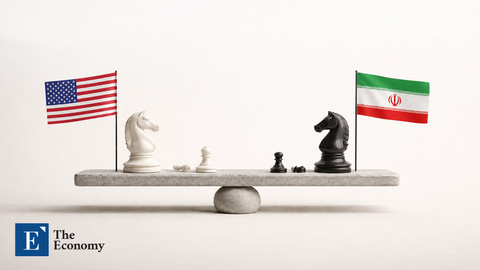
International oil prices have fallen back to levels last seen immediately before the outbreak of the Iran war in February. The decline follows progress in ceasefire negotiations between the United States and Iran, as well as the reopening of shipping through the Strait of Hormuz, easing part of the geopolitical risk premium. Markets believe the move is offsetting inflationary pressures that had weighed heavily on the U.S. economy while reducing pressure on the Federal Reserve (Fed) to raise interest rates. Analysts also argue that the likelihood of an abrupt shift in monetary policy remains low, given newly appointed Fed Chair Kevin Warsh’s apparent preference for focusing on incoming economic data rather than adhering rigidly to rule-based policymaking.
Continued Decline in Oil Prices
On June 24 (local time), ICE Futures Europe reported that Brent crude futures for August delivery settled at $73.74 per barrel, down 4.33% from the previous session. On the same day, August West Texas Intermediate (WTI) crude futures on the New York Mercantile Exchange closed at $70.34 per barrel, down 3.92%. Both benchmarks fell to their lowest levels since Feb. 27, the day before military conflict erupted between the United States and Iran. The decline indicates that the geopolitical risk premium built into oil markets during the early stages of the war has largely dissipated.
Earlier, on June 21, the United States and Iran concluded high-level talks and agreed to continue negotiations through working-level groups. Iran also announced that vessels would be permitted to transit the Strait of Hormuz without paying passage fees during the 60-day negotiation period. Shipping data confirmed that three tankers carrying approximately 5 million barrels of crude oil exited the Strait following the announcement. The International Maritime Organization (IMO) also stated that hundreds of vessels stranded in the Persian Gulf had received security assurances allowing them to depart safely. The Strait of Hormuz remains the principal export corridor for Middle Eastern crude oil and liquefied natural gas (LNG), serving as one of the world's most critical chokepoints for global oil prices, shipping costs, and energy supply sentiment.
Additional downward pressure on oil prices appears to have come from Washington's decision to lift restrictions prohibiting U.S. dollar-denominated transactions for Iranian crude exports. U.S. Treasury Secretary Scott Bessent announced on X on June 22 that "Iran has committed to maintaining free and open navigation through the Strait of Hormuz and allowing International Atomic Energy Agency (IAEA) inspectors to return," adding that "the Treasury Department has issued a 60-day temporary general license permitting the production, delivery, and sale of Iranian crude oil." Until now, Western sanctions had effectively confined Iran to selling discounted crude primarily to a limited number of countries, including China.
Will U.S. Inflation Begin to Cool?
With elevated oil prices beginning to moderate, inflationary pressures in the United States are also expected to ease to some extent. U.S. inflation indicators had deteriorated steadily following the outbreak of the war. Annual consumer price inflation, measured by the Consumer Price Index (CPI), accelerated from 2.4% in February before the conflict to 3.3% in March, 3.8% in April, and 4.2% last month. The latest reading marked the highest level since April 2023, when CPI rose 4.9%, representing a three-year-and-one-month high. The Producer Price Index (PPI), widely regarded as a leading indicator for consumer inflation, also climbed 6.0% year over year in April.
U.S. President Donald Trump has actively sought to capitalize on the recent decline in oil prices to counter inflationary pressures. In a recent post on his social media platform Truth Social, Trump argued that "major oil companies are buying crude at much lower prices, yet gasoline prices at the pump have not declined nearly enough." He added that "gasoline prices should be falling much more rapidly," revealing that he had instructed the Department of Justice to investigate the matter. However, he did not specify which companies or practices were under investigation.
Financial markets have also responded swiftly to the changing environment. Shortly before the close of trading on June 24, the yield on the two-year U.S. Treasury note fell to 4.148%, down from 4.194% at the same time a day earlier. During the same period, the benchmark 10-year Treasury yield declined from 4.493% to 4.406%, while the 30-year Treasury yield dropped from 4.940% to 4.857%. The moves reflect growing expectations that easing inflationary pressures have weakened the case for additional Federal Reserve rate hikes. Before progress toward a ceasefire agreement emerged, markets had increasingly expected the Fed to raise interest rates in the near future.
Warsh's Shift in the Fed's Policy Approach
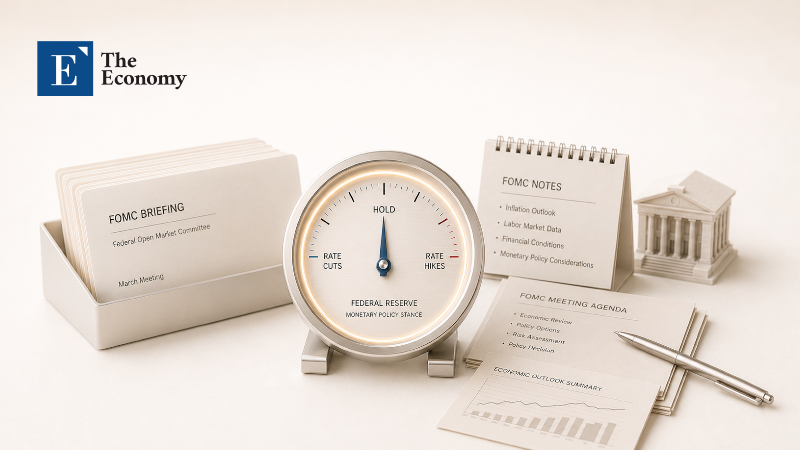
Warsh's monetary policy framework has reinforced these shifting market expectations. In macroeconomics, monetary policy is generally categorized as either rule-based or discretionary. For decades, both academics and financial markets have favored rule-based frameworks, arguing that central banks enhance credibility by consistently adhering to predetermined objectives. By contrast, discretionary policymaking—which allows policymakers to adjust policy according to changing economic conditions—has often been criticized for reducing predictability and undermining policy credibility. However, shortly after taking office, Warsh emphasized price stability as the Fed's overriding objective while simultaneously making clear that the future path of interest rates would not be predetermined.
His refusal to submit a dot plot projection stands as the clearest illustration of that philosophy. Following the June 17 Federal Open Market Committee (FOMC) meeting, Warsh told reporters that he had declined to submit his own interest-rate forecast for inclusion in the dot plot. He also argued that the Fed had provided excessive forward signals to financial markets, encouraging investors to focus more on anticipating the Fed's next statement than on underlying economic fundamentals. "Financial markets function most efficiently when they respond to incoming economic data," he said. "When markets become preoccupied with predicting how the Federal Reserve will react instead, an important source of price information fails to reach the central bank effectively."
Warsh has also expressed his intention to scale back the Fed's reliance on forward guidance. He believes excessive forward guidance contributed to repeated inflation forecasting failures and frequent policy reversals that ultimately fueled market confusion. He declined to offer any specific formula linking future rate hikes or economic indicators to policy decisions, saying only that markets could "know more" after the July meeting. Rather than providing advance signals regarding the Fed's next policy move, Warsh indicated that policymakers would determine the appropriate course of action based on newly available economic data at each meeting. Ultimately, his objective is to restore the Federal Reserve's policy flexibility while keeping price stability at the center of its mandate.
- Previous "Battle Over the Compensation Ratio" U.S.-Iran Clash Reignites Over Nuclear Inspections and Strait of Hormuz Transit Fees, Raising Fears of a Repeat of the Failed U.S.-North Korea Denuclearization Talks
- Next "Driver Error vs. Manufacturer Negligence" Surge in Driver-Assistance Crashes Reignites Liability Debate as Tesla Faces Special Investigation
Similar Post