“Immediate Cost-of-Living Gamble After Taking Office”: Burnham Government Begins with Electricity Tax Cut and Moves to Reshape Britain’s Economy and Welfare System

Authored On
Modified
New UK Prime Minister Andy Burnham moving to abolish VAT on household electricity bills
Economic agenda centered on devolution, reindustrialization, and expanded public housing
Sweeping welfare reforms expected, including a universal National Care Service
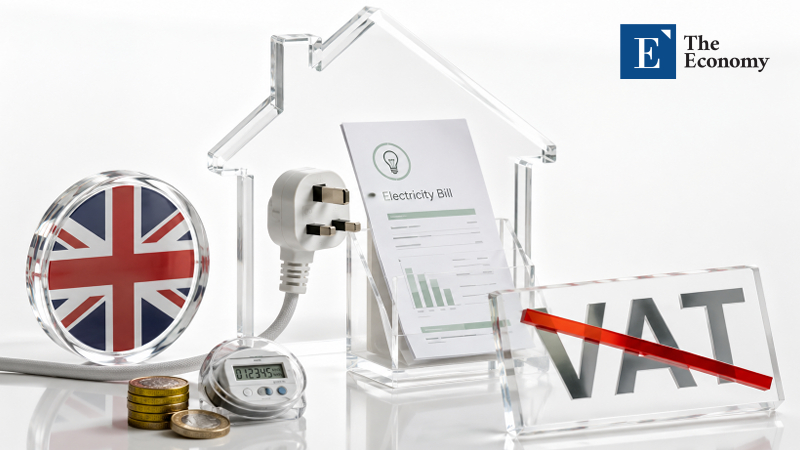
New British Prime Minister Andy Burnham has announced that value-added tax on household electricity bills will be abolished. With high inflation and elevated utility costs worsening financial pressure on households, Burnham has introduced an immediate cost-of-living measure shortly after taking office, seeking to distinguish his government from the previous administration of Keir Starmer, which was widely criticized for responding too slowly to voters’ economic difficulties.
Burnham has also identified devolution, reindustrialization, expanded public housing, and the establishment of a universal care system as central priorities, presenting a broader agenda intended to address Britain’s prolonged low-growth problem and close persistent gaps in the country’s welfare system.
Burnham’s Response to Cost-of-Living Pressures
The British Prime Minister’s Office announced on July 21, local time, that the VAT rate applied to household electricity bills would be reduced from the current 5% to zero beginning in October. The government estimates that the measure will lower the consumer price inflation rate by 0.1 percentage points and save the average British household approximately £45, or about $60, annually. The resulting loss of tax revenue is expected to reach £850 million, or approximately $1.14 billion, in fiscal year 2026–2027. To finance the measure, the Burnham government plans to cancel a digital identification policy that had been scheduled to receive £1.8 billion, or about $2.4 billion, in funding over the next three years.
The measure is intended to address accelerating inflation and the resulting deterioration in household living standards. According to the Office for National Statistics, the UK consumer price inflation rate reached 2.8% in May, substantially exceeding the Bank of England’s 2% target. Energy and transportation costs have increased amid the effects of the war involving the United States, Israel, and Iran, while services inflation has also remained elevated, visibly increasing the financial burden on households. The pressure has translated into a measurable weakening of consumers’ ability to meet ordinary expenses. In June, the proportion of households in the middle 40%–60% of the UK income distribution that failed to complete direct-debit payments for utilities and other recurring bills rose to 2%, more than twice the 0.8% recorded in early 2021.
“I said that I wanted to give people room to breathe, and on my second day in office, I am announcing action to do exactly that,” Burnham said of the tax reduction. “We are taking immediate steps to restore hope by cutting taxes on energy bills and putting more money back into people’s pockets.” The Financial Times assessed that Burnham was attempting to avoid the mistake made by former Prime Minister Starmer, who failed to move quickly after taking office, and to demonstrate to voters that his government had a concrete plan for improving everyday living conditions. The Starmer government entered office after a landslide victory in the July 2024 general election but faced criticism within months that little meaningful change had occurred, eventually losing its lead in public support to Reform UK.
Economic and Industrial Policy Direction
Burnham has also made a series of statements indicating the broader direction of his government’s economic policy. The administration plans to transfer decision-making authority and funding for housing, transportation, employment, and industrial policy from Whitehall in London to combined regional authorities, allowing each area to design policies according to its own economic conditions. The institutional center of this agenda will be No 10 North, a new government office to be established in Manchester. The Burnham government intends to consolidate regional growth functions currently divided among the Prime Minister’s Office, Cabinet Office, Treasury, and housing department within a newly created Prime Minister and Cabinet Department, while relocating relevant personnel to Manchester. Burnham himself plans to work in the city for at least one day each week, elevating devolution from a peripheral responsibility distributed across individual ministries into a core economic policy managed directly from the center of government.
The government’s reindustrialization agenda is expected to advance alongside this devolution strategy. Burnham has said that each region will establish long-term industrial-development objectives based on its existing manufacturing and advanced-technology capabilities, while central government procurement will be used to prioritize products and services supplied by British companies. The policy represents a departure from the previous model, which largely relied on the expectation that wealth concentrated in London’s financial and professional-services sectors would eventually produce benefits elsewhere. Instead, the government intends to intervene directly in areas where industrial capacity has deteriorated and rebuild regional production capabilities. The approach reflects Britain’s chronic growth difficulties: since the 2008 global financial crisis, the economy has frequently recorded average annual growth of only around 1%, while former manufacturing regions have experienced a continuing decline in high-quality employment and private investment. Burnham has argued that unless economic growth accelerates, future governments will inevitably be forced to raise taxes or reduce public expenditure.
Burnham has additionally pledged to undertake Britain’s largest public rental housing program since the end of the Second World War. His government believes that an entrenched shortage of public housing has created a cycle in which housing benefits intended for low-income households ultimately flow to private landlords rather than expanding the country’s permanent supply of affordable homes. Public control over essential services is also expected to increase. In the water sector, the government is initially considering placing Thames Water, Britain’s largest water company, under a special administration regime because of its enormous debt burden and financial instability. In transportation, the Bee Network model introduced during Burnham’s tenure as mayor of Greater Manchester is expected to be expanded nationally. The model brings privately operated bus routes under a system managed by local government, and Manchester has used it to reduce bus operating costs per kilometer by approximately one-third compared with the previous privatized structure.

Sweeping Welfare Reforms Expected
The new government has also signaled an ambitious and relatively radical welfare agenda. Burnham said that his first instruction to the Prime Minister’s Office after taking office was to develop a plan to eliminate rough sleeping. Rather than merely increasing the number of temporary shelters, the administration intends to pursue a preventive strategy combining permanent housing, mental-health treatment, and employment assistance. Burnham has also pledged to redesign education and vocational training around the needs of employers and provide young people unable to find work with both occupational training and mental-health support. The objective is to break the cycle in which prolonged unemployment contributes to deteriorating mental health, rising welfare dependence, and lower labor-force participation. These policies are expected to serve as an important test of Burnham’s proposed “preventive state,” under which the government intervenes earlier in housing, healthcare, and education to reduce larger social costs over the long term.
A comprehensive restructuring of adult social care is also expected. Under the existing system, elderly people in England who possess assets exceeding £23,250, or approximately $31,100, generally do not qualify for local-government assistance with care costs. A substantial number of older people must therefore pay for residential or home-based care themselves, and some are forced to sell homes or other assets accumulated over a lifetime when they can no longer afford the expense. Burnham has identified social care as a problem that must be resolved during his premiership and has pledged to accelerate the creation of a universal National Care Service under which the state would assume responsibility for care costs.
The government has yet to disclose a specific financing mechanism for the National Care Service, but attention has returned to the proposed “national care levy” that Burnham considered while serving as health secretary between 2009 and 2010. At the time, he examined a plan to reform the inheritance-tax system and impose a flat levy of approximately 10% on a person’s estate after death in exchange for providing care services free at the point of use. Conservatives strongly opposed the proposal, characterizing it as a “death tax,” and the plan effectively lost political momentum after Labour was defeated in the 2010 general election. Burnham has nevertheless continued to support the underlying idea and reiterated in May that he had no intention of withdrawing the proposal he advanced in 2010. His return to the issue suggests that the new government’s welfare agenda may involve not only a considerable expansion of public provision, but also politically contentious reforms to the way the British state raises and distributes revenue.
Similar Post