“Fiscal Pressure in Bid to Ease Cost of Living”: Japan Pushes Food Consumption Tax Cut to 1%, Raising Revenue Gap and Reversal Risks

Authored On
Modified
Takaichi government seeking to reduce the consumption tax on food to 1%
Expanding fiscal commitments with no clear plan to replace lost revenue
Political backlash expected when tax rate is restored, while business enthusiasm remains limited
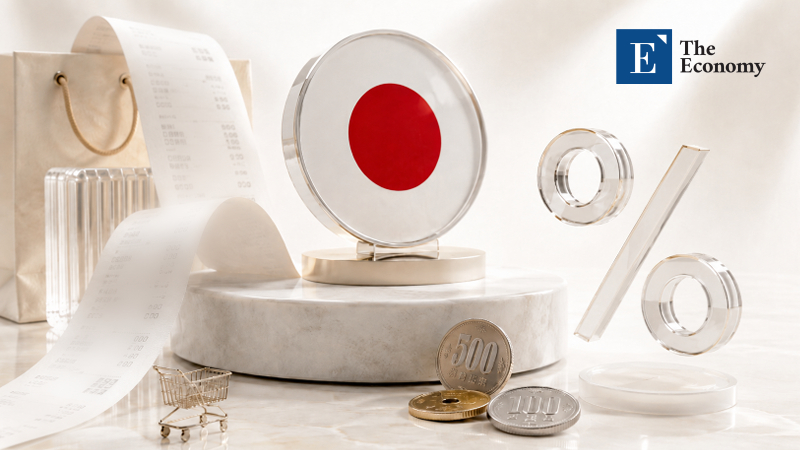
The government of Japanese Prime Minister Sanae Takaichi is moving to reduce the consumption tax rate on food. With rising prices for essential goods weakening households’ real purchasing power and delaying a recovery in private consumption, the government hopes that reducing food expenses will provide fresh momentum for domestic demand. Market observers, however, warn that the policy could become a self-defeating move.
Japan’s public finances are already under severe expenditure pressure, and the government has yet to present a specific plan for replacing the revenue that would be lost through the tax cut. The political backlash likely to emerge when the temporary reduction expires is also being identified as a significant risk.
Japan Plans Consumption Tax Cut
According to Japanese media reports compiled on July 21, the Takaichi government is considering reducing the consumption tax rate on food from its current level of 8% to 1% for a temporary period of two years. The measure is intended to fulfill a campaign promise made by Takaichi during the House of Representatives election in February. The prime minister had originally pledged a temporary complete exemption from the consumption tax on food, but practical limitations in the point-of-sale systems used by supermarkets and other retailers obstructed the proposal because many systems do not support setting the tax rate at exactly 0%. The Yomiuri Shimbun reported in June that industry representatives had informed the government that modifying systems to accommodate a zero rate could take as long as one year, whereas introducing a 1% rate could be completed in approximately six months. The government has therefore chosen to implement a more rapid reduction even if it falls short of its original promise.
Japan’s effort to accelerate the tax cut reflects the prolonged accumulation of household cost pressures and weakening private consumption. According to the Ministry of Internal Affairs and Communications, Japan’s nationwide consumer price index reached 113.5 in May, based on an annual average of 100 in 2020, indicating that prices had risen by 13.5% over five years. Average monthly consumption expenditure by households of two or more people increased by 1.3% year on year in nominal terms during the same month, but declined by 0.4% after adjusting for inflation. In other words, households spent more money while purchasing a smaller volume of goods and services. Japanese policymakers expect that reducing the consumption tax on food will allow households to feel an immediate decline in everyday expenses and free additional income for discretionary spending on restaurants, clothing, travel, and other services.
The economic contraction that followed Japan’s previous consumption tax increase has also strengthened the political case for a reduction. Immediately after the Shinzo Abe government raised the standard consumption tax rate from 8% to 10%, Japan’s real gross domestic product declined by 1.6% in the October–December quarter of 2019 compared with the preceding three months, while private final consumption expenditure fell by 2.9%. Typhoons, weak exports, and other adverse factors also contributed to the slowdown, but a strong perception remains within Japanese politics that the tax increase encouraged households to bring purchases forward and was followed by a sharp fall in consumption that interrupted the economic recovery. Political pressure to honor the election pledge is another factor driving the proposal. If the Takaichi government abandons the promised reduction, it would face public criticism for failing to respond adequately to inflation, potentially damaging the governing parties in the local elections scheduled for spring 2027, which are regarded as an important indicator ahead of the 2028 House of Councillors election.
Japan’s Fiscal Position Flashes Red
The central problem is that reducing the consumption tax would impose a substantial additional burden on Japan’s already strained public finances. In a statement issued after completing its annual consultation with Japan in February, the International Monetary Fund warned that the authorities should avoid lowering the consumption tax because untargeted tax reductions would erode fiscal space and increase economic risks. The IMF identified rising interest costs as a particularly important concern. Japan has one of the world’s highest ratios of government debt to GDP, and although an extended period of exceptionally low interest rates previously allowed the government to manage the associated financing costs, continued monetary normalization by the Bank of Japan would require maturing government bonds to be refinanced at higher rates. The IMF expects that this process could cause Japan’s public-debt interest payments to double from their 2025 level by 2031.
Rising welfare spending is also constraining the government’s fiscal flexibility. Japan’s social-security-related budget for fiscal year 2026 stands at ¥39.1 trillion, or approximately $240 billion, an increase of ¥760 billion, or about $4.7 billion, from the previous year. Of that increase, ¥480 billion, or approximately $3 billion, is attributable solely to the automatic expansion of expenditure caused by population aging. The recent acceleration in defense spending is adding further pressure. Japan’s fiscal year 2026 defense budget amounts to ¥8.9843 trillion, or approximately $55.2 billion, equivalent to 7.3% of the general-account budget. The government plans to increase defense-related spending to approximately 2% of GDP by fiscal year 2027, while the United States is reportedly pressing Tokyo to raise the ratio further to 3.5%. If that scenario materializes, the Japanese government would have to secure several trillion yen in additional annual funding.
It also remains unclear how the government intends to replace the revenue lost through the food-tax reduction. The Daiwa Institute of Research estimates that lowering the consumption tax rate on food from 8% to 1% would reduce annual tax revenue by approximately ¥4.4 trillion, or about $27 billion, while increasing GDP by only around ¥300 billion, or approximately $1.8 billion. The economic stimulus generated by the tax cut would therefore be far too small to compensate for the decline in government income. Takaichi has stated that she does not intend to rely on additional deficit-financing government bonds, but the government has yet to identify a specific alternative source of revenue.
High Risks and Uncertain Benefits
The temporary design of the tax reduction itself is expected to create a considerable political burden. The government plans to lower the food consumption tax beginning in 2027, restore the current 8% rate two years later, and simultaneously introduce a benefit system under which the level of support would vary according to household income. Consumers who have become accustomed to the lower rate, however, are likely to regard its restoration not merely as the expiration of a temporary tax cut but as an effective tax increase that raises food prices. Public opposition could become particularly severe if wages have not risen sufficiently by the time the reduction ends or if food inflation remains elevated.
Opposition parties would consequently be likely to characterize the restoration as a “cost-of-living tax increase” and demand that the reduction be extended or made permanent. Members of the governing parties facing elections could also press the administration to postpone the return to the original rate. If a measure initially presented as temporary is repeatedly extended under political pressure, the annual revenue shortfall of several trillion yen could effectively become permanent. The Takaichi government would then be trapped in a dilemma: restoring the tax would intensify household cost pressures, while maintaining the reduction would deepen Japan’s fiscal risks.
The proposal may also fail to generate a meaningful response from Japanese industry. According to a February survey by market research firm Teikoku Databank covering 1,546 companies in manufacturing, services, retail, and other sectors, 48.2% of respondents said that a consumption tax reduction would have little or no effect on their business. Companies outside the food-related sectors would have difficulty experiencing any direct benefit if the tax cut were limited to food and selected essentials. Only 25.7% of surveyed businesses expected the policy to have a positive effect, while 9.3% anticipated that its impact would be negative. The findings reinforce concerns that the government may incur a large and politically difficult fiscal cost while delivering only a limited improvement in broader economic activity.
Similar Post