"Retaliating With Precision Strikes After Merchant Ship Attacks" U.S.-Iran Military Clash Reignites, Deadlock Persists Over Nuclear Rollback and Control of the Strait of Hormuz

Authored On
Modified
Iran attacks commercial vessels transiting the Strait of Hormuz, prompting immediate U.S. retaliation
Ceasefire negotiations stall as dismantling Iran's nuclear capabilities remains the central sticking point
Talks over transit charges in the Strait of Hormuz also remain effectively deadlocked
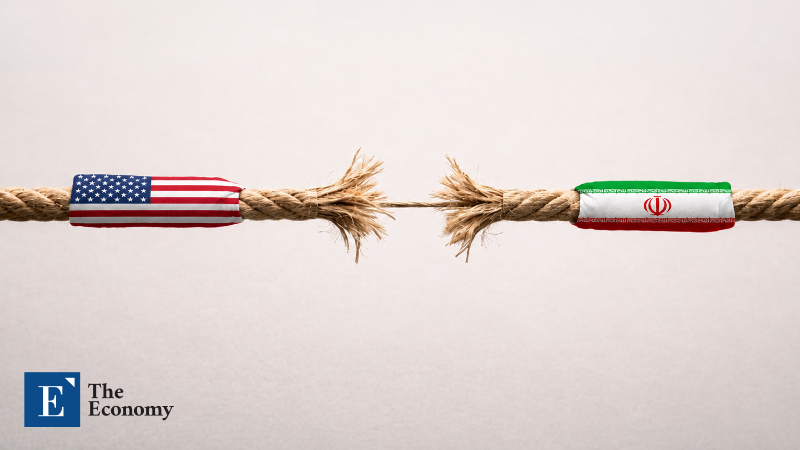
The United States and Iran have once again entered into direct military confrontation. After Iran attacked commercial vessels near the Strait of Hormuz, undermining the intent of the memorandum of understanding (MOU) that ended hostilities last month, Washington responded by striking military targets inside Iran and revoking sanctions exemptions for Iranian oil, significantly escalating pressure on Tehran. The renewed confrontation is widely viewed as stemming from irreconcilable differences over the core issues underpinning the ceasefire negotiations, including the reduction of Iran's nuclear capabilities and control over the Strait of Hormuz.
U.S.-Iran Military Tensions Escalate
According to Reuters on July 8 (local time), U.S. Central Command (CENTCOM) announced that it had conducted precision strikes against more than 80 targets inside Iran the previous night. Using precision-guided munitions, U.S. forces struck Iran's air defense systems, command-and-control networks, coastal radar installations, anti-ship missile assets, and more than 60 Islamic Revolutionary Guard Corps (IRGC) fast attack craft deployed in and around the Strait of Hormuz. CENTCOM said the operation was intended to degrade Iran's capability to attack commercial shipping in the strategic waterway. "CENTCOM forces remain prepared to hold Iran accountable should it fail to comply with or adhere to the terms of the agreement," the command said.
On the same day, the U.S. Treasury Department's Office of Foreign Assets Control (OFAC) also announced the cancellation of a 60-day temporary general license, originally issued on June 21, that had authorized the production, delivery, and sale of Iranian crude oil. Washington's tougher stance followed Iran's attacks on three commercial vessels in the Strait of Hormuz between the night of July 6 and the morning of July 7. According to CENTCOM, the targeted vessels included the Qatari LNG carrier Al Rekayat, the Saudi oil tanker Wedian, and the Liberian-flagged tanker Cyprus Prosperity. The Al Rekayat reportedly faced the risk of explosion after a fire broke out in its engine room.
Iran swiftly condemned the U.S. actions. According to AFP, Iran's Foreign Ministry denounced Washington's decision to revoke sanctions relief on Iranian oil sales on July 7, calling it "a violation of the MOU intended to end the war." Immediately after the U.S. precision strikes, Tehran warned that "Iran strongly cautions against the consequences of America's violation of the agreement and will take resolute measures to protect its national interests and national security." On July 9, the IRGC announced through state broadcaster IRIB that "the Navy and Aerospace Force jointly carried out missile and drone operations," describing the attack as "the first phase of punitive retaliation against the United States." The statement identified Camp Arifjan and Ali Al Salem Air Base in Kuwait, along with the U.S. facilities at Juffair and Sheikh Isa in Bahrain, as targets.
Nuclear Disarmament Talks Go Nowhere
The renewed escalation between Washington and Tehran reflects the fact that ceasefire negotiations, which gained momentum last month, have effectively stalled. On July 8, U.S. President Donald Trump, speaking alongside NATO Secretary General Mark Rutte during the NATO Summit in Türkiye, remarked, "They're sickening people," adding, "I think the MOU with Iran is probably over." Referring to Iran's recent military actions, he also warned, "We will disable their power plants," adding, "We'll take out their desalination facilities if necessary, and we may even seize Kharg Island." Kharg Island serves as Iran's primary crude oil export terminal.
At the heart of the dispute lies Iran's nuclear disarmament. Although President Trump has cited multiple objectives for the conflict—including ending Iran's nuclear and missile programs, halting support for Iran-backed militant groups, and even regime change—the centerpiece of the actual agreement has been the verifiable reduction of Iran's nuclear capabilities. From Washington's perspective, the current negotiations therefore represent less the conclusion of the war than a strategic shift in achieving the primary objectives of its military campaign. For Tehran, however, abandoning its nuclear program—or placing its nuclear capabilities under a long-term international monitoring regime—would amount to relinquishing a critical pillar of regime security and negotiating leverage. The issue therefore represents an inherently irreconcilable clash of national interests.
The United States continues to reaffirm its position that Iran must never possess nuclear weapons. The White House stated that last month's MOU ensures that "Iran will never obtain a nuclear weapon," while President Trump reiterated at the NATO Summit on July 8 that "Iran will not have a nuclear weapon." Iran, by contrast, continues to insist that while it has no intention of developing nuclear weapons, it cannot abandon its nuclear program altogether. As a signatory to the Treaty on the Non-Proliferation of Nuclear Weapons (NPT), Tehran argues that it has the legitimate right to pursue nuclear energy for peaceful purposes and that any ceasefire negotiations must respect that right. Iran also maintains that while the level of uranium enrichment and the handling of enriched uranium stockpiles may be open to discussion, its fundamental right to enrich uranium itself is not negotiable.
Differences Over the Strait of Hormuz Remain Unresolved
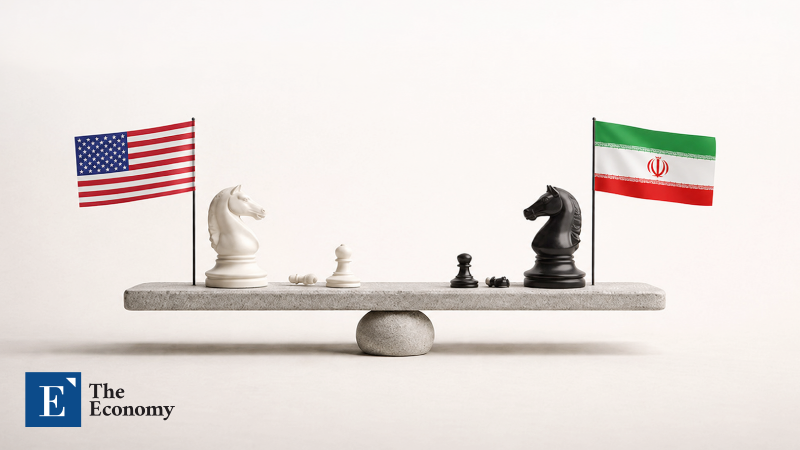
Differences over the Strait of Hormuz also remain far from resolved. Under the MOU, the United States maintains that free passage through the Strait of Hormuz should be guaranteed for at least 60 days and that this principle should be incorporated into the final agreement. Washington argues that, as an international waterway, the strait cannot be subject to transit charges imposed by any single country. Iran, however, contends that while transit fees may be suspended during the 60-day negotiation period, vessels passing through the Strait of Hormuz thereafter should be required to pay. Tehran is effectively seeking to redefine the payment not as a transit toll but as a fee for waterway management, maritime security, and navigation services.
Iranian officials have repeatedly emphasized this position. On June 30, Iranian Parliament Speaker Mohammad Bagher Ghalibaf stated that "free navigation through the Strait of Hormuz will only be permitted during the 60-day ceasefire negotiations with the United States," stressing that toll-free passage was not intended to be permanent. On July 4, Iranian Ambassador to China Abdolreza Rahmani Fazli likewise stated at the World Peace Forum in Beijing that "as a country whose territorial waters include the Strait of Hormuz, we will undoubtedly collect service fees." He added, "This is not a transit toll," explaining that the charges would cover "the cost of ensuring safe navigation, supervising maritime traffic, and addressing environmental damage caused by large commercial vessels." Fazli further noted, "Countries that have been friendly to us and stood by Iran, especially during difficult times, will certainly receive special consideration," adding that "China is clearly a friendly nation."
Meanwhile, Oman, which has served as a mediator between Washington and Tehran, recently submitted a formal proposal to the United States and several Western governments outlining a framework under which vessels using the Strait of Hormuz would pay service fees. Oman stressed that the payments would be voluntary rather than mandatory transit charges. The proposal is understood to draw on the Cooperative Mechanism employed in the Strait of Malacca and the Singapore Strait, where Indonesia, Malaysia, and Singapore jointly manage the waterways and receive financial contributions from shipping companies to support navigational safety and maritime security services. Oman, however, has emphasized that such a voluntary fee system can only be established with the consent of the Gulf states.
Similar Post