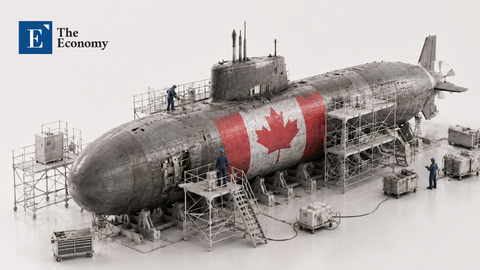
Canada's $43 Billion Submarine Program Awarded to Germany's TKMS, with NATO Integration and Technology Gap Proving Decisive

Authored On
Modified
Canada prioritizes NATO interoperability and Arctic security over operational certainty
South Korea's proven platform and rapid delivery timeline fall short
Continued reliance on German propulsion technology exposes remaining technological limitations
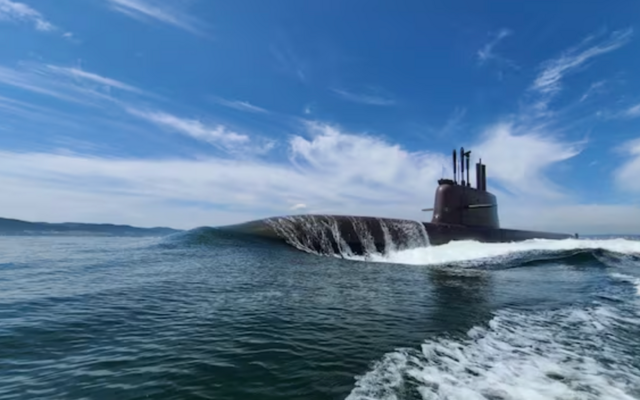
Germany's Thyssenkrupp Marine Systems (TKMS) has been selected as the preferred bidder for Canada's next-generation submarine acquisition program. South Korea's Hanwha Ocean and HD Hyundai Heavy Industries remained in contention until the final stage but ultimately failed to overcome Germany's advantage as a fellow member of the North Atlantic Treaty Organization (NATO). Industry observers also believe Canada's decision reflected the fact that, despite South Korea's rapid advances in submarine development, key source technologies—including critical propulsion systems—still rely in part on German expertise.
NATO Solidarity and Economic Benefits Emerge as Decisive Factors
The Globe and Mail reported on July 6 (local time), citing multiple sources, that the Canadian government had selected Germany's TKMS as the contractor for its next-generation submarine program. Although the final contract has yet to be signed, the selection effectively determines the winner under Canada's standard defense procurement process. The acquisition marks Canada's first purchase of new submarines since the Cold War era in the 1960s. The Royal Canadian Navy currently operates four secondhand submarines, but only one is generally considered mission-ready at any given time.
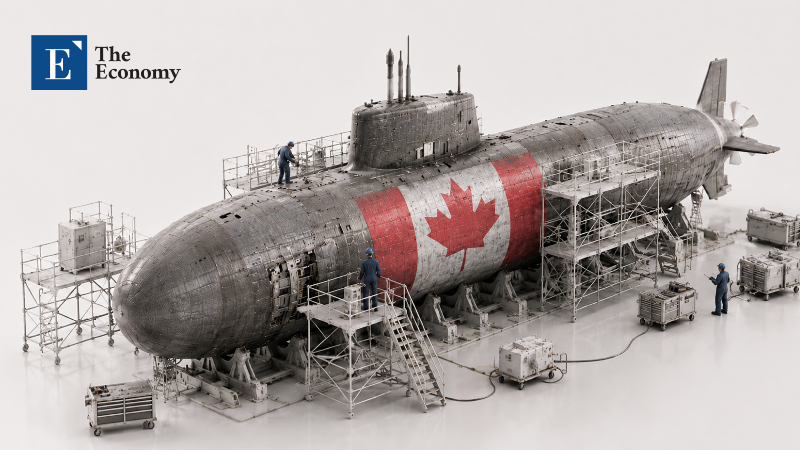
The initiative, known as the Canadian Patrol Submarine Project (CPSP), will replace the Royal Canadian Navy's four 2,400-ton Victoria-class submarines with up to 12 new diesel-electric submarines of approximately 3,000 tons each. The Canadian government expects the new fleet to provide simultaneous underwater operational capability across the Atlantic, Pacific, and Arctic regions. Construction costs alone are estimated at between approximately $14 billion and $21 billion, while total lifecycle expenses—including 30 years of operations, maintenance, and modernization—are projected to reach as much as approximately $43 billion.
South Korean shipbuilders competed head-to-head with Germany's TKMS until the final round. Hanwha Ocean promoted its KSS-III Batch-II submarine by highlighting rapid delivery, extended submerged endurance, and a vertical launch system (VLS). In May, the 3,000-ton Dosan Ahn Chang-ho submarine conducted a demonstration while crossing the Pacific Ocean, sharing battlefield information with the Royal Canadian Navy to showcase its performance and interoperability. Canadian authorities are understood to have concluded that both Hanwha Ocean's KSS-III Batch-II and TKMS's Type 212CD satisfied the military's operational requirements.
However, Canada's final decision was shaped not only by platform performance but also by broader strategic considerations, including security cooperation within the NATO alliance, the economic value offered to Canada, and the scale of industrial collaboration. Under the Donald Trump administration, Canada has faced sustained pressure to increase NATO defense spending and has pledged to raise defense expenditures to 5% of gross domestic product (GDP) by 2035. TKMS's Type 212CD was jointly designed by Germany and Norway for operations in northern waters, emphasizing NATO interoperability and Arctic operational capability as its key strengths. Joining the German-Norwegian submarine program ecosystem also represents the clearest demonstration of Canada's commitment to the broader European security network.
Canada's recent efforts to strengthen defense ties with Europe also worked in Germany's favor. In December last year, Canada became the first non-European Union country to join the EU's SAFE joint defense procurement initiative. The move underscored Ottawa's growing emphasis on defense-industrial cooperation with NATO and Europe amid mounting security uncertainty following the launch of the Trump administration. Germany also held the advantage in industrial offsets. Canada operates an Industrial and Technological Benefits (ITB) policy requiring defense contractors to generate domestic economic activity equal to 100% of contract value. Germany is understood to have proposed initiatives including critical minerals procurement and participation in the modernization of Arctic military facilities.
Germany Once Taught South Korea How to Build Submarines, with Critical Components Still Dependent on German Technology
South Korea likewise presented an extensive industrial cooperation package. Hanwha Ocean proposed partnering with Canadian companies to participate in the construction of floating liquefied natural gas (LNG) production facilities while working with the Automotive Parts Manufacturers' Association (APMA) to localize production of South Korean defense systems such as the K9 self-propelled howitzer and the Chunmoo multiple rocket launcher. The company also emphasized that cooperation with roughly 100 local firms could create tens of thousands of jobs annually. A study commissioned by Hanwha estimated that the project could generate approximately 22,000 direct jobs and deliver economic benefits exceeding approximately $43 billion.
Nevertheless, Canada's preference for Germany appears to have reflected its assessment of South Korea's level of technological independence in submarine development. South Korea entered the submarine era relatively late, introducing its first submarine only in 1992. Even North Korea commissioned its first submarine in 1963—nearly three decades earlier. Facing growing concerns over North Korea's expanding submarine fleet, Seoul established a dedicated submarine acquisition task force in the late 1980s and learned submarine construction technology from Germany's Howaldtswerke-Deutsche Werft (HDW). Daewoo Heavy Industries, which later became Daewoo Shipbuilding & Marine Engineering and is now Hanwha Ocean, acquired its submarine construction expertise from HDW—the predecessor of today's TKMS.
South Korea's localization rate in submarine development has steadily increased over the years, with domestic companies expanding their participation in key areas such as combat management systems, sonar, lithium-ion batteries, and hydrogen fuel cell-based air-independent propulsion (AIP) systems. However, the country continues to rely on Germany's MTU group for one of the most critical elements of a submarine's propulsion architecture—the diesel engine. Unlike conventional marine equipment, submarine engines play a far more strategic role. Diesel engines recharge onboard batteries while surfaced or operating under snorkel conditions, directly influencing underwater endurance, operational sustainability, and maintenance cycles. Should defects arise during service, diagnosis by the original manufacturer, parts supply, and technical personnel support must all be provided in tandem.
TKMS's Type 212CD enjoys a distinct advantage under these conditions. The German shipbuilder has built its reputation around propulsion systems integrating diesel engines with AIP technology while accumulating decades of operational experience with the Type 212 family. MTU submarine engines are currently in service with more than 20 navies worldwide, giving Germany a well-established ecosystem for long-term maintenance and spare parts support. South Korean shipbuilders have sought to address after-sales support concerns by expanding cooperation with German firms, but as long as control over the original propulsion technology remains in German hands, prospective customers are likely to question whether South Korean contractors can independently provide full life-cycle support.
German Engineering Continues to Drive Success in Global Submarine Competitions
Germany also maintains a technological edge. Since the 1960s, TKMS has developed conventional submarines and exported more than 180 vessels to over 20 countries. Its Type 209 submarines serve with the navies of South Korea, Greece, Türkiye, Indonesia, Peru, and numerous other nations, while the successor Type 212 and Type 214 classes have entered service in Germany, Italy, Portugal, Greece, Singapore, and elsewhere. Decades of accumulated maintenance data and operational experience from navies around the world operating the same family of platforms constitute a competitive advantage that newer entrants cannot replicate within a short period.
Germany has therefore continued to dominate major export competitions. In April, the Indian Navy finalized price negotiations after selecting the TKMS-Mazagon Dock Shipbuilders Limited (MDL) consortium as the preferred bidder for its next-generation Project-75I submarine program, valued at approximately $10.5 billion. Alongside the contract, the Indian government moved forward with an intergovernmental agreement (IGA) encompassing technology transfer, personnel training, and long-term logistical support as a single package. The decision underscored India's emphasis not only on submarine performance but also on decades of technical support and operational sustainability.
Singapore offers another example of Germany's technological leadership. After signing a contract with TKMS in 2013 for two Type 218SG submarines, Singapore ordered two additional boats of the same class in 2017. In 2025, it placed yet another order for two more submarines based on the identical platform to prevent a capability gap, expanding the fleet to six vessels. The Type 218SG was newly designed based on the Type 212 and Type 214 technologies while incorporating the Singapore Navy's operational requirements, including shallow and congested waters, hot and humid tropical conditions, and long-range missions. A high degree of automation also enables the submarines to be operated with relatively small crews.
Germany has likewise maintained its presence in localized construction and mid-life modernization programs. The Turkish Navy adopted a domestic construction model at the Gölcük Naval Shipyard for six Reis-class submarines based on the German Type 214 design. It received the lead boat, Piri Reis, in August 2024 and is scheduled to take delivery of the second vessel, Hızır Reis, in November 2025. Greece, after introducing Type 214 submarines in the early 2000s, again partnered with TKMS for its recent mid-life modernization program. The Israeli Navy has also operated TKMS-built Dolphin-class submarines for many years, while construction of the first next-generation Dakar-class submarine commenced in 2024.
Collectively, these cases demonstrate that Germany's submarine industry possesses comprehensive capabilities spanning the entire life cycle—from new construction and localized production to modernization programs and tailor-made platform design. "South Korean submarines have unquestionably advanced to the point where their construction technology and platform integration capabilities challenge Germany's," one defense industry expert said. "However, certain core technologies, particularly in propulsion systems, still depend on Germany. South Korea has entered the ranks of the world's leading submarine builders, but it is still premature to conclude that it can fully replace Germany."
Similar Post