"Even Lamborghini Is on the Table" Volkswagen Wields the Axe With 100,000 Job Cuts, Shutters German Plants in Sweeping Overhaul

Authored On
Modified
Restructuring Expanded Through 100,000 Job Cuts and Plant Closures
Cash Generation Through Divestment of Marine Engine Unit and Sports Assets
Strategic Reassessment of Core Premium Brands
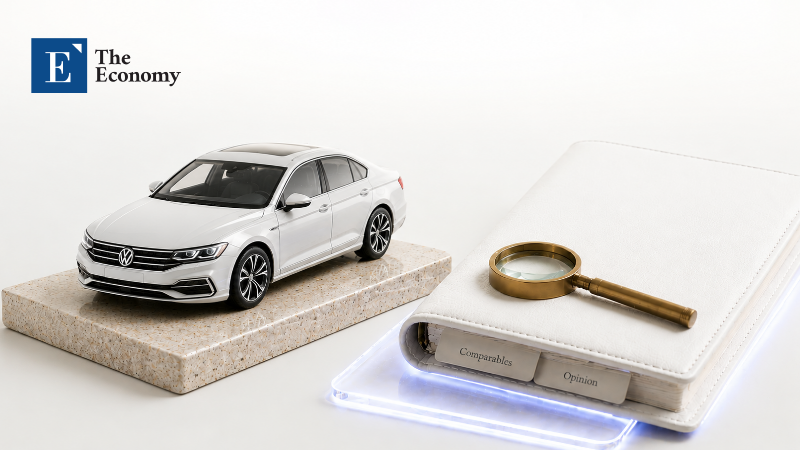
Volkswagen, the iconic standard-bearer of Germany's automotive industry, has embarked on the largest restructuring program in its history. In addition to plans to eliminate 100,000 jobs worldwide and close multiple factories, the automaker is pursuing a broad-based corporate overhaul by reviewing the sale of its marine engine business, divesting sports-related assets, and exploring strategic options for its premium brands. As sluggish sales and deteriorating profitability persist, analysts say Volkswagen's sense of urgency has reached the point where even some of the group's most symbolic assets are being considered for restructuring.
Aggressive Restructuring and Corporate Transformation
According to the Financial Times (FT) on July 2 (local time), Volkswagen CEO Oliver Blume plans to present a restructuring proposal to the group's supervisory board on July 9 that calls for eliminating 100,000 positions from its global workforce of 657,000 employees and shutting down four additional manufacturing plants. The proposal represents a substantial expansion from the restructuring agreement reached with labor unions in 2024, under which Volkswagen agreed to eliminate 35,000 jobs in Germany and halt vehicle production at two factories. If implemented, the plan would rank among the largest corporate restructurings in the history of the global automotive industry. It would far exceed General Motors' workforce reduction of roughly 74,000 employees in the 1990s and IBM's 60,000-job cut in 1993.
Volkswagen's decision to pursue sweeping workforce reductions reflects shrinking sales across the global automotive market. Although the company remains the world's second-largest automaker by production behind Toyota, its underlying business has been under pressure for years. Global vehicle sales fell from 11 million units in 2019 to around 9 million last year. Operating profit plunged 53.5% year over year in 2025, while its operating margin dropped to just 2.8%, leaving the company with only razor-thin earnings on vehicle sales. Hyundai Motor Group has nearly caught up in global sales volume and has already surpassed Volkswagen in operating profit. Conditions have remained challenging this year as well. Volkswagen Group's vehicle sales declined 4% year over year in the first quarter, including a steep 14.8% drop in China, the world's largest automotive market.
In response, Volkswagen has begun downsizing its manufacturing footprint, including the closure of its Dresden plant in Germany. Facilities in Hannover, Zwickau, Emden, and Neckarsulm are also under review for potential closure. Industry observers believe these plants could be phased out as production cycles for their current vehicle models come to an end. In addition, Volkswagen is reportedly seeking buyers for its Osnabrück plant, one of the group's key production facilities.
Divestment of Non-Core Assets Accelerates
The company is also accelerating the sale of non-core businesses. Last month, Volkswagen signed an exclusive agreement with U.S. private equity firm Bain Capital to sell a 51% stake in Everllence, formerly MAN Energy Solutions, its marine engine business. The transaction is structured as a leveraged buyout (LBO) and values the company at approximately $17 billion. Volkswagen expects to receive roughly $8.7 billion in proceeds while retaining the remaining 49% stake, allowing it to benefit from any future increase in the company's valuation.
Everllence is a global leader in large marine engines and power-generation equipment. Its valuation has surged amid rapidly growing demand for large-scale power generation systems driven by the expansion of artificial intelligence (AI) data centers. Bain Capital ultimately prevailed in a competitive bidding process that also included EQT and CVC Capital Partners, with the final transaction reportedly closing at a valuation above initial market expectations.
Signs are also emerging that Volkswagen is scaling back its sports marketing activities. The company is reportedly reviewing the sale of its stakes in Bayern Munich (8.3%) and VfB Stuttgart (10.4%), which are held through its subsidiaries Audi and Porsche. Volkswagen acquired its stake in Bayern Munich for approximately $106 million in 2009 and became a shareholder in Stuttgart in 2023 through an investment of approximately $53 million. Given Volkswagen's longstanding status as one of the most prominent corporate supporters of German football, divesting these holdings would carry considerable symbolic weight.
The company may also reduce the scale of its sponsorship commitments. Volkswagen has long spent more than approximately $118 million annually on sports marketing, sponsoring the German national football team as well as multiple Bundesliga clubs. However, as the company moves forward with sweeping restructuring measures, its advertising and sponsorship budgets have reportedly become subject to a comprehensive review. Industry observers believe even Volkswagen's long-established sports sponsorship strategy will likely undergo significant changes as part of broader cost-cutting efforts.
Volkswagen Advisory Board Recommends Ducati Sale and Lamborghini IPO
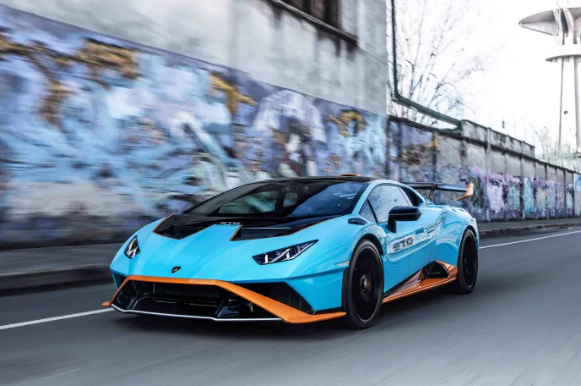
The restructuring drive is now extending to the group's premium brands. According to the Financial Times, Volkswagen's advisory board has once again proposed raising capital through either the sale of motorcycle manufacturer Ducati or an initial public offering (IPO) of supercar maker Lamborghini. Discussions have reportedly gained momentum following Volkswagen's partial divestment of Everllence. Industry analysts believe the stronger-than-expected valuation achieved in the Everllence transaction has encouraged the advisory board to revisit the Ducati and Lamborghini options.
Volkswagen acquired Lamborghini through Audi in 1998 for approximately $110 million and purchased Ducati in 2012 for approximately $909 million. Bloomberg Intelligence currently values Lamborghini at more than $22 billion, while the luxury automaker generated approximately $888 million in net profit last year despite the impact of U.S. tariffs.
This is not the first time Volkswagen has explored strategic options involving Ducati and Lamborghini. In 2017, following the Dieselgate emissions scandal, the company hired investment bank Evercore to advise on a potential Ducati sale as it sought to raise funds for its electrification strategy. Bain Capital, PAI Partners, Polaris, Investindustrial, and Italy's Benetton family were all mentioned as prospective bidders, while market estimates placed Ducati's valuation between approximately $1.5 billion and $1.7 billion. However, the sale process was ultimately abandoned after facing strong opposition from German labor unions and employee representatives on Volkswagen's supervisory board.
Lamborghini has likewise been discussed repeatedly as a potential capital-raising vehicle. Following Porsche's successful IPO in 2022, speculation surrounding a Lamborghini listing continued to surface, but Volkswagen declined to proceed, citing the brand's exceptional profitability and strategic importance. The company also reviewed Lamborghini's future in 2020, though the supervisory board ultimately decided to retain the marque within the group. In 2021, a consortium comprising Switzerland's Quantum Group AG and UK-based Centricus Asset Management submitted an offer of approximately $8.8 billion to acquire Lamborghini, but Volkswagen rejected the proposal, stating that "Lamborghini is not for sale."
For now, however, industry consensus suggests that an actual sale remains unlikely. With Europe's automotive sector facing weakening electric vehicle demand, intensifying competition from Chinese manufacturers, and mounting pressure from U.S. tariffs, few strategic or financial investors are in a position to pursue acquisitions of this magnitude. In Lamborghini's case, where the company's valuation runs into the tens of billions of dollars, the pool of potential buyers is exceptionally limited. As a result, market participants increasingly view the discussions as a means of preserving financing flexibility rather than signaling an imminent transaction. Moreover, given that German labor unions and employee representatives on Volkswagen's supervisory board strongly opposed similar asset sales in the past, any renewed attempt would almost certainly face substantial resistance once again.
Similar Post