Humanoids Accelerated Into the Field by Low-Cost Chinese Competition, Yet Major Hurdles Remain Before Full Commercialization

Authored On
Modified
Airport, Factory and Warehouse Deployment Turns Industrial Sites Into Humanoid Testing Grounds
Productivity and Safety Validation Remain Inadequate as Expectations Outpace Reality
Battery Innovation and Embodied Data Among Key Challenges Yet to Be Solved
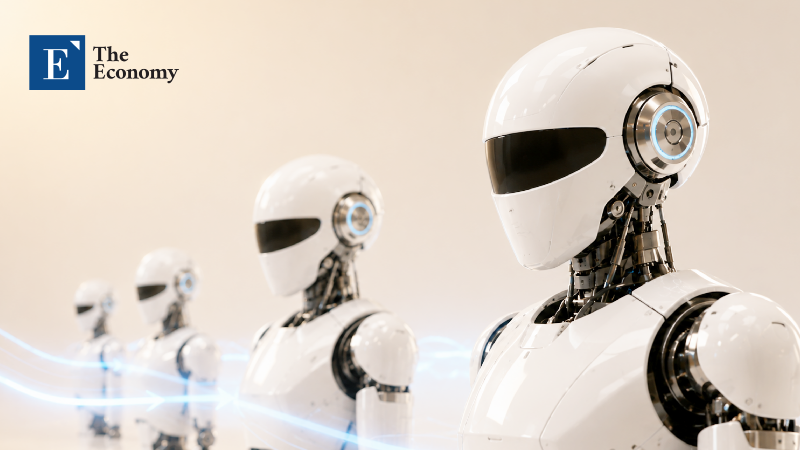
Humanoid robots have begun moving beyond laboratories and into industrial environments. A combination of aggressive low-cost competition from Chinese manufacturers and expanding pilot programs by global industrial companies is accelerating the race to deploy robots across worksites. Yet significant technological gaps remain before humanoids can achieve the productivity levels required in real-world operations. Academic experts generally contend that large-scale commercialization remains a distant prospect, as critical challenges involving task coverage, battery performance and dexterous manipulation capabilities remain unresolved.
Active Deployment Across Industrial Sites, From Baggage Handling to Battery Cell Stacking
According to robotics-focused publication The Robot Report on June 3 (local time), JAL Ground Service, a subsidiary of Japan Airlines, and GMO AI & Robotics this month launched a proof-of-concept trial at Haneda Airport using humanoid robots developed by China's Unitree. Through 2028, the companies plan to gradually assess how effectively robots can assist with physically demanding tasks such as baggage and cargo loading and unloading. As labor shortages worsen due to population aging, the strategy assigns humans to core responsibilities such as safety management while robots handle repetitive and labor-intensive work.
At Sharp Group's recycling facility in Rainham, East London, the humanoid robot "Alpha," developed by China's RealMan Robotics, is being trained to sort waste materials. The facility processes up to 280,000 tons of recyclable waste annually, yet worker turnover reaches 40% because of severe dust and noise conditions. A British robotics company is testing a model in which Chinese-made robotic platforms are modified for real-world recycling operations and deployed directly onto sorting lines.
Humanoid robots have also entered Germany's automotive industry. BMW announced that Figure AI's Figure 03 robot has transitioned to a commercial contract at its Spartanburg, South Carolina plant in the United States, operating at a rate of $25 per robot hour. During an 11-month pilot period, two Figure 02 robots participated in the production of more than 30,000 BMW X3 vehicles while achieving component placement accuracy exceeding 99%. Based on those results, BMW signed an expanded contract covering 40 Figure 03 units.
BMW also announced Europe's first humanoid robot factory deployment on February 27 by introducing Hexagon Robotics' "AEON" robot at its Leipzig plant in Germany. Standing 165 centimeters tall and equipped with 22 sensors, AEON performs physically demanding tasks such as high-voltage battery assembly and is scheduled to expand into a full-scale mass-production pilot program this summer. Mercedes-Benz has deployed Apptronik's "Apollo" humanoid robot at its Berlin Digital Factory Campus and its Kecskemét facility in Hungary for logistics automation.
China is also introducing humanoid robots onto production lines. In late March, SAIC-GM, the joint venture between SAIC Motor and General Motors, deployed the wheeled humanoid robot "Nengzai No. 1" on the battery mass-production line for the Buick Electra E7. Jointly developed by SAIC-GM and Shanghai robotics startup AgiBot, the robot is responsible for lifting and stacking battery cells. SAIC said the system reduces worker exposure to hazardous electrical tasks while enabling more flexible production line operations within a smaller footprint than conventional automation equipment.

Skepticism Dominates Outlook for Large-Scale Commercialization
Although the pace of humanoid robot deployment in industrial settings has accelerated sharply this year, skepticism remains widespread regarding full-scale commercialization. The industry's largest bottleneck lies not in cost but in task coverage. Current humanoid robots can walk, lift objects and transport them to designated locations, but many experts argue they remain incapable of handling the irregular situations and complex decision-making routinely performed by human workers. Real-world workplaces are inherently unpredictable. Components may be slightly misplaced, workers alter movement paths, packaging materials tear and equipment unexpectedly stops. If humanoids cannot independently recognize and respond to such variables in a reliable manner, increased supervision requirements and rework costs will inevitably dilute the benefits of deployment.
This reality helps explain Tesla's decision to delay production of its Optimus humanoid robot. Until last year, Tesla Chief Executive Officer Elon Musk had expressed strong confidence regarding Optimus' early commercialization. During an earnings call on December 15 last year, he stated, "I am confident that thousands of Optimus robots will be doing useful work in factories this year," while also mentioning plans to produce 10,000 units annually. In June 2024, Tesla's official account promoted videos showing two robots autonomously performing factory tasks.
However, Musk's tone changed dramatically during the company's earnings call in January this year. He acknowledged that "we are still in the early stages of Optimus and remain essentially in an R&D phase." He added, "We have experimented with basic factory tasks, but as we repeatedly build new versions, older models are being discarded," and emphasized that "it is not being used in factories in a meaningful way." The remarks effectively amounted to an admission that the robots are currently performing little more than repetitive learning exercises rather than independently providing productive labor.
Commercialization Timeline Hinges on Achieving Advanced Dexterity
Numerous additional challenges continue to delay commercialization. Both industry and academic experts identify continuous operating time as one of the most significant obstacles facing humanoid robots. Most current humanoids can operate for only two to four hours on a single charge, far short of the eight-to-twelve-hour operating requirements typical of industrial environments. The resulting excessive downtime prevents robots from achieving productivity comparable to human workers. Batteries remain the principal constraint, and experts generally believe humanoid deployment will remain confined to pilot programs until substantially longer operating durations become possible.
Data collection presents another formidable challenge. Generative AI benefits from vast quantities of readily available data, whereas physical systems face different limitations. Autonomous vehicles generate approximately 25 gigabytes of data per day, while aircraft engines generate around 20 terabytes per hour, yet much of this information remains underutilized. The issue stems not from a lack of data but from an inability to synthesize disparate sensor streams into actionable intelligence. Safety validation presents an additional dilemma. Existing safety certification frameworks cannot easily be applied to AI systems because of limited transparency, errors, bias and unpredictability. Since it is impossible to guarantee exactly how a robot will behave in a given environment, entirely new approaches to safety assurance are required.
Limitations in dexterous manipulation and mobility also remain major barriers to widespread commercialization. These two areas simultaneously represent the most critical domains for improvement and some of the most technically challenging capabilities to achieve. Current humanoid robots remain significantly behind human performance in both categories, with the gap becoming particularly apparent in unstructured environments.
These differences are primarily evident across three dimensions: mechanical characteristics, sensorimotor capability and learning efficiency. Mechanical limitations are especially pronounced in robotic hands. Human hands possess approximately 20 to 27 degrees of freedom and can perform a wide variety of actions including grasping, twisting and precision manipulation. Most robotic hands, by contrast, possess substantially fewer effective degrees of freedom. Multiple joints are often mechanically linked together, making independent control difficult and restricting operational flexibility. Robotic actuators also lag behind human muscles in force density, bandwidth and control performance. While robots can execute basic grasping tasks, they remain incapable of matching the level of fine manipulation routinely demonstrated by humans.
Sensorimotor capability also trails far behind human performance. Even after extensive training, humanoid robots struggle with closed-loop manipulation tasks, whereas humans possess highly sophisticated sensorimotor integration abilities that combine tactile, visual and other sensory inputs to guide movement. Furthermore, robots can approach human precision only within controlled environments and continue to exhibit significant limitations in dynamic work settings.
Challenges are equally apparent in learning efficiency. Experts identify closing the Sim-to-Real Gap as an urgent priority. Because humanoids possess limited generalization capabilities, they often require billions of simulated interactions before fully mastering a specific task. Overcoming this limitation will require robots to recognize their own deficiencies, establish goals and formulate strategies for improvement. Researchers must also advance tactile sensing skins—layered networks of electronic sensors that enable robots to perceive touch across their external surfaces—and improve kinematic designs by optimizing mechanical component alignment to enhance motion control.
Ultimately, achieving all of these advances will require breakthrough innovation in high-performance actuators and high-density multimodal sensing technologies, such as systems that combine thermal and tactile inputs with camera-based vision. Equally important will be AI models trained on massive embodied datasets that allow humanoids to learn through experience. Although recent progress has been made in efficient actuators, adaptive robotic hands and foundation models specialized for physical interaction, the industry still faces a long road before closing the capability gap between humans and machines.
Similar Post