With Reciprocal and Global Tariffs Blocked, U.S. Turns to ‘Forced Labor’ Card, Recasting Trade Barriers Under Fairness Rationale

Authored On
Modified
USTR Releases Section 301 Investigation Findings
Tariffs Previewed Over Insufficient Forced-Labor Import Controls
Move Pursued as Substitute After Reciprocal Tariffs Ruled Unlawful
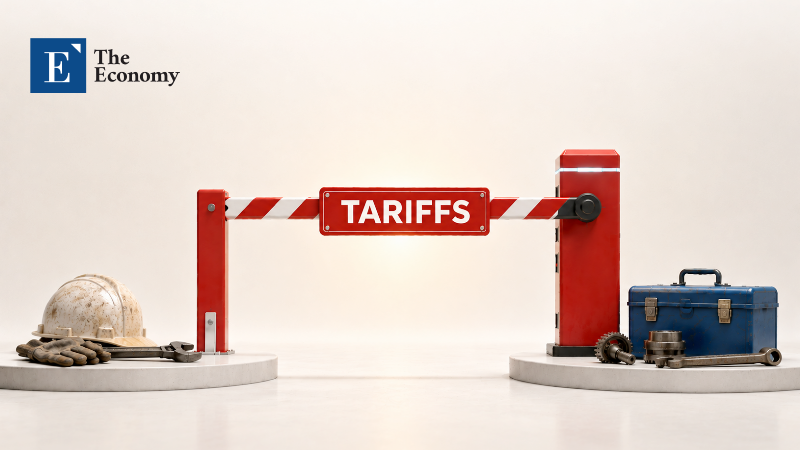
The administration of U.S. President Donald Trump is accelerating the introduction of a new tariff framework to replace reciprocal tariffs invalidated by a Supreme Court ruling. The strategy relies on Section 301 of the Trade Act, which allows Washington to respond to unfair foreign trade practices, and seeks additional tariffs on the grounds of inadequate controls on imports of forced-labor goods and structural overcapacity. Although the measure is framed as an effort to block the inflow of products made with forced labor, it is widely viewed as a new trade-pressure mechanism designed to circumvent judicial constraints on the administration’s earlier tariff policy.
54 Economies Classified for 12.5% Tariff Application
According to Bloomberg on June 3 local time, the USTR announced the previous day a plan to impose additional tariffs ranging from at least 10% to as much as 12.5% on more than 60 trading partners. The core of the proposal is a differentiated tariff structure based on each country’s rules and enforcement level concerning forced-labor imports. South Korea was placed in a group of 54 economies deemed to have failed both to introduce and effectively enforce import bans on goods produced with forced labor, making it subject to a 12.5% tariff. The same group includes China, Japan, Australia, Brazil, Malaysia, Norway, Russia, Saudi Arabia, Singapore, Switzerland, Taiwan, Thailand, Turkey, the United Kingdom and Vietnam, along with most of the economies under review.
By contrast, Canada, Ecuador, the European Union, Indonesia, Mexico and Pakistan — six economies that have implemented, pledged to implement or partially introduced relevant import-ban regimes — were proposed for a 10% tariff. The USTR argued that the economies under investigation had failed to properly block market access for goods produced with forced labor. It also stated that U.S. companies and workers had been forced into unfair competition with foreign producers that enjoy artificially low costs. On overcapacity, the office said excessive production in various countries had created global trade imbalances and inefficiencies, inflicting damage on U.S. industries and the labor market.
The Trump administration’s attempt to impose additional tariffs on the grounds of tolerating forced labor is intended to replace reciprocal tariffs that the Supreme Court ruled unlawful in February this year. After the ruling, the administration quickly activated a 10% global tariff under Section 122 of the Trade Act as a stopgap measure, but that measure can remain in place for only up to 150 days without congressional approval and is set to expire on July 24.
The alternative tariff instrument now being deployed is Section 301 of the Trade Act. Section 301 grants the executive branch authority to respond to unfair foreign government policies and practices through measures including tariffs. Immediately after the Supreme Court ruling, the USTR launched two Section 301 investigations. One is the now-completed probe into “failure to regulate imports of goods linked to forced labor,” and the other concerns “structural overcapacity.” Since April, the Trump administration has proceeded through congressional hearings and other steps before first announcing the forced-labor-related tariff plan. The USTR website also lists “failure to introduce and enforce bans on imports of products produced by forced labor” and “structural overcapacity in manufacturing sectors” as Section 301 investigation categories.
Absence of Specific Cases, Thin Evidentiary Basis
Yet the USTR’s “Report on Section 301 Investigation: Failure to Introduce and Enforce Ban on Imports of Products Produced by Forced Labor” contained little concrete evidence. The section on South Korea consisted of only one paragraph. It was a formulaic statement saying South Korea’s failure to introduce and enforce a forced-labor import-ban regime burdens U.S. commerce. The same language was applied to the other 53 countries, with only the country names changed.
The only case in which South Korea was mentioned in any detail concerned solar materials allegedly used to reroute forced-labor-linked products into the United States. The USTR noted that China exports polysilicon wafers, a key material used in solar panels, mainly to cell manufacturers in South Korea, Thailand and Vietnam. It claimed that major trading partners had imported polysilicon wafers suspected of being made with forced labor from China and then attempted to bring them into the U.S. market through circumvention routes. But the report merely asserted that “the risk is extreme” because presumed forced-labor polysilicon is so widespread in the market, without explaining what that “extreme risk” actually entails or its scale. It even added the caveat that not all Chinese polysilicon exports and downstream U.S. imports are necessarily products of forced labor.
The same pattern appeared in other cases. Section 301 allows tariffs only when U.S. commerce is found to have been harmed by unfair trade practices. Given its sweeping authority with no tariff ceiling, specific evidence is required. Yet the USTR attached caveats in case after case, including “although it cannot be determined that all such products are produced by forced labor” and “although the clandestine nature of forced labor makes its true scale unknown.” In effect, the office itself stopped short of concluding that the decline in U.S. market share was entirely attributable to forced labor.
The report also acknowledged that China’s shift from U.S. beef to Brazilian beef may have been affected by “sanctions and the 2019 retaliatory tariffs,” while still claiming that cost reductions from forced labor caused the decline in U.S. imports. It provided no concrete data showing that Brazilian beef should be regarded as a forced-labor-linked product.
Moreover, the products exempted from the additional tariffs were unrelated to forced labor. The report said products would be excluded if they were already subject to product-specific tariffs, if tariffs could disrupt U.S. supply of key raw materials, if the United States lacked sufficient domestic production capacity, or if tariffs could shock the broader economy. In other words, tariffs are being imposed on the grounds that countries have failed to take measures against forced labor, while the exemption criteria themselves have little connection to preventing or deterring forced labor. The exemption list includes electronics, integrated circuits and displays produced in Asia, including South Korea, Taiwan, Japan and China, even though the report also described such products as “products linked to forced labor.”
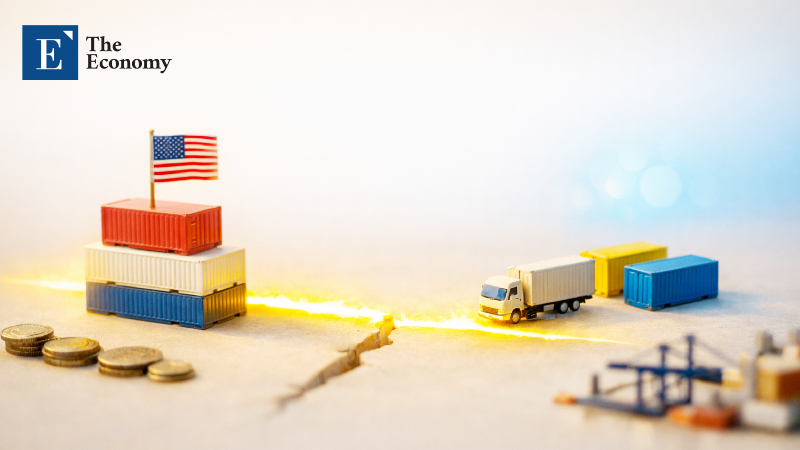
Forced-Labor Frame Erases Tariff Vulnerabilities, Builds New Political Defense Line Against Democrats
Even so, experts expect the additional tariff proposal to secure Democratic support at the hearing scheduled for June 7. During the Biden administration, Democrats enforced the Uyghur Forced Labor Prevention Act as a core supply-chain regulation, while the U.S. Labor Department and State Department have also defined blocking goods linked to forced labor in Xinjiang from entering the U.S. market as a major pillar of foreign economic and human-rights policy. Blocking forced-labor imports has already become a bipartisan trade agenda in Washington, combining China containment, human-rights diplomacy and labor-rights protection.
The UFLPA, in particular, has served as a symbolic example of “values-based trade” that Democrats have used to distinguish their approach from Trump-style protectionism. Through the UFLPA, the Biden administration applied a forced-labor presumption to goods produced in Xinjiang, while the Department of Homeland Security and Customs and Border Protection expanded import detentions and corporate sanctions centered on key products such as cotton, tomatoes and polysilicon. For Democrats, appearing to weaken forced-labor regulation itself would risk undermining the legitimacy of the human-rights- and labor-centered trade policy architecture they built.
Pressure from U.S. labor groups also narrows the Democrats’ room for maneuver. Forced labor is both a human-rights issue and an industrial-policy argument that low-wage, lightly regulated imports erode U.S. manufacturing jobs. That is a frame difficult for labor unions and manufacturing workers, core Democratic constituencies, to ignore. Democrats may challenge the tariff mechanism, but rejecting the policy goal of blocking forced-labor-linked supply chains would likely expose them to backlash from both labor groups and human-rights organizations.
Bipartisan consensus on China containment also strengthens the political defensibility of the tariff plan. Over the past several years, Congress has hardened its stance on China over forced labor in Xinjiang, advanced-technology supply chains and strategic-industry subsidies. Forced-labor regulation sits at the intersection of Republican protectionism and Democratic human-rights and labor agendas, offsetting much of the political constraint the Trump administration faced after the reciprocal-tariff ruling. Existing reciprocal tariffs were vulnerable to criticism over inflation, heavier consumer burdens and deepening conflict with allies, while the forced-labor frame simultaneously secures the rationale of human rights, labor rights and supply-chain transparency. Even if Democrats criticize the tariffs themselves, the structure makes it difficult for them to reject the broader policy objective of blocking forced labor.
- Previous China Tightens Outbound Investment Controls From Technology Transfers to Equity Markets, as the EU Raises Regulatory Barriers to Prevent a ‘Second Nexperia Case’
- Next Humanoids Accelerated Into the Field by Low-Cost Chinese Competition, Yet Major Hurdles Remain Before Full Commercialization
Similar Post