"From Education to Advanced Industry": Gulf Capital Flows Into China, Rewriting a Partnership Once Anchored in Oil Trade

Authored on
Modified
Growing demand for education in the Gulf is shifting toward China, while Chinese technology is gaining increasing prominence
Gulf sovereign wealth funds are steadily expanding their China-focused investment portfolios
China’s rapidly advancing high-tech industries, led by artificial intelligence (AI), are driving notable improvements in trade performance
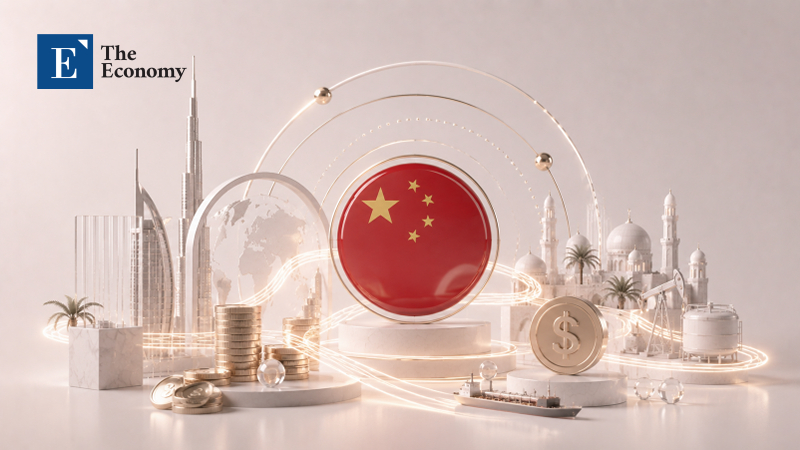
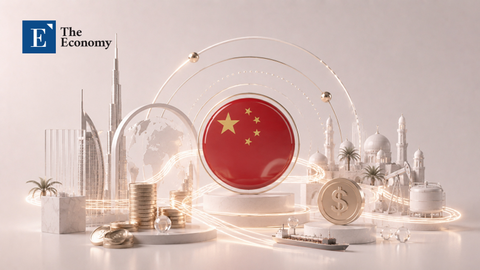
Capital from the Middle East’s Gulf region is increasingly flowing into China. Demand from ultra-high-net-worth families for educational opportunities is surging, while the adoption of Chinese technology and the expansion of local investments continue to accelerate, reshaping the framework of engagement between the two sides. At the center of this trend lies the rapid growth of China’s advanced industries, particularly in artificial intelligence (AI).
Gulf States Reach Out to China
According to a report by the South China Morning Post (SCMP) on June 14, inquiries regarding educational and business training packages in China’s major technology hubs have risen sharply among upper-middle-class families and private schools from key Gulf Cooperation Council (GCC) countries, including the United Arab Emirates (UAE), Saudi Arabia, and Oman. Based on disclosures from Chinese immigration authorities and the UAE China Cultural Center, more than 150,000 visitors from the six GCC member states traveled to China last year, representing an increase of over 100% from the previous year. A new educational network is emerging around China rather than other advanced East Asian economies such as South Korea and Japan. In this regard, Madi Yoo, head of the Korea office at Beijing-based Cheung Kong Graduate School of Business (CKGSB), stated, “The number of Chinese entrepreneurs visiting South Korea has declined, leading to changes in some aspects of our work,” adding, “We are increasingly introducing Chinese companies to foreign businesspeople who travel to China.”
This growing cooperation between the Middle East and China is also generating tangible changes across industries. Chinese advanced technology supply chains are beginning to combine with Middle Eastern capital to create synergies across multiple sectors. Abu Dhabi offers a prominent example. Abdullah Humaid Al Jarwan, Chairman of the Abu Dhabi Department of Energy, recently attended the 18th Shanghai International Water Exhibition and stated in an interview, “We intend to rapidly deploy China’s most advanced technologies in renewable energy, electric vehicles (EVs), and robotics throughout Abu Dhabi.” He explained that negotiations are currently underway with 22 Chinese technology companies, including EV battery giant CATL, regarding infrastructure projects.
Al Jarwan remarked, “The scale of high-tech expansion we witnessed within China’s value chains is extraordinary,” adding, “Chinese innovators are fully prepared to deliver tailored solutions ideally suited to Abu Dhabi’s harsh climate and infrastructure conditions. That is precisely the long-term objective we seek to achieve through capital deployment.” He also noted that an ultra-fast EV charging network in Abu Dhabi was completed in just six weeks, praising the speed and efficiency of Chinese supply chains. Abu Dhabi authorities plan to provide extensive support through streamlined logistics systems and favorable policy frameworks to attract Chinese companies and secure future growth opportunities.
China Evolves Into an Investment and Technology Partner
Middle Eastern capital flowing into China continues to expand steadily. Saudi Arabia’s Public Investment Fund (PIF), which manages nearly $1 trillion in assets, recently opened an additional office in Shanghai to strengthen its ability to execute overseas investment transactions within China. PIF has already invested $2 billion in Lenovo and established a joint investment fund with Shenzhen’s Futian District, bringing its cumulative investment in China to more than $22 billion. The Shanghai office is expected to serve not merely as a liaison center but as a hub for managing local networks and identifying new investment opportunities on an ongoing basis.
Abu Dhabi’s sovereign wealth fund Mubadala has also established a Beijing office and is reportedly considering consolidating its China-related assets into a new entity in partnership with fellow sovereign fund ADQ. Commenting on this trend, one market expert noted, “Many Middle Eastern sovereign wealth funds and family offices are already expanding their portfolios in China. While investments previously flowed into Chinese companies through Hong Kong, there is now a growing tendency to deploy local personnel directly in search of AI, semiconductor, advanced manufacturing, and new-energy companies.”
China, meanwhile, is gradually reducing its dependence on Middle Eastern countries. By strengthening its domestic energy supply chains and decreasing reliance on imported Middle Eastern crude oil, China is moving beyond its traditional role as a major customer. China is currently regarded as the world’s fastest-growing renewable energy market and continues to expand coal production to secure baseload power supplies. Last year, China’s annual solar power generation reached 366,010 gigawatt-hours (GWh), more than double the 176,680 GWh recorded in 2018. During the same period, coal production climbed to a record 4.83 billion tons.
The Rise of Chinese AI Reaches the World Cup
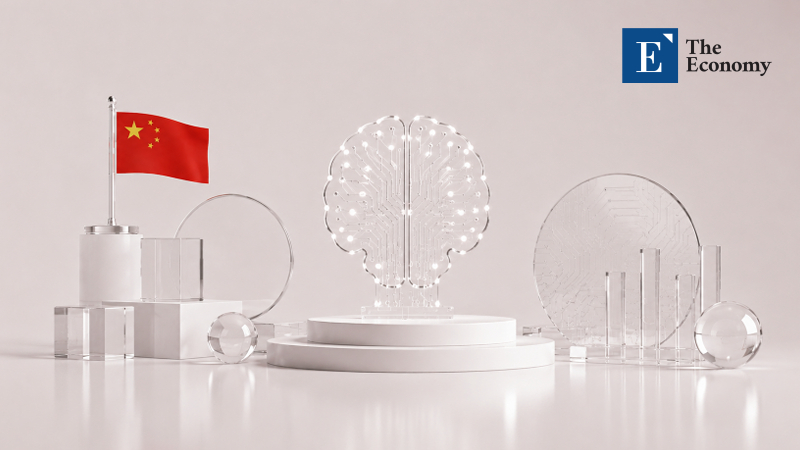
As ties between the Middle East and China are rapidly being redefined, the flow of Middle Eastern capital into China is expected to accelerate further. The rapid expansion of advanced industries such as AI has strengthened incentives for local investment. Just two or three years ago, the primary investment narrative surrounding China centered on EVs and batteries. Following the so-called “DeepSeek shock” in January of last year, however, the landscape shifted dramatically. DeepSeek, a Chinese AI startup, unveiled its proprietary reasoning model R1, sending shockwaves through the global AI market. The model delivered performance approaching that of large language models (LLMs) developed by U.S. technology giants, despite being built at a fraction of the cost. Within months, DeepSeek emerged as a flagship company within China’s AI sector, reinforcing global investor confidence that China could establish an independent AI ecosystem.
Beyond DeepSeek, numerous Chinese companies—including Alibaba, Tencent, Baidu, and ByteDance—have entered the AI race. Alibaba is targeting the enterprise AI market through its generative AI model Qwen, while Tencent has integrated its Hunyuan model into WeChat and cloud services. Baidu continues to enhance its search-based ERNIE model, and ByteDance, the parent company of TikTok, is expanding its consumer footprint through the AI chatbot Doubao. The Chinese government has also designated AI, alongside semiconductors, as a strategic national industry and continues to allocate substantial funding to the sector. These developments have fueled growing assessments that AI in China is evolving into a comprehensive national industrial ecosystem.
The influence of Chinese AI is becoming increasingly visible across global markets. One notable example is FIFA’s decision to deploy AI-powered football analytics services from Chinese technology giant Lenovo, an official technology partner, throughout the 2026 FIFA World Cup in North America. In many Global South markets, where budgets are constrained and AI infrastructure remains underdeveloped, China’s highly efficient free AI models have effectively become a de facto standard. Microsoft recently reported that DeepSeek commands market shares of approximately 56% in Belarus, 49% in Cuba, and 43% in Russia, while securing between 17% and 18% market share across major African economies. Chinese open-source AI models account for more than 60% of AI-related traffic across the Global South.
These developments have translated into an immediate improvement in China’s trade balance. The global AI boom has emerged as a significant tailwind for the Chinese economy. China’s General Administration of Customs recently announced that the country’s exports in May reached $376.78 billion, up 19.4% from the same month a year earlier. The figure significantly exceeded forecasts from both Reuters and Bloomberg, which had projected 15% growth. Imports totaled $271.35 billion during the same period, resulting in a trade surplus of $105.43 billion.
Similar Post