“New Beijing Fab” CXMT Accelerates Capacity Expansion and Enters LPDDR6 Race, but Results Remain Uncertain

As one of the youngest members of the team, Tyler Hansbrough is a rising star in financial journalism. His fresh perspective and analytical approach bring a modern edge to business reporting. Whether he’s covering stock market trends or dissecting corporate earnings, his sharp insights resonate with the new generation of investors.
Authored On
Modified
CXMT Builds New Beijing Fab Following Hefei and Shanghai Projects
LPDDR6 Race Heats Up Across Memory Industry as CXMT Accelerates Development
China’s Semiconductor Self-Sufficiency Stagnates, Raising Doubts Over Process and Equipment Capabilities
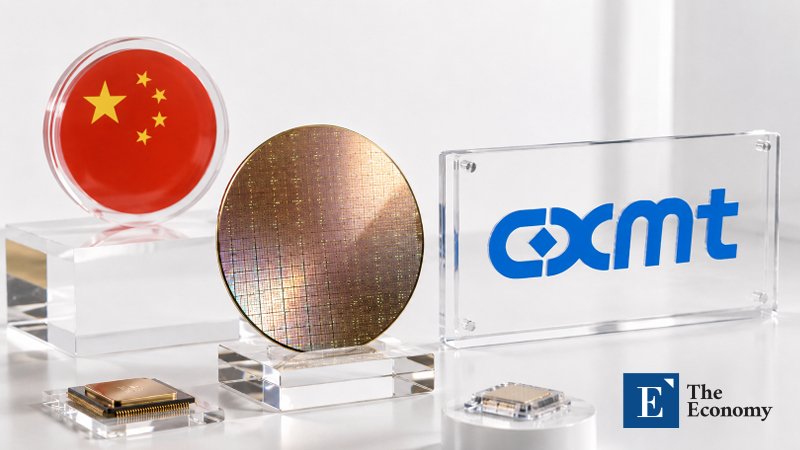
China’s ChangXin Memory Technologies (CXMT) is expanding its DRAM production capacity. Following the construction of new fabs in Hefei and Shanghai, the company is pursuing another production base in Beijing as part of an aggressive capital spending campaign. Market observers expect these facilities to focus on LPDDR6, which is poised to become the next major battleground in the commodity DRAM market. However, China’s semiconductor industry continues to face clear industrial and technological constraints, leaving the prospects for meaningful returns on these investments uncertain.
CXMT Renews Capacity Expansion Drive
Reuters reported on August 3 that CXMT is considering building its second memory semiconductor fab in Beijing. According to multiple sources cited by Reuters, CXMT is negotiating financing with the Beijing Economic-Technological Development Area for a 12-inch memory fab in Beijing’s Yizhuang district. CXMT is seeking at least $8.9 million in support from the development authority, while other state-owned technology companies have also expressed interest in the project. The negotiations remain at an early stage, however, and the size and structure of the financing package could change.
Reuters also reported that CXMT is constructing new fabs in Hefei, Anhui Province, where it is headquartered, and in Shanghai, while holding separate discussions with another local government over a third facility. Hefei serves as CXMT’s principal production hub and already hosts two operational 12-inch DRAM fabs, each with a monthly capacity of 100,000 wafers. If the new Shanghai and Hefei facilities and the broader expansion plan proceed as envisioned, CXMT’s monthly production capacity is expected to more than double from approximately 300,000 wafers to over 600,000.
LPDDR6 Race Moves Into High Gear
Market analysts widely expect the new fabs to emerge as LPDDR6 production bases. LPDDR6 is the sixth-generation standard for low-power DRAM used in smartphones and other devices, with the Joint Electron Device Engineering Council (JEDEC) finalizing the standard in July last year. It offers data transfer speeds of 10.67 to 14.4 gigabits per second (Gbps), alongside substantially higher bandwidth and power efficiency than LPDDR5X. “LPDDR6 is expected to expand beyond smartphones into artificial intelligence (AI) PCs, autonomous vehicles and edge AI devices,” one market source said. “It will become the next battleground in the commodity DRAM market.”
Global memory manufacturers have stepped up competition to secure an early lead in the next-generation LPDDR6 market. In March, SK hynix successfully developed a 16-gigabit (Gb) LPDDR6 product using its sixth-generation 10-nanometer-class 1c process. The company said shipments would begin in the second half of the year as it expands its portfolio of commodity memory products optimized for the AI era. Samsung Electronics unveiled its LPDDR6 product at the CES 2026 consumer electronics exhibition in January but has yet to announce a specific mass-production schedule. Micron also projected during its June earnings conference call that the center of DRAM demand would shift from LPDDR5 and DDR5 toward LPDDR6 and DDR6, although it disclosed no details about development progress or mass-production plans.
CXMT’s Development Progress
CXMT is also accelerating LPDDR6 development. Chinese financial news outlet Yicai reported on August 1, citing industry sources, that a key CXMT affiliate had nearly completed research and development (R&D) validation for LPDDR6 and had entered the final stage before mass production. The company is moving to commercialize the next-generation product less than a year after beginning mass production of its previous-generation LPDDR5X late last year. Some observers expect CXMT to begin supplying LPDDR6 within this year, with speculation mounting that it could become the first company worldwide to bring LPDDR6 to market.
CXMT’s LPDDR6 product reportedly supports data transfer speeds of up to 12.8Gbps. Although this falls short of the maximum 14.4Gbps offered by products under development at Samsung Electronics and SK hynix, CXMT’s price competitiveness and demand in China’s domestic market could provide it with a viable competitive position. The protracted memory supply crunch could also create an opening for CXMT. Surging investment in AI infrastructure has driven explosive demand for high-bandwidth memory (HBM) and server DRAM, straining the supply capacity of the world’s three largest memory manufacturers. If companies diversify their suppliers under mounting pressure to secure memory volumes, CXMT, the world’s fourth-largest DRAM producer, could capture a larger share of orders.
China’s Semiconductor Returns Lag Investment
It remains unclear whether CXMT’s aggressive investment campaign will become powerful enough to reshape the market. China’s semiconductor industry continues to face entrenched constraints. Its central vulnerability lies in a low self-sufficiency rate. When Beijing unveiled its “Made in China 2025” initiative in 2015, it set a target of raising the domestic supply rate for key components and materials to 70% by 2025. The semiconductor strategy similarly envisioned Chinese companies supplying a substantial share of domestic demand. The U.S.-China Economic and Security Review Commission, however, estimated that locally based manufacturers supplied only about 30% of the semiconductors used in China at the end of last year, less than half the original target. China’s integrated-circuit import data underscore this dependence. According to the Observatory of Economic Complexity (OEC), China purchased approximately $425 billion worth of integrated circuits from overseas last year, with a substantial portion comprising high-performance chips used in smartphones, servers, data centers and automobiles.
The concentration of industrial growth in mature process nodes presents another challenge. Data from the U.S.-China Economic and Security Review Commission show that Chinese companies’ share of global foundational semiconductor production capacity—commodity chips manufactured on mature process nodes of 28 nanometers or above—rose from 19% in 2015 to 33% in 2023. The pace was more than four times faster than the growth of global semiconductor demand over the same period. Yet Chinese companies accounted for only 11% of the value added across the global semiconductor value chain as of 2022. The disparity reflects expansion concentrated in comparatively low-value-added segments. “Competing in advanced semiconductors requires the accumulation of process technology and manufacturing equipment, as well as chip-design intellectual property, design tools, experience in joint development with customers and product-validation data,” an industry source said. “These requirements explain why the three largest memory manufacturers retain substantial influence in leading-edge processes and high-performance computing.”
Table 1. Constraints Facing China’s Semiconductor Industry
| Core vulnerability | Key figures and conditions | Implications |
|---|---|---|
| Low self-sufficiency | Chinese-made semiconductors accounted for approximately 30% of domestic procurement in 2025 | Far below the 70% target under “Made in China 2025” |
| Heavy import dependence | Integrated-circuit imports reached approximately $425 billion in 2025 | Persistent gap between domestic demand and locally supplied products despite capacity expansion |
| Concentration in mature processes | China’s share of global foundational semiconductor production capacity increased from 19% in 2015 to 33% in 2023 | Quantitative growth concentrated in commodity products manufactured at 28 nanometers or above |
| Low value added | China accounted for 11% of value added across the global semiconductor value chain in 2022 | Capacity expansion has yet to translate into high-value-added competitiveness |
| Underdeveloped advanced ecosystem | Deficiencies in design intellectual property, design tools, joint development experience and validation data | Global companies retain their influence in advanced chip design and high-performance computing |
Uncertain Progress in Lithography Equipment Self-Sufficiency
China’s limitations in semiconductor production equipment are equally pronounced. Reports from Bloomberg, Reuters and other international media indicate that China has recently accelerated efforts to produce indigenous semiconductor lithography equipment. Chinese state-owned enterprise Shanghai Aishengna Electronic Technology Group has reportedly absorbed teams from domestic lithography equipment startup Yuliangsheng and Shanghai Micro Electronics Equipment (SMEE), placing it at the forefront of China’s deep ultraviolet (DUV) lithography equipment program. The group aims to produce five lithography systems this year and 20 next year, with future deliveries planned for leading Chinese semiconductor manufacturers, including Semiconductor Manufacturing International Corporation (SMIC), Hua Hong Semiconductor and CXMT. Lithography systems are critical manufacturing tools that use light to etch microscopic circuit patterns onto semiconductor substrates, and Dutch company ASML effectively dominates the market. U.S. sanctions have severely disrupted China’s imports of ASML equipment since 2019.
Market analysts have cautioned against overstating this progress. Stéphane Houri, an analyst at French financial group ODDO BHF, said China’s manufacturing capabilities would probably remain confined to a narrow range of lower-end equipment. Global investment bank JPMorgan also concluded that Chinese systems lag ASML’s products in resolution, throughput, equipment stability and yield, making a near-term shift in the competitive landscape of the global lithography equipment market unlikely. When lithography equipment underperforms on an operational semiconductor production line, manufacturers must repeat process steps to produce the same circuitry, reducing wafer throughput and raising production costs. Frequent equipment failures and process deviations can also increase defect rates, further eroding commercial competitiveness.
As one of the youngest members of the team, Tyler Hansbrough is a rising star in financial journalism. His fresh perspective and analytical approach bring a modern edge to business reporting. Whether he’s covering stock market trends or dissecting corporate earnings, his sharp insights resonate with the new generation of investors.
Similar Post