Chinese Automakers Seek to Localize European Production Networks, but Industrial Sovereignty and High Costs Signal a Difficult Road Ahead

Authored On
Modified
BYD turns to local production in response to tighter restrictions on Chinese EVs
Approaches Renault in 2024 and 2025, seeking control beyond a conventional partnership
Localization strategy runs into defenses of management control, regional sourcing requirements and a high-cost production environment
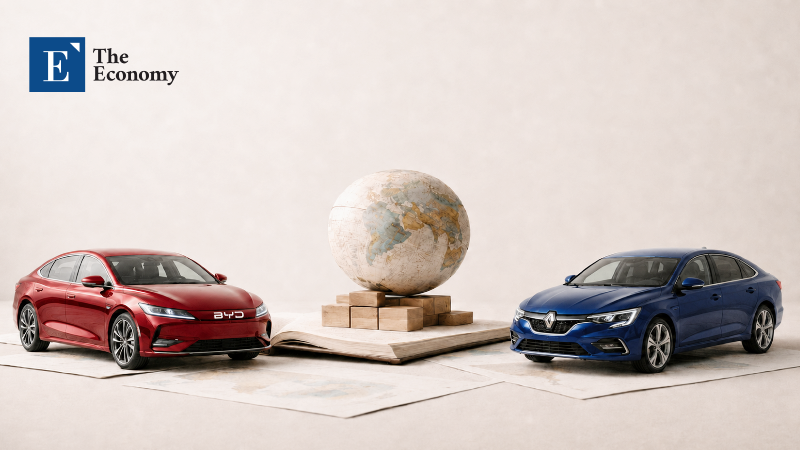
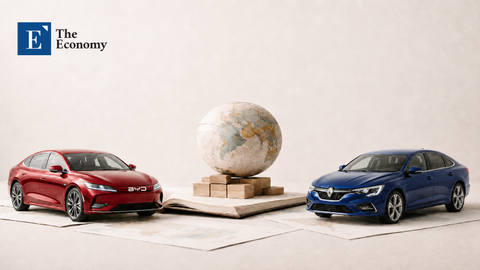
BYD, China’s largest electric vehicle manufacturer, is accelerating efforts to acquire idle European auto plants after attempting to buy a stake in Renault, France’s flagship automaker. With Europe’s automotive industry facing a heavy fixed-cost burden, BYD aims to acquire and repurpose underused facilities to circumvent tariff barriers and rapidly establish a European production network. Securing local factories alone, however, is unlikely to be enough to overcome the region’s formidable market-entry barriers, which encompass labor regulations, supply chains, technical standards and political wariness.
BYD’s Strategic Overtures to Renault Through Equity and Operational Partnerships
According to French business newspaper Les Echos on July 13, BYD reportedly made strategic overtures to Renault over the past two years involving either the acquisition of partial management control or cooperation on production infrastructure. The first approach was made in 2024 under then-Renault Chief Executive Luca de Meo, while the second took place last year, when BYD Executive Vice President for Europe Stella Li met Renault Chairman Jean-Dominique Senard to present specific partnership proposals.
At the time of the initial approach, Renault was expanding partnerships with Geely and other global automakers as the industry entered a capital-intensive transition to electrification. After several rounds of meetings, however, Renault rejected BYD’s proposed equity investment. The decision reflected the French automaker’s determination to preserve its independent management control and strategic leadership in the European market. BYD returned with another equity proposal last autumn. Under the plan, BYD would provide its battery-electric and plug-in hybrid technology, as well as its battery manufacturing capabilities, in exchange for access to Renault’s European production facilities.
The proposals discussed at the negotiating table excluded contract manufacturing and instead centered on an equity-sharing arrangement. As its principal bargaining chips, BYD offered to transfer its latest dedicated EV platform technology and establish a battery joint venture in Europe. The package also included a detailed plan to convert idle production lines at Renault’s European plants, including those in France, into dedicated BYD manufacturing bases, with the two companies splitting ownership of the facilities’ operating interests. Renault’s board ultimately rejected this proposal as well, concluding that the potential benefits of technology sharing were outweighed by the risk of losing exclusive ownership and operational control over its key production sites.
The French government’s status as a Renault shareholder further heightened the transaction’s sensitivity. France owns approximately 15% of Renault, while its share of voting rights rises to 30% when double-voting rights are taken into account. Because Renault’s factories constitute part of the national industrial base, binding together jobs, suppliers and regional economies, Chinese equity participation cannot be treated solely as a matter of price negotiations between private companies. The role played by the French government in the rejection process has not been disclosed, but BYD’s proposal was clearly inseparable from the broader debate over industrial sovereignty.
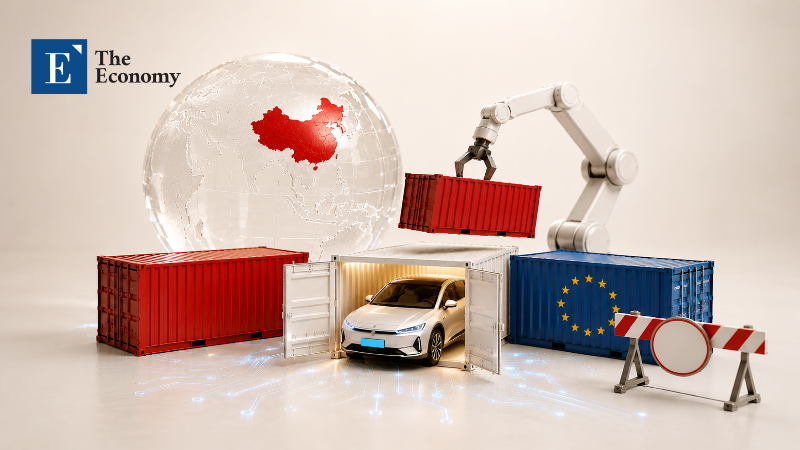
Chinese Capital Targets Idle Plants as Europe’s Automotive Production Network Undergoes Rapid Realignment
BYD’s interest in acquiring existing European factories is rooted in the region’s chronic problem of low plant utilization. Boston Consulting Group recently estimated that the average utilization rate at European auto plants had fallen to approximately 60%. Assuming that profitability requires an operating rate of 80%, Europe’s excess annual production capacity amounts to 5.4 million vehicles—the equivalent output of more than 35 assembly plants. That is a level at which existing facilities would struggle to absorb their fixed costs even if sales recovered. The demand base has also failed to return to its pre-pandemic scale. European passenger-car sales fell from 15.3 million units in 2019 to fewer than 13 million in 2025. European automakers are therefore being forced to expand research and development and capital expenditure for the EV transition while simultaneously shouldering the carrying costs of idle plants designed primarily for internal combustion engine vehicles.
BYD is seeking to capitalize on this supply-demand imbalance as an opportunity to accelerate localization. In May, Li said the company was in talks with Stellantis and other automakers over the acquisition of underutilized European plants, including facilities in Italy. Building a factory on a greenfield site can take years because of permitting, infrastructure development, equipment installation and recruitment. Existing plants, by contrast, already possess paint shops, stamping facilities, assembly lines, logistics networks and skilled workforces, creating considerable scope to bring forward market entry even after accounting for the cost of converting production.
The integration of Chinese automakers into Europe’s manufacturing network is already proceeding through multiple channels. Ford is pursuing a plan to hand over part of its Valencia plant in Spain to Geely, while Nissan is discussing production at its Sunderland plant in the United Kingdom with Chery Automobile. Stellantis has also decided to manufacture vehicles for Leapmotor, in which it holds a stake, at a Spanish plant. As European manufacturers seek to reduce the cost burden of idle facilities and Chinese companies aim to cut tariffs and investment lead times, the ownership and utilization of production assets are being rapidly reshaped.
Renault’s rejection nevertheless demonstrates that Europe’s automakers are not responding uniformly. Renault CEO Francois Provost said at a Financial Times event in May that the company’s European plants were operating at approximately 85% capacity and that it had no need to share production facilities with another manufacturer. Chinese capital may help companies with substantial idle capacity preserve jobs and lower fixed costs. For manufacturers with high utilization rates and independent turnaround strategies, however, the cost of helping a long-term competitor establish itself in the market appears far greater.
Higher Local-Sourcing Thresholds Under the Industrial Accelerator Act
Concerns that Europe’s automotive industry could witness a replay of the “Tears of Malmö”—the 2002 acquisition of a Goliath crane in Malmö, Sweden, by South Korea’s Hyundai Heavy Industries for $1—stem from this same duality. In Malmö, a critical piece of industrial equipment left Sweden and was relocated to Ulsan. In the contest for European auto plants, the facilities and jobs would remain in place, but authority over vehicle models, investment levels, component sourcing and technical standards would pass to Chinese companies. European automakers could avoid plant closures and large-scale layoffs, but over the longer term they could find themselves expanding a rival’s production capacity within their own industrial base. The industrial decline once made visible through the physical removal of equipment would instead unfold through the transfer of production leadership and decision-making authority.
This is also why European governments are wary of Chinese companies acquiring local factories. The Industrial Accelerator Act proposed by the European Commission in March would require EVs benefiting from public procurement or subsidies to source 70% of their components, excluding batteries, from within the bloc. It also contains provisions that would impose conditions on large-scale foreign investment in clean technologies, including requirements concerning the proportion of EU workers, contributions to research and development, and ownership structures. The measures reflect concerns that an expansion of the model under which Chinese components are imported and merely assembled at European factories could deliver only limited benefits in terms of local employment and technological accumulation.
Even after satisfying local-production requirements, substantial time and expense are needed to bring a factory into full operation. BYD’s plant in Szeged, Hungary, was initially scheduled to begin production late last year, but delays in equipment installation and preparations for mass production pushed the launch back to the fourth quarter of this year. Construction has yet to begin on the company’s planned $1 billion plant in Manisa, Türkiye, which was designed to produce 150,000 vehicles annually, and the project schedule has been suspended. Even BYD, which has established a system of rapid factory construction and mass production in China, has been unable to avoid the complex operational burdens created by the convergence of permitting, workforce recruitment, facility conversion and supplier certification in Europe.
The production-cost gap is another variable that factory acquisitions alone cannot eliminate. According to the International Energy Agency, the cost of manufacturing battery-electric vehicles in China is more than 30% lower than in advanced economies, with battery costs accounting for approximately one-third of the differential. BYD’s cost advantage is the product of an integrated Chinese battery supply chain, high levels of automation and a rapid product-development system. At European plants, however, the company would have to accept existing employment conditions and labor relations while incorporating local component manufacturers into a newly configured supply chain, making it difficult to replicate the cost structure established in China. This is why Spain and Hungary, where labor costs are lower than at major Western European plants, have emerged as leading production candidates.
- Previous “Foreign-Made Pistols Turn Scrap Metal When the Bullets Run Out” — The Era of Selling Weapons Alone Is Over, With the ‘Operational Ecosystem’ Now Deciding Contracts
- Next “Dermatology Absorbs Demand”: Korea’s Fast-Growing Medical Tourism Industry Faces Test as VAT Refund Ends Price-Driven Growth Model
Similar Post