“EU Buyer Cartel, U.S. Trade Bloc” Opening Salvo in the Critical Minerals Hegemony War, Will China Face Blowback From Weaponizing Rare Earths?

Authored On
Modified
EU seeks to fracture China’s grip through a “buyers’ alliance”
U.S. moves to diversify supply chains through a multilateral “critical minerals trade bloc”
Objective is to reduce dependence on China and secure supply-chain sovereignty
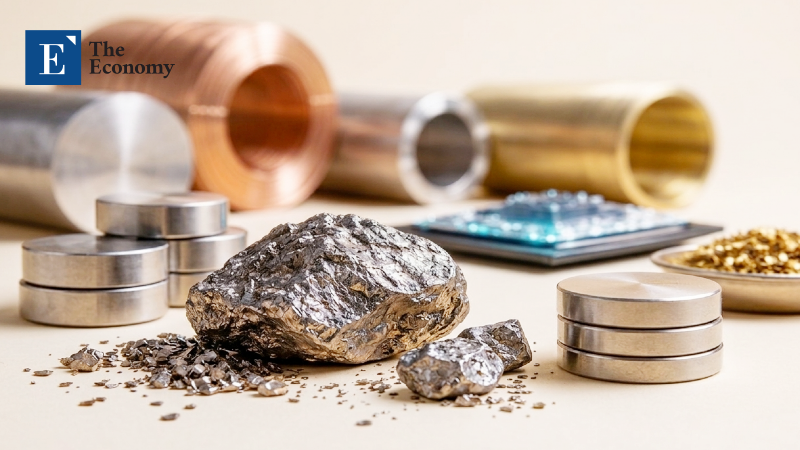
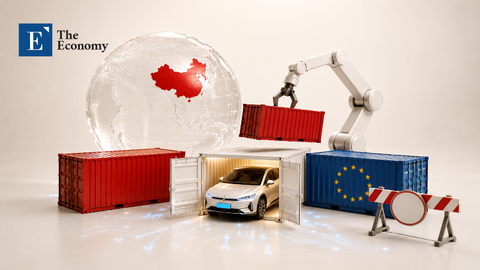
The European Union has formally launched a pan-European joint procurement platform to reduce its dependence on China for strategic minerals that are central to the energy transition and defense security. The strategy is designed to aggregate the purchasing power of individual companies, strengthen market bargaining leverage, and break away from an abnormal structure in which a single country controls more than 90% of the supply chain. Through the initiative, the EU aims to secure a stable supply of strategic materials such as rare earths and battery inputs, while also accelerating the construction of a broad-based de-China supply chain by strengthening a minerals alliance with the United States. As Washington pushes ahead with a “critical minerals trade bloc” that binds allied nations together, Brussels’ entry is rendering the allied response to lower dependence on China more multidimensional.
EU Launches Joint Procurement for Critical Minerals
According to Reuters on April 13, the EU has formally launched the critical minerals arm of its Energy and Raw Materials Platform and begun accepting buyer registrations. The platform’s debut marks a core implementation step in the REsource EU strategy unveiled in December last year. The platform is intended to serve as a bridge that aggregates demand from buyers across the bloc and connects them with suppliers worldwide. Final contracts will still be signed directly by the two sides, but the emphasis lies in mitigating supply-chain risks that individual companies have struggled to address by consolidating demand at the EU level.
China has established near-total control over the critical minerals supply chain. In the case of rare earths, it accounts for as much as 90% of global production. Core industries including electric-vehicle batteries, renewable-energy equipment and the defense sector are operating within a structure heavily dependent on a single country. As China’s monopolistic standing in global critical minerals supply has deepened, Beijing has been strategically deploying export controls over those minerals in trade negotiations and diplomatic disputes.
China began overtly intensifying strategic export controls in the critical minerals sector in 2023. A representative case was its introduction in August 2023 of an export licensing regime for gallium and germanium under the banner of “safeguarding national security.” Gallium is essential for semiconductor wafers and fifth-generation communications, while germanium is indispensable for optical fiber and solar power. China supplies 90% of the global gallium market and 70% of germanium.
In addition, China has been operating a licensing system for graphite exports for the past two years. With China controlling more than 90% of graphite refining and processing, a core input for battery anodes, global secondary-battery producers have struggled to secure alternative supply lines once Beijing moved to restrict exports. Last year, China also imposed export controls on rare earths in response to U.S. measures including fentanyl tariffs and reciprocal tariffs. Beijing added seven heavy rare earths, including neodymium, dysprosium and terbium, to its control list last year, dealing a direct blow to the production of permanent magnets used in electric-vehicle motors worldwide.
To mitigate that structure, the EU has changed its procurement model. The approach centers on joint purchasing that aggregates demand from companies across member states, rather than leaving firms to procure individually. The platform links demand-side companies with suppliers, while actual contracts are still concluded between firms. The platform was built by a PwC consortium at a cost of about $10.6 million, and it operates as a multi-resource procurement system encompassing not only critical minerals but also hydrogen, natural gas and biomethane. The EU had previously operated the same platform first in the hydrogen sector, where it successfully completed 273 supply matches. The first round of matching begins on April 14 and will focus on items that can be secured in the short term, including rare earths, battery materials and defense-related raw materials.
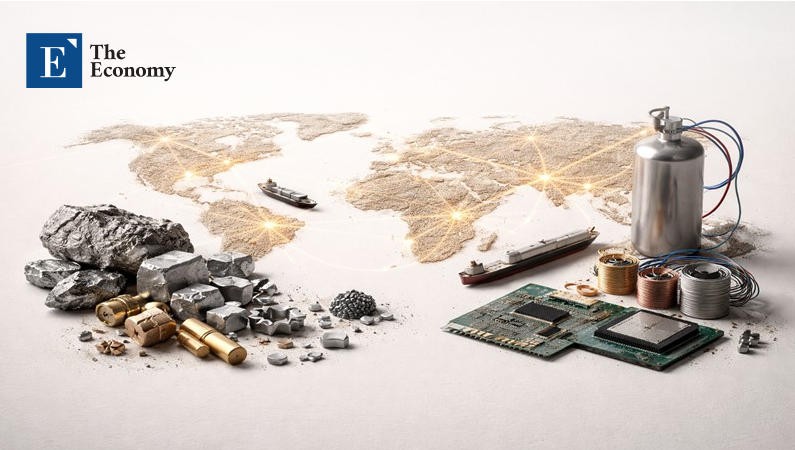
EU-U.S. Move to Launch a Transatlantic Minerals Alliance
The EU is not stopping there and is also pushing ahead with a strategic stockpiling plan. According to the European Commission, a videoconference last December involving EU officials and member-state representatives finalized the division of roles among participating countries. France will take charge of financing purchases for stockpiles, Germany will secure mineral supply lines, and Italy will oversee logistics facilities. A European Commission spokesperson said, “Ten member states are currently participating in a pilot project for critical minerals stockpiling,” adding that work is under way in separate working groups tasked with assessing mineral volumes, logistics and long-term storage costs.
The European Critical Raw Materials Center is also set to launch within the year. The center will act as a portfolio manager responsible for providing market intelligence, supporting strategic projects, and coordinating joint public-private purchasing and stockpiling. The critical minerals stockpiling pilot project is scheduled to begin at the same time. Measures restricting exports of permanent-magnet scrap and waste will be introduced in the first half of this year, and additional steps targeting aluminum scrap have also been signaled.
In addition, since the Critical Raw Materials Act took effect in May 2024, the EU has focused on securing internal production capacity. Under targets of meeting 10% of domestic consumption through extraction, 40% through refining and processing, and 25% through recycling by 2030, the EU announced 60 strategic projects worth about $33.0 billion in the first half of last year alone. Of those, 18 are lithium-related projects, the largest category, followed by graphite with 11 and rare earths with seven.
Coordination between the EU and the United States is also beginning in earnest after Brussels proposed a critical minerals partnership to Washington. Last month, Bloomberg, citing sources, reported that the EU planned to propose critical minerals cooperation to the United States in order to curb China’s influence and establish a “strategic partnership roadmap” within three months. The proposal is said to include joint development projects for critical minerals, exploration of price-support mechanisms, and market protection against oversupply of external minerals and other forms of market manipulation.
From Price Supports and Joint Stockpiles to Coordinated Export Controls, U.S. De-China Push Accelerates
The EU’s partnership proposal also dovetails with Washington’s plan for a multilateral critical minerals consultative framework aimed at allied countries. Since the start of Donald Trump’s second administration, the United States has placed critical minerals supply-chain strategy at the forefront of its foreign and economic policy and is mounting a direct counteroffensive. In particular, Washington views access to critical minerals as a core task in terms of technological competitiveness and national security, while pursuing allied coordination and supply-chain diversification. Its efforts to advance critical minerals cooperation with the EU, Japan and Mexico are part of that strategy. In February, the Office of the United States Trade Representative formally moved to build a powerful resource alliance with Mexico, the EU and Japan centered on a price floor and joint stockpiling.
The measure is linked to the scheduled July review of the United States-Mexico-Canada Agreement and is intended to lower resource dependence on specific countries, including China, while reinforcing supply-chain security. The USTR is working with Mexico to flesh out a price-floor mechanism that would ensure critical minerals imports do not fall below a certain price. The device is intended to prevent market disruption caused by particular countries flooding the market and driving prices sharply lower, while guaranteeing minimum profitability for mining and processing companies in allied nations. The U.S. government is also discussing ways to apply such price floors to future trade agreements with other countries. In parallel, Washington plans to jointly stockpile critical minerals and establish common regulatory rules spanning mining and trade.
Separately, the United States has also launched FORGE, the Forum for Geostrategic Resource Cooperation, a critical minerals trade bloc. The initiative appears to reflect a judgment that the existing market-centered approach has failed and that price-stabilization mechanisms within the alliance are needed to counter China’s low-cost supply strategy. FORGE includes not only South Korea, Japan, Australia and major European countries, but also nations in South Asia, Africa and Latin America. Washington is also linking the trade-bloc initiative to its financial and stockpiling policies. In February, President Trump announced Project Vault, a public-private initiative to strategically stockpile critical minerals with an investment of $12 billion.
Beyond that, the U.S. government has championed a “binding supply-chain alliance,” building cooperative frameworks with Japan, Australia and Canada while operating mineral surveying, stockpiling and joint procurement systems at the national-security level. Washington has also recently strengthened cooperation with resource-rich countries such as Australia and Ukraine, while accelerating domestic mine development. Earlier, the White House announced up to $277.7 million in direct funding and $1.3 billion in loans for mining and manufacturing company USA Rare Earth to support development of the rare earth supply chain, while the Department of Defense agreed in July last year to acquire a stake in MP Materials, which competes with China.
Similar Post