Strained Naval Maintenance Capacity Exposes Limits of U.S. Military Hegemony Amid Mounting Fiscal Deficits

Authored On
Modified
$800 million spent with only 22% completion
An additional $1.9 billion required
U.S. military capability constraints laid bare
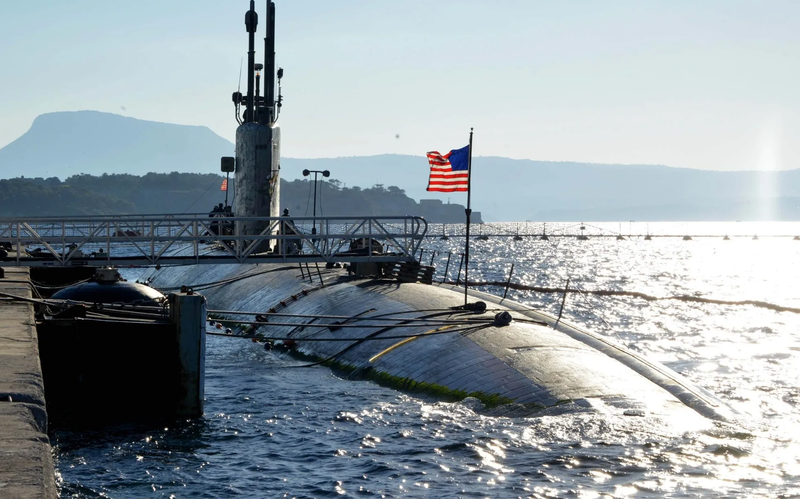
The U.S. Navy has ultimately abandoned its plan to return the Los Angeles-class nuclear-powered attack submarine (SSN) USS Boise (SSN 764) to active service. Despite more than $1 billion in sunk costs, the decision to terminate the project due to unsustainable maintenance expenses starkly reveals the constraints facing the United States’ defense budget and the hollowing out of its defense industrial base. It signals that America’s overwhelming military power—long a cornerstone of the global security order—has collided with the hard realities of economic efficiency and resource allocation priorities.
USS Boise, Idle for a Decade, Ultimately Destined for Scrap
According to U.S. defense outlet The War Zone (TWZ) on April 13 (local time), the Navy recently canceled the long-delayed overhaul of the USS Boise, which had been sidelined at port for nearly a decade. On April 10, Admiral Daryl Caudle, Commander of U.S. Fleet Forces Command, stated, “Following rigorous, data-driven analysis, we have decided to deactivate USS Boise,” adding, “We have an obligation to make these difficult decisions to build a more capable and ready Navy.”
The Navy also noted in a separate statement the same day that “this decision is part of a data-informed plan to optimize the fleet by ensuring every dollar is invested in capabilities that contribute to decisive warfighting advantage,” adding that “funding and personnel previously allocated to Boise will be redirected to higher-priority programs, including the timely delivery of submarine capabilities.”
The Boise, now slated for decommissioning, belongs to the improved ‘688i’ variant of the Los Angeles-class. With a submerged displacement of approximately 7,000 tons, it is powered by an S6G nuclear reactor, enabling virtually unlimited range and underwater speeds of up to 33 knots (approximately 61 km/h). Enhanced noise-reduction technologies significantly improved its stealth profile, while its armament—including MK-48 torpedoes and 12 vertical launch system (VLS) tubes for Tomahawk cruise missiles—made it a critical asset for anti-submarine warfare and precision strike missions.
Cancellation of Four Frigates Ordered from Italian Shipyard
The significance of Boise’s retirement lies in its illustration of both the decline in U.S. shipbuilding capacity and the mounting pressure on defense finances. Commissioned in 1992 during the Cold War, the submarine last deployed operationally in 2015 and was scheduled for a routine overhaul in 2016. However, chronic shortages of drydock capacity at U.S. naval shipyards and a persistent maintenance backlog repeatedly delayed its turn in the queue.
As maintenance delays accumulated, the situation deteriorated irreversibly. Boise lost its dive certification in 2016 and was stripped of its ability to submerge in 2017, effectively rendering it non-operational. Transferred to Newport News Shipbuilding in 2018 with expectations of completing its overhaul by 2021, the vessel’s restoration was repeatedly deferred due to funding constraints, even after the Navy paid an initial $350 million in September 2020.
It was not until 2024—nearly a decade after the originally scheduled overhaul—that the Navy signed a $1.2 billion contract. However, subsequent assessments revealed costs far exceeding initial projections. Prolonged delays had exacerbated hull corrosion and system degradation, pushing estimated repair costs close to $3 billion. Even if completed, the submarine was projected to retain only about 20% of its service life. Under current timelines, the overhaul would conclude in 2029—by which point the vessel would have remained inactive in port for roughly 15 years.
The Navy’s capability gap extends beyond a single project. In recent years, it has scaled back or canceled multiple shipbuilding programs, signaling a broader retreat from its fleet expansion strategy. In 2020, the Navy awarded Italian shipbuilder Fincantieri a contract for the Constellation-class frigate program, but has since decided to proceed with only the two ships currently under construction while canceling the remaining four.
Experts argue that the Constellation-class program underscores how far U.S. shipbuilding capabilities have fallen behind global peers. Even Fincantieri’s attempt to adapt a proven frigate design to U.S. Navy specifications has been plagued by delays and cost overruns. The USS Constellation, originally scheduled for launch this year, has now been pushed back to late 2029. To date, approximately $2 billion has already been spent on the vessel.
Questions Over the Sustainability of U.S. Military Primacy
Despite these setbacks, the United States faces an urgent need to expand its naval power relative to China’s growing fleet. In a report released in January, the Navy outlined plans to increase its battle force ships from 295 in 2024 to 390 by 2054. Accounting for retirements, the plan calls for acquiring a total of 364 new vessels over the next 30 years, including 293 combat ships and 71 logistics and support vessels.
Planned acquisitions include six aircraft carriers, ten Columbia-class ballistic missile submarines (SSBNs), and 59 attack submarines, including Virginia-class nuclear-powered vessels. The total estimated cost stands at $1.075 trillion, with submarines accounting for 49% of the total.
The Congressional Budget Office (CBO), analyzing the plan, estimated that implementing it would require an average annual expenditure of $40.1 billion from fiscal year 2025 through 2054, including $35.8 billion for new ship construction. The CBO noted that “average annual shipbuilding costs over the next 30 years would be 46% higher than the average over the past five years,” adding that the projected spending is elevated not only relative to recent budgets but also by historical standards.
However, the likelihood of congressional approval remains low. Lawmakers retain negative perceptions of past Navy procurement programs, including the Littoral Combat Ship (LCS), Zumwalt-class destroyers, and Ford-class aircraft carriers—projects launched with ambitious technological visions but plagued by significant cost overruns, delays, and persistent technical issues even after commissioning.
Compounding the challenge is the deteriorating fiscal environment. The U.S. federal deficit reached $1.8 trillion last year. The Committee for a Responsible Federal Budget (CRFB) warned that the Navy’s long-term plan could add $5.8 trillion to national debt over the next decade. Julia Gledhill, an analyst at the Stimson Center’s Defense Reform Program, criticized the Navy, stating, “The U.S. Navy has failed multiple audits. If it cannot even account for where its $1 trillion budget is going, how can it make sound decisions?”
Some analysts warn that mounting fiscal pressures could directly impair warfighting capability. Late last month, the Pentagon requested an unprecedented $200 billion in supplemental funding from the White House to sustain operations in the war with Iran. The request reflects the rapid escalation of military costs and the urgent need to replenish depleted arsenals.
The U.S. military spent $11 billion in the first week of the war alone, with costs rising exponentially as the scope of operations expanded. Although the fiscal year 2026 defense budget already stands at $901 billion, President Donald Trump had previously pledged—even before the outbreak of the war—to raise the next defense budget to $1.5 trillion. However, public sentiment toward such massive expenditures remains unfavorable. The opposition Democratic Party has intensified criticism, while public support for the war remains lukewarm. Even within Trump’s core MAGA base, divisions have emerged over whether the conflict aligns with U.S. national interests. Republican leadership has expressed support for the additional funding, but a clear legislative strategy for passage remains uncertain.
- Previous “Even Corporations Are Joining Forces” Japan Mounts an All-Out Push on Physical AI Amid Labor Strains, Testing the Limits of Its Global Full-Stack Competitiveness
- Next “EU Buyer Cartel, U.S. Trade Bloc” Opening Salvo in the Critical Minerals Hegemony War, Will China Face Blowback From Weaponizing Rare Earths?
Similar Post