“Ceasefire Fractures but Talks Continue” Trump Says War Could End Within Two to Three Days as U.S. Compromise Proposal Holds Key to Peace Deal

Siobhán Delaney is a Dublin-based writer for The Economy, focusing on culture, education, and international affairs. With a background in media and communication from University College Dublin, she contributes to cross-regional coverage and translation-based commentary. Her work emphasizes clarity and balance, especially in contexts shaped by cultural difference and policy translation.
Authored On
Modified
Trump tells Iran after attack on Israel: “Return to negotiations and reach an agreement”
Urges both Iran and Israel to avoid further escalation as region faces choice between peace deal and renewed conflict
Outcome hinges on compromise between sanctions relief and security guarantees
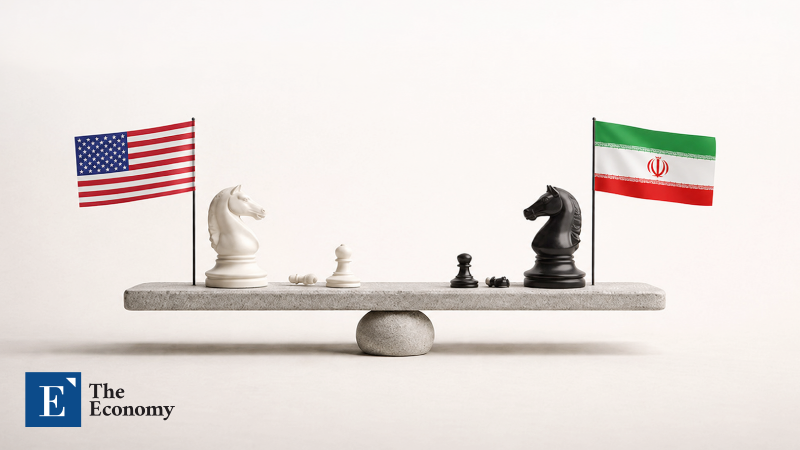
U.S. President Donald Trump has expressed strong confidence that a final agreement with Iran could be reached within two to three days, signaling optimism about ongoing efforts to end the conflict. Even as signs of strain have emerged in the ceasefire after Iran launched ballistic missiles toward Israeli territory following Israeli strikes on Hezbollah positions, Trump has maintained a diplomatic approach, urging Israel to refrain from further attacks while keeping negotiations on track. With Israel’s dissatisfaction over the effectiveness of the ceasefire colliding directly with Iran’s demands for the release of frozen assets, analysts believe Washington’s ability to broker a last-minute compromise will determine the success or failure of the peace negotiations.
Iran Strikes Israeli Territory After Ceasefire Breach as Trump Says Final Agreement Is Near and Urges Restraint
On June 9 (local time), Trump spoke to reporters while returning to the White House after attending an NBA Finals game in New York, saying, “We are in the final stage of a very good agreement that will not allow Iran to possess a nuclear weapon in any form.” Asked how long it would take to reach a deal, he replied, “Two or three days.” He did not elaborate on the details of the negotiations.
In an interview with Fox News on June 7, Trump stated, “My message to Iran is that they have launched their missiles, so now they should stop, return to the negotiating table, and make a deal,” adding that “this attack does absolutely nothing to help negotiations.” In a separate interview with the Financial Times the same day, he said, “I make all the decisions,” and added, “Netanyahu has no choice. He will have to accept any agreement I negotiate with Iran.” The remarks amounted to another warning directed at Israel, which has complicated peace negotiations, while reaffirming his commitment to reaching an agreement with Tehran.
On June 7, Iran launched approximately 10 ballistic missiles toward northern Israel. The attack was widely viewed as retaliation for Israeli airstrikes against Hezbollah positions in Beirut’s southern suburbs and marked Iran’s first direct strike on Israeli territory since the ceasefire between Washington and Tehran took effect on April 8. Trump also voiced dissatisfaction with Israel’s Beirut operation, telling Fox News, “There was no prior coordination with Israel,” and adding, “I’m not happy about that.”
Axios, citing details from a phone conversation with Trump, reported that the president said, “No one was injured in the Iranian attack,” and added, “I hope Israel does not retaliate.” He further warned that “if Prime Minister Netanyahu retaliates, the conflict will simply continue, just as it has for the past 47 years—or even the past 3,000 years.” Trump went on to say, “I’m going to call Bibi right now and tell him not to retaliate,” adding, “Israel attacked, Iran attacked, and we do not need any more attacks.” Although details of the conversation between the two leaders have not been immediately disclosed, observers believe Trump likely urged restraint while emphasizing that a deal with Iran was close at hand.
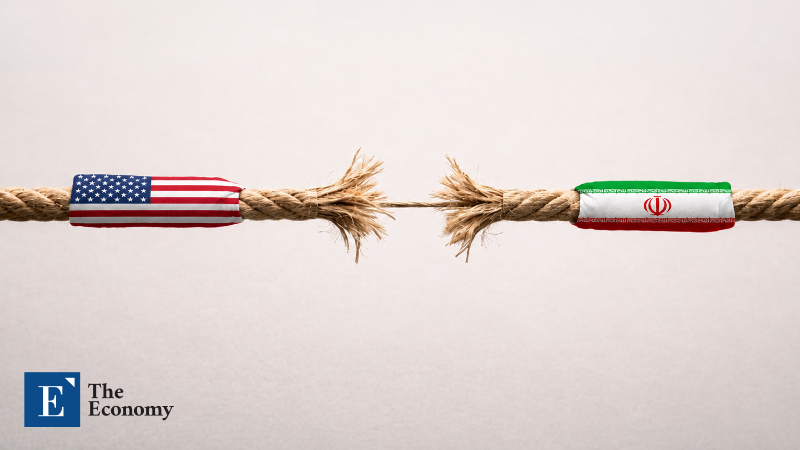
A Peace Timeline That Has Repeatedly Missed the Mark
This is not the first time Trump has claimed that an agreement with Iran was imminent. Since the outbreak of the war in late February, he has repeatedly predicted that an end to the conflict was near. On March 6, Trump pressured Iran by declaring that “there is no deal except unconditional surrender,” warning that Iranian energy infrastructure and bridges could be targeted if no agreement was reached. The initial deadline was set for March 21 but was repeatedly postponed. In the end, Trump’s original timelines failed to produce a final agreement.
In his first national address after the outbreak of war on April 1, Trump declared, “Tonight, I am pleased to say that our key strategic objectives are nearing completion,” expressing optimism that the conflict would enter its final phase within two to three weeks. On the same day, he posted on Truth Social that Iran’s new president had requested a ceasefire from the United States, adding that he would consider one when the Strait of Hormuz became open, free, and secure. Iran’s Foreign Ministry immediately dismissed the statement as “false and baseless.” The peace negotiations that Trump predicted would conclude within “two or three weeks” remain unresolved as of June.
A conditional two-week ceasefire was brokered by Pakistan on April 7, but a permanent agreement failed to materialize. Following U.S.-Iran talks in Islamabad on April 11, Trump said that “most items have been agreed upon,” yet no concrete breakthroughs or additional meetings were announced. Discussions at the time focused on freedom of navigation through the Strait of Hormuz, Iran’s nuclear and ballistic missile programs, postwar reconstruction, sanctions relief, and a long-term peace agreement. Washington demanded that Iran halt uranium enrichment and limit missile development, while Tehran insisted on retaining enrichment rights and securing sanctions relief, leaving core differences unresolved. Trump ultimately acknowledged that “the nuclear issue—the single most important issue—has not been agreed upon.” As negotiations stalled, he shifted his tone on April 19, warning, “If Iran does not accept the proposal, I will completely destroy every power plant and bridge in Iran. No more Mr. Nice Guy.”
Trump continued to promote the prospect of an imminent deal throughout May. On May 24, he said that a memorandum of understanding with Iran had been “largely negotiated” and that “final details are being discussed,” adding that the Strait of Hormuz could soon reopen. Three days later, he suggested that an agreement featuring robust nuclear inspections was nearing completion. Iran’s Foreign Ministry responded by saying it could not confirm that a deal was close. Similar developments have continued this month. On June 6, Trump stated that a peace agreement could be signed over the weekend, but on June 7—the 100th day of the war—Iran launched ballistic missiles toward northern Israel while Israel struck Hezbollah positions. A weekend breakthrough failed to materialize.
Trump Chooses Negotiation Over Military Victory
Although Trump’s latest comments about an imminent peace deal may ultimately prove premature, several indicators distinguish the current situation from previous rounds of negotiations. Whereas Washington’s earlier objective centered on forcing Iran into military capitulation, the focus has increasingly shifted toward designing a postwar order. The evolving relationship between Trump and Netanyahu reflects that change. In his interview with the Financial Times, Trump declared that “Netanyahu has no choice.” It marked the first time he had publicly pressured the Israeli prime minister during wartime.
Washington’s primary concern has also evolved. Early in the conflict, dismantling Iran’s nuclear program was the overriding objective. More recently, preserving stability in the Strait of Hormuz and preventing disruptions to global energy markets has become an even greater priority. The longer the war continues, the greater the risk to maritime logistics and oil exports across the Middle East.
In modern warfare, costs extend far beyond battlefield losses. In strategic chokepoints such as Hormuz, energy markets, maritime logistics, supply chains, financial markets, and domestic politics all become part of the cost equation. Indeed, the more Washington intensifies military pressure, the more Tehran can respond through asymmetric measures such as mine threats, drone attacks, commercial shipping disruptions, and interference with maritime traffic. Even without directly defeating U.S. forces, such actions can generate substantial instability for the international community. The stronger America’s military advantage becomes, the greater the burden of maintaining regional order. This dynamic creates a paradox in which military superiority simultaneously increases the cost of preserving stability.
Against this backdrop, Iran’s ballistic missile launch on June 7 is being interpreted less as a sign of collapsing negotiations than as an effort to raise the cost of reaching a settlement. Tehran continues to maintain that no agreement can be signed without the release of frozen assets and meaningful sanctions relief. Raising demands as negotiations enter their final stages is a common bargaining tactic, and diplomatic observers note that military tensions often intensify precisely when peace talks approach their conclusion. Frustrations accumulated throughout the negotiation process frequently erupt during the drafting of a final agreement. For months, Washington and Tehran have engaged in a prolonged struggle over Iran’s nuclear program, ballistic missile restrictions, sanctions relief, frozen assets, and navigation through the Strait of Hormuz. In a phase where neither side can secure a fully satisfactory outcome, Iran’s decision to increase military pressure is widely viewed as a calculated effort to maximize its leverage.
Ultimately, the remaining question is how quickly Washington can reconcile the grievances of both sides. Israel remains deeply concerned about a scenario in which Iran’s missile capabilities and regional proxy network remain intact, while Iran insists that any agreement lacking sanctions relief and access to frozen assets will be unacceptable. Recent negotiations between Washington and Tehran have focused heavily on the scope of sanctions relief, post-agreement implementation mechanisms, and oversight of Iran’s nuclear program—all politically sensitive issues. One foreign policy and security expert noted, “Most of the remaining issues on the negotiating table are already fully visible,” adding, “Whether a peace agreement is reached will depend on how the United States manages to reconcile Israel’s security concerns with Iran’s demands regarding frozen assets and sanctions relief over the next two to three days.”
Siobhán Delaney is a Dublin-based writer for The Economy, focusing on culture, education, and international affairs. With a background in media and communication from University College Dublin, she contributes to cross-regional coverage and translation-based commentary. Her work emphasizes clarity and balance, especially in contexts shaped by cultural difference and policy translation.
Similar Post