OECD Targets China’s Subsidy-Driven Growth Model as EU Opens a New Front in Trade Offensive Against Beijing

Authored On
Modified
OECD takes aim at China’s state-directed economic model
60% of Chinese firms’ market share gains attributed to subsidies
China reclassified as an economic security risk, raising prospects of a major industrial shock
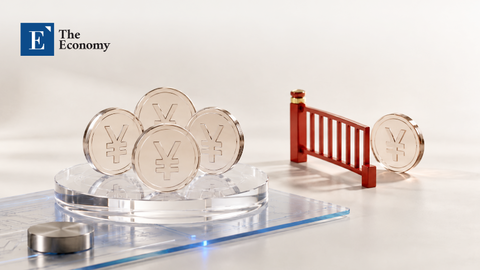
The Organisation for Economic Co-operation and Development (OECD) has released a report directly targeting the industrial subsidy regime underpinning China’s manufacturing expansion. The report argues that Chinese companies receive up to eight times more subsidies than firms in OECD member states and that a substantial portion of their global market share gains over the past two decades has been driven by state support. The European Union (EU), which has long criticized excess capacity and market distortions, is now armed with a stronger justification for adopting a more aggressive trade stance. Industry observers believe China’s manufacturing sector as a whole will face mounting pressure, with the electric vehicle industry likely to be among the first to feel the impact.
OECD, Chinese Firms Receive Up to Eight Times More Subsidies Than Global Rivals
According to the Financial Times on June 4 (local time), the OECD stated in its recently published report, OECD MAGIC Database of Industrial Subsidies, that subsidies received by Chinese companies amount to between three and eight times the average received by firms in the OECD’s 38 member countries. The organization further concluded that roughly 60% of the expansion in Chinese companies’ global market share since 2005 can be explained by subsidies.
The report found that the Chinese government has provided extensive support through direct subsidies and below-market borrowing (BMB). The scale of BMB was particularly significant. According to the OECD, this has been made possible by China’s financial system, where most corporate lending is channeled through state-owned banks and policy lenders at interest rates close to China’s one-year benchmark rate.
The study examined 525 companies across 15 manufacturing sectors, including automobiles, semiconductors, and steel. Direct government subsidies, tax incentives, and loans extended below market rates were all classified as subsidies. In 2024, China accounted for 52% of the $108 billion in subsidies distributed worldwide.
The sectors receiving the largest concentration of subsidies included solar panels, semiconductors, steel, and aluminum. While subsidies in the semiconductor sector averaged 2% of corporate revenue globally, Chinese semiconductor firms received subsidies equivalent to 10% of revenue in 2021 and 2022. Although Beijing has consistently denied allegations of unfair trade practices and maintains that Chinese exporters have gained market share through competitiveness, the OECD concluded that subsidies played a decisive role in sectors such as solar panels, where China’s market share expanded from 14% to 87%.
The automotive industry displayed a similar pattern, with Chinese manufacturers receiving subsidies equivalent to four times those of their OECD counterparts relative to revenue. In the wind turbine sector, global subsidies averaged around 1% of corporate revenue between 2005 and 2024, while Chinese firms consistently received more than 2% over the past 15 years, exceeding 5% in some years. OECD Secretary-General Mathias Cormann warned that “large-scale and persistent industrial subsidies can distort global markets, create unfair competitive advantages, and lead to excess supply.”
From Product-Level Measures to a Broader Industrial Defense Framework
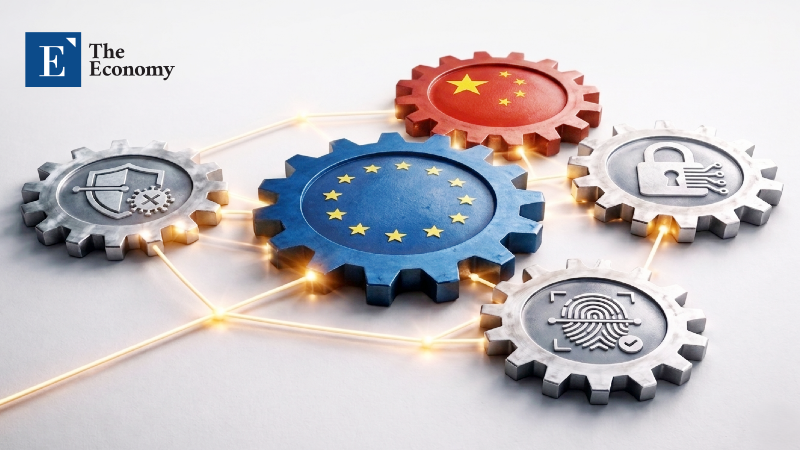
With the European Commission recently agreeing to adopt tougher trade remedy measures to address market distortions caused by low-priced Chinese imports, and Beijing signaling retaliatory action, the OECD report is expected to provide Europe with a powerful legal and institutional rationale for stronger intervention. Until now, the EU’s China policy has often been criticized for lacking consistency due to divergent national interests. Germany sought to avoid confrontation because of its dependence on automobile and machinery exports to China, while France advocated a tougher stance centered on industrial sovereignty and strategic autonomy. Several Eastern and Southern European countries prioritized Chinese investment and infrastructure cooperation, repeatedly delaying the emergence of a unified EU strategy toward China.
However, Europe’s calculations are shifting as Chinese excess capacity spreads across electric vehicles, batteries, solar energy, steel, and chemicals. China has become both a critical source of imports and a major factor intensifying deindustrialization pressures across Europe. While China remains the EU’s third-largest trading partner in goods and services after the United States and the United Kingdom, Europe’s trade deficit with China has reached approximately $420 billion. This explains why Europe is increasingly classifying China as an economic security risk rather than merely a trading partner.
The European Commission has steadily expanded the use of anti-dumping measures to shield domestic industries from subsidized Chinese imports. Europe initiated seven cases against China in 2024. That number rose to 17 in 2025, and more than 50 cases are currently underway this year. Tariffs and levies have been imposed on Chinese electric vehicles, solar supply chains, steel cylinders, vanillin, fiberglass, and other products. Yet Europe still lacks a comprehensive vision for addressing China through the lens of economic security. German Chancellor Friedrich Merz, Spanish Prime Minister Pedro Sánchez, and French President Emmanuel Macron all visited China last year, but each delivered different messages without a coordinated approach.
EU member states are also debating the Commission’s proposed Industrial Acceleration Act, yet remain divided over how aggressively China should be excluded. Advocates of formally defining China as an economic security threat are clashing with those emphasizing the importance of supply chains and trade ties, delaying the formation of a unified strategy. Against this backdrop, the OECD report is likely to serve as a common policy framework capable of unifying Europe’s fragmented concerns. It provides a basis for treating China’s manufacturing growth model itself as a target of trade policy.
Mounting Restructuring Pressure on China’s Electric Vehicle Industry
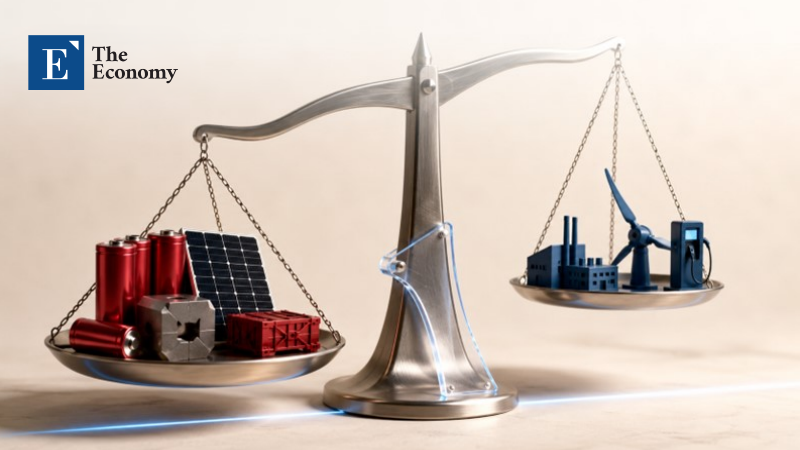
These developments are likely to place substantial strain on China’s manufacturing sector, particularly the electric vehicle industry. EVs represent one of Beijing’s flagship strategic industries, cultivated through more than a decade of heavy subsidies and policy financing, while also being the sector most frequently cited by Europe in discussions of excess capacity. The challenge for China is that the industry’s growth increasingly depends on the European market. Although China’s domestic market remains the world’s largest, production capacity has expanded far faster than demand. This imbalance explains why concerns over oversupply persist despite repeated government efforts to stimulate consumption.
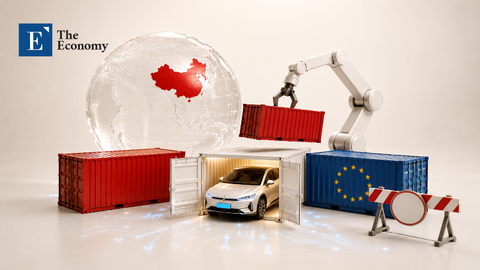
As a result, the importance of Europe has grown even further. The U.S. market, where strategic rivalry continues to intensify, is effectively closed to Chinese EV manufacturers. Washington has imposed a 100% tariff on Chinese electric vehicles and tightened restrictions on Chinese participation in battery and advanced technology supply chains. For Chinese automakers, Europe has effectively become the last major developed market with significant purchasing power. Consequently, leading manufacturers including BYD, Geely, and SAIC have spent years aggressively expanding their European sales networks and establishing local production facilities. BYD is building a factory in Hungary, while Chery Automobile is moving to secure manufacturing capacity in Spain.
However, with the OECD formally identifying subsidies and excess capacity as systemic concerns, the likelihood of anti-dumping investigations, countervailing duties, public procurement restrictions, and supply-chain regulations being linked together has increased significantly. These developments could intensify restructuring pressures within China’s EV sector. Even now, few companies beyond BYD and CATL have established stable profit models. Global consulting firm AlixPartners has projected that of the more than 100 Chinese EV brands currently operating, only around 15 are likely to survive through 2030.
Yet even the industry leaders may find it difficult to secure their future if much of their success remains tied to the European market. Europe has served both as a growth engine and as a critical outlet for absorbing excess Chinese production. As European trade barriers rise, Chinese manufacturers will face the dual pressures of slowing exports and intensifying price competition. Should Europe fully incorporate this perspective into its trade policy framework, the possibility of a large-scale shakeout in China’s EV industry cannot be dismissed. One trade policy expert noted, “If European policymakers begin to approach China’s excess capacity and industrial subsidy issues in a more systematic manner, the market environment facing Chinese EV manufacturers could change dramatically. The more limited overseas market access becomes, the greater the pressure for industry consolidation will be.”
Similar Post