The Dawn of the Unmanned Warfare Era: U.S.-China Competition in Unmanned Military Power Intensifies Across the Pacific

Anne-Marie Nicholson is a fearless reporter covering international markets and global economic shifts. With a background in international relations, she provides a nuanced perspective on trade policies, foreign investments, and macroeconomic developments. Quick-witted and always on the move, she delivers hard-hitting stories that connect the dots in an ever-changing global economy.
Authored On
Modified
China begins sea trials of extra-large unmanned submarines
Expansion of “unmanned force”–centered intelligent warfare doctrine
The United States also develops unmanned undersea capabilities and deploys them in actual operations
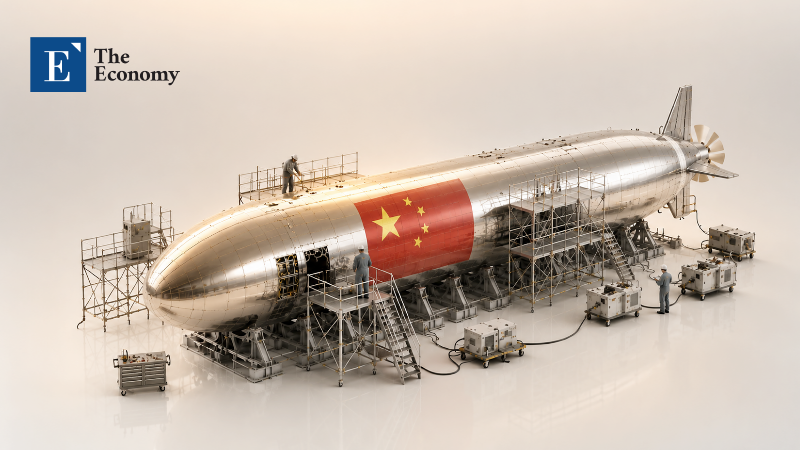
China has begun testing extra-large unmanned submarines capable of reaching the U.S. West Coast. The United States, meanwhile, is escalating its response by fielding long-endurance unmanned submarines and unmanned surface vessels. As artificial intelligence (AI)-enabled unmanned capabilities are increasingly integrated into naval force structures traditionally centered on surface combatants and submarines, the center of gravity in future warfare is also shifting rapidly.
PLAN Trials Unmanned Submarines
According to French defense publication Naval News on June 16 (local time), the People’s Liberation Army Navy (PLAN) is currently conducting sea trials of two prototype Extra Extra Large Unmanned Underwater Vehicles (XXLUUVs), each comparable in size to a submarine, from a secure dock near the Sanya naval base on Hainan Island. Analysts believe the XXLUUV represents a significantly enlarged platform compared with the HSU-001 series that China unveiled several years ago. Satellite imagery analysis indicates that the vessel ranks among the largest unmanned underwater vehicles currently under development anywhere in the world.
Although China has not officially disclosed the platform’s specifications, military experts estimate its operational range could reach as much as 10,000 nautical miles (approximately 18,520 kilometers). That would allow it to depart from China’s coastline, cross the Pacific Ocean, and approach the U.S. West Coast. The operational envelope would encompass access to Seattle, San Diego, Hawaii, Guam, and the Panama Canal.
The propulsion system is drawing particular attention. Experts believe the platform may employ a hybrid architecture combining a diesel engine with large lithium iron phosphate (LFP) battery packs. Conventional diesel submarines must periodically use snorkels to recharge their batteries, but an XXLUUV equipped with high-capacity batteries could remain fully submerged for far longer periods. Some assessments suggest it could travel roughly 7,000 nautical miles while snorkeling and then cover an additional 3,000 nautical miles on battery power alone. Such a capability would provide both long-range reach and enhanced stealth.
Experts believe the XXLUUV’s mission profile will extend well beyond reconnaissance. In addition to long-range intelligence gathering and maritime surveillance, the platform could potentially conduct mine-laying operations, subsea infrastructure monitoring, special operations support, maritime communications reconnaissance, and serve as a deployment platform for smaller unmanned submarines. The large hull significantly expands payload capacity and onboard power availability.
Some military analysts have also suggested that the platform could eventually evolve into a “mothership unmanned submarine” capable of deploying and operating dozens of smaller unmanned underwater vehicles. Over recent years, the Chinese Navy has simultaneously expanded its fleet of unmanned surface vessels (USVs), unmanned underwater vehicles (UUVs), and seabed surveillance systems. The more consequential development is not the acquisition of individual platforms but the construction of a networked architecture. Distributed unmanned systems operating above and below the surface are increasingly able to share information and divide missions. The focus of China’s naval modernization is shifting accordingly. Alongside fleet expansion, the country is pursuing unmanned force development built around autonomous navigation, AI, and high-capacity batteries.
Long-Range Capability Designed to Threaten the U.S. West Coast
China’s XXLUUV trials carry the clear characteristics of an asymmetric undersea capability aimed at the United States. Washington maintains maritime control in the Western Pacific through carrier strike groups, nuclear submarines, and a network of forward bases stretching across Guam, Hawaii, Japan, and the Philippines. China still faces difficulty matching America’s accumulated operational experience and surveillance infrastructure in large surface combatants and nuclear submarines over the short term. Unmanned submarines are widely viewed as a means of circumventing that gap.
The operational space targeted by the XXLUUV is equally clear. The Taiwan Strait, South China Sea, Philippine Sea, and waters surrounding Guam constitute critical transit corridors for U.S. reinforcement forces. If China deploys long-range unmanned submarines into these areas, the U.S. Navy would need to monitor not only traditional manned submarines but also low-noise, long-endurance unmanned platforms. As the number of targets requiring surveillance increases, the burden on U.S. anti-submarine warfare capabilities rises substantially. Moreover, even short of open conflict, China could use such platforms for subsea communications reconnaissance, port-access monitoring, mine-threat generation, and intelligence collection around U.S. military installations, potentially delaying American operational planning itself.
China’s ambitions extend beyond reinforcing its submarine force. The Chinese Navy has increasingly showcased unmanned surface vessels, unmanned submarines, aerial drones, robotic dogs, and autonomous ground systems simultaneously, highlighting the battlefield applicability of what it describes as “intelligent unmanned forces.” Previously, Chinese President Xi Jinping, in his report to the 20th National Congress of the Communist Party of China last year, called for expanding the role of new-domain operational capabilities and advancing unmanned and intelligent combat capabilities. The XXLUUV can be viewed as an extension of that strategic direction into the realm of undersea warfare.
The development is also aligned with China’s broader concept of “intelligentized warfare.” Chinese military doctrine has long identified AI-enabled battlefield awareness, automated target recognition, machine-assisted decision-making, and collaboration among unmanned platforms as the next stage beyond informationized warfare. In particular, “unmanned forces” have emerged both as a testing ground and a showcase for this concept. Chinese military literature and exercises repeatedly depict scenarios in which human commanders establish objectives and constraints while distributed unmanned systems divide responsibilities for reconnaissance, disruption, deception, and strike missions.
The message directed at the United States is unmistakable. China seeks to offset qualitative disadvantages in manned forces through the quantitative expansion and risk dispersion afforded by unmanned platforms. America’s strengths lie in high-performance platforms, integrated command-and-control systems, and long-range precision-strike capabilities. Rather than confronting those advantages directly, China is pursuing a strategy that expands the number of surveillance targets and threat vectors, thereby increasing the cost of U.S. responses. If dozens of XXLUUVs were integrated into operational networks, the U.S. military would be compelled to broaden its defensive perimeter to include Guam, Hawaii, approaches to the U.S. West Coast, subsea cables, and areas surrounding naval bases.
U.S. Navy Enters Operational Phase for Unmanned Systems
The United States has also accelerated the development of undersea unmanned capabilities over the past several years in response to mounting pressure from China. In 2023, the U.S. Navy received the Orca extra-large unmanned underwater vehicle developed by Boeing and Huntington Ingalls Industries. Orca was designed for long-duration independent operations and modular mission payloads. Potential mission concepts include mine warfare, surveillance and reconnaissance, electronic warfare, and support for special operations. If China’s XXLUUV is intended to raise the cost of U.S. access in the Western Pacific, Orca represents a core asset in America’s effort to expand its operational reach through distributed undersea forces.
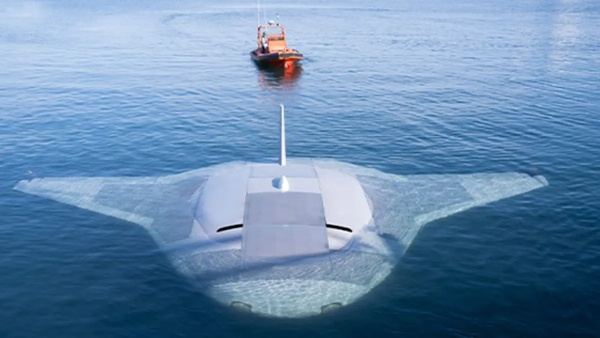
DARPA’s Manta Ray program follows the same trajectory. The Manta Ray prototype, built by defense contractor Northrop Grumman, completed open-water testing off Southern California in 2024. DARPA describes the initiative as a technology demonstration focused on energy management, low-power propulsion, underwater navigation, and mission management for long-endurance unmanned undersea systems. The concept centers on platforms capable of remaining underwater for extended periods and carrying out missions when required.
America’s expansion of unmanned capabilities is not limited to the undersea domain. Through its 2021 Unmanned Campaign Framework, the U.S. Navy and Marine Corps outlined a long-term plan integrating aerial, surface, underwater, and ground-based unmanned systems. The objective is to simultaneously enhance survivability, scalability, and lethality across all domains of warfare. As relying exclusively on manned ships and aircraft to absorb operational risks becomes increasingly untenable in high-cost combat environments, unmanned platforms have emerged as essential assets for forward deployment into contested areas, surveillance expansion, deception operations, target detection, and even personnel recovery.
The United States has already validated these investments through real-world operational use. On June 9, during a mission to rescue two crew members from a U.S. Army AH-64 Apache attack helicopter that had been shot down by Iranian forces over the Gulf of Oman, an unmanned platform directly carried out the recovery operation. It marked the first confirmed instance of an unmanned surface drone successfully conducting a search-and-rescue mission involving the recovery of actual personnel. Tim Hawkins, a spokesperson for U.S. Central Command, told military publication TWZ that “the surface drone supporting the Apache crew rescue off the coast of Oman was a U.S. Navy Corsair unmanned surface vessel operated by Task Force 59 of the U.S. Fifth Fleet,” adding that “Task Force 59 began deploying these drones to the theater in late March.” While manned fighter aircraft and MQ-9 Reaper drones were operating overhead during the rescue, the actual recovery was performed by the Corsair. Central Command stated that the Corsair “picked them up.”
TWZ assessed that “at a time when the U.S. Navy must maintain persistent maritime surveillance, reconnaissance capabilities, and presence across the vast Pacific theater, the successful execution of this rescue mission clearly demonstrates the future value of unmanned surface vessels in maritime search-and-rescue operations worldwide.” For example, in the event of military conflict with China in the South China Sea or broader Pacific region, where Chinese missiles and combat aircraft could restrict access by U.S. assets, unmanned surface drones such as the Corsair could play a critical role in combat search-and-rescue (CSAR) operations aimed at locating and recovering downed or isolated U.S. personnel. Such drones could also be pre-positioned along anticipated flight paths of U.S. combat aircraft in advance of operations.
Anne-Marie Nicholson is a fearless reporter covering international markets and global economic shifts. With a background in international relations, she provides a nuanced perspective on trade policies, foreign investments, and macroeconomic developments. Quick-witted and always on the move, she delivers hard-hitting stories that connect the dots in an ever-changing global economy.
Similar Post