"MRO Package vs. Production Priority and Investment Commitments" South Korea and Germany Clash Over Canada's CPSP Contract, Testing Germany's Conventional Submarine Dominance and Industrial Capacity

Aoife Brennan is a contributing writer for The Economy, with a focus on education, youth, and societal change. Based in Limerick, she holds a degree in political communication from Queen’s University Belfast. Aoife’s work draws connections between cultural narratives and public discourse in Europe and Asia.
Authored On
Modified
Germany's TKMS and South Korea's Hanwha Ocean enter full-scale competition over Canada's CPSP program
Shifting dynamics in the NATO submarine market raise questions over Germany's traditional dominance
Germany's submarine industry strained by existing orders, with workforce and supply chains under pressure
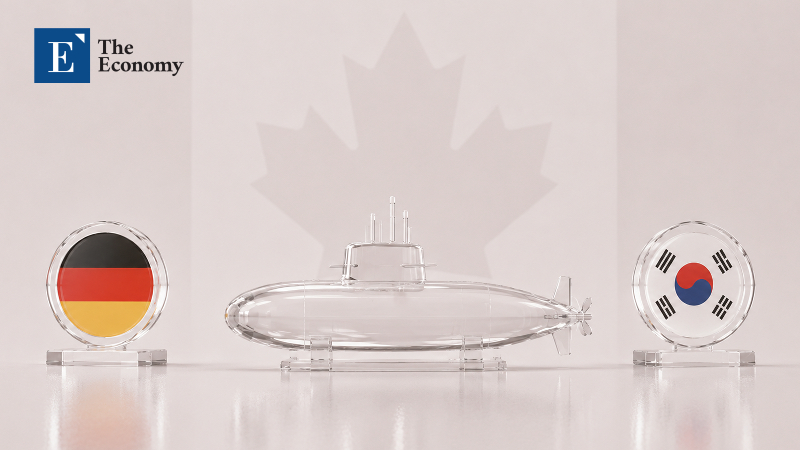
Germany's Thyssenkrupp Marine Systems (TKMS) and South Korea's Hanwha Ocean are engaged in an intense battle for Canada's Canadian Patrol Submarine Project (CPSP). As Hanwha Ocean strengthens its competitiveness by increasing contributions to local industry, TKMS has responded by offering production-line priority and investments in the aerospace sector. Experts note that Germany's industrial capacity has weakened considerably despite its long-standing status as a conventional submarine powerhouse, giving South Korea a meaningful chance of success.
Intensifying South Korea-Germany Competition for CPSP
According to a report published on Aug. 8 (local time) by Canadian investigative outlet Halifax Examiner, the Canadian government selected South Korean shipbuilders, including Hanwha Ocean, along with Germany's TKMS, as qualified suppliers for the CPSP, a program valued at approximately $43.5 billion. Final bids closed in March, and the evaluation process is underway ahead of the selection of a preferred bidder in the second half of this year. To gain a competitive edge, Hanwha Ocean has signed a memorandum of understanding (MOU) with Canadian space company MDA Space on low-Earth-orbit satellite communications cooperation and has strengthened maintenance, repair and operations (MRO) partnerships with local construction and shipbuilding firms as part of a strategy to enhance its contribution to Canadian industry.
TKMS has adopted an equally aggressive approach. According to German media outlet Focus Online, German Defense Minister Boris Pistorius recently attended the CANSEC defense exhibition in Ottawa and proposed transferring four production slots from the Type 212CD submarine program, currently being built under a joint German-Norwegian procurement initiative, to Canada. Pistorius emphasized that such a transfer would allow Canada to field new submarines immediately without experiencing a capability gap. He also offered economic incentives valued at approximately $35.3 billion including local port development and investments in artificial intelligence (AI) and battery industries.
Germany has also proposed making large-scale investments in the construction of a Canadian space launch facility in partnership with German aerospace startup Isar Aerospace. Following the announcement of the proposal, the Canadian government allocated $200 million in funding to Maritime Launch Services (MLS), Canada's commercial spaceport operator, a move widely interpreted as being linked to the broader TKMS package. However, according to Halifax Examiner's local reporting, infrastructure at MLS's launch site in Canso, Nova Scotia, remains in the early stages of development. In addition, Transport Canada unexpectedly imposed a Notice to Air Missions (NOTAM) restriction on the area from June 8 to June 14, triggering strong opposition from local residents and civic groups.
Positioning in the Global Submarine Market
Defense industry observers believe that the emerging rivalry and Germany's aggressive strategy clearly reflect changing dynamics within the NATO submarine market. Since World War II, the NATO submarine market has largely been dominated by the United States and major European defense producers. In the conventional submarine segment in particular, Germany, France and Sweden have traditionally served as key suppliers. NATO members have faced significant constraints in acquiring Russian or Chinese weapon systems, while the United States has long focused on nuclear-powered submarines.
Germany, in particular, maintained its position across NATO and allied markets for decades through its U-boat heritage and advanced air-independent propulsion (AIP) submarine technology. It effectively filled the void left by the United Kingdom and the United States, which had symbolized global maritime dominance for more than 200 years since the Battle of Trafalgar in 1805. The United Kingdom ceased conventional submarine production after the Upholder class in the 1990s, while the United States has not built conventional submarines since the 1950s. Today, both countries concentrate their shipbuilding capabilities on nuclear-powered submarine production.
The emergence of South Korea, however, has altered the landscape. Once regarded as a late industrial entrant, South Korea has grown into one of the world's leading shipbuilding and defense manufacturing powers. It has already exported large numbers of K2 tanks and K9 self-propelled howitzers to Poland and strengthened its presence in Europe's strategic industries by being selected as the preferred bidder for a Czech nuclear power project. South Korea's domestically developed KSS-III (Dosan Ahn Changho-class) submarines have already entered operational service, and the country has also acquired submarine-launched ballistic missile (SLBM) capabilities.
The most significant difference between the two submarine forces lies in their operational environments. German submarines were primarily developed for operations in nearby European waters such as the North Sea, Baltic Sea and Mediterranean Sea. The Republic of Korea Navy, by contrast, operates in Northeast Asian waters adjacent to China, Japan and Russia simultaneously. It has continuously trained and prepared for combat in environments characterized by dramatic depth changes and heavy maritime traffic. Canada's military environment requires long-range operational capabilities spanning the Arctic, Pacific and Atlantic oceans. Given future considerations surrounding China containment and broader Indo-Pacific strategies, South Korean submarines could represent an attractive option due to the country's extensive operational experience.
NATO, however, has emphasized interoperability among member states as a core value since the Cold War. Greater standardization of communications, weapons and sensor systems facilitates multinational coalition operations. Germany, Canada and Norway all share direct security interests in the North Atlantic and Arctic regions. Growing Russian military activity and accelerating development of Arctic shipping routes have further heightened the importance of defense capabilities in the region. Germany and Norway have already established close cooperation in the submarine sector and regularly conduct joint naval exercises in both the North Atlantic and waters near the Arctic Ocean. Canada likewise identifies Arctic defense as a core national security priority.
Warning Signs for Germany's Industrial Capacity
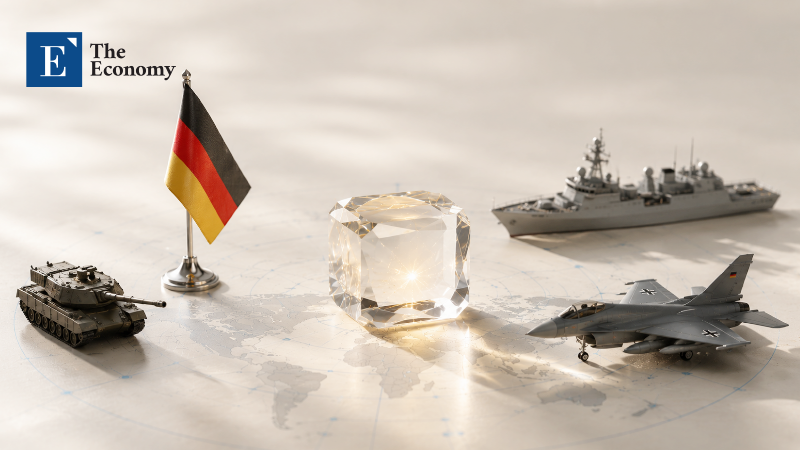
As competition between the two countries intensifies, experts increasingly argue that South Korea possesses a meaningful chance of securing the contract. Questions persist over whether TKMS has the industrial capacity necessary to fulfill the large-scale requirements of the Canadian program. The primary basis for this skepticism is its existing order backlog. TKMS recently reported a record order backlog of approximately $24.2 billion. In the submarine segment alone, the company is simultaneously handling the Type 212CD program, contracts for Singapore and negotiations with India involving six submarines. While a large backlog is generally positive for the company, Canada may view it as a source of production-slot constraints and delivery risks.
The availability of skilled labor has also become a challenge. Since Russia's invasion of Ukraine, European nations have accelerated rearmament efforts, sharply increasing demand for specialized workers such as welders, hull fabrication technicians and design engineers essential for submarine construction. At the same time, supply chains for critical submarine components—including AIP propulsion systems, specialty steel, sonar equipment and combat systems—have become heavily strained by surging demand for naval vessels and missile production across Europe. The challenge extends well beyond performance competition, encompassing the ability to secure personnel, maintain supply chains and meet delivery schedules.
Veterans of the submarine sector have reached similar conclusions. In an article published last month in Canadian defense publication True North Strategy Review, retired Australian Navy Rear Admiral Rowan Moffitt assessed Germany's Type 212CD program, stating that "what currently exists is a design and an early production phase." He pointed out that the Type 212CD has yet to accumulate operational experience under real-world conditions. Moffitt also highlighted Germany's substantial existing order backlog. In his view, winning the CPSP contract on top of the Type 212CD program and ongoing overseas projects could place additional strain on production schedules and industrial capacity. "Canada is not simply looking for the best submarine," he said. "It must choose the most reliable industrial partner." He added that Canada should verify whether any prospective supplier possesses sufficient technical personnel, production facilities and long-term maintenance capabilities.
Aoife Brennan is a contributing writer for The Economy, with a focus on education, youth, and societal change. Based in Limerick, she holds a degree in political communication from Queen’s University Belfast. Aoife’s work draws connections between cultural narratives and public discourse in Europe and Asia.
Similar Post