SpaceX Draws in Global Capital Ahead of IPO, Bets on Technological Edge and Industrial Dominance for Sustained Upside

As one of the youngest members of the team, Tyler Hansbrough is a rising star in financial journalism. His fresh perspective and analytical approach bring a modern edge to business reporting. Whether he’s covering stock market trends or dissecting corporate earnings, his sharp insights resonate with the new generation of investors.
Authored On
Modified
SpaceX Emerges as a Global “Liquidity Black Hole” During IPO Process
Investor Attention Focuses on Future Growth Engines Such as Starlink and Space-Based Data Centers
Reusable Rockets Deliver Major Cost Efficiencies, While Capital-Raising Capacity Remains Unmatched
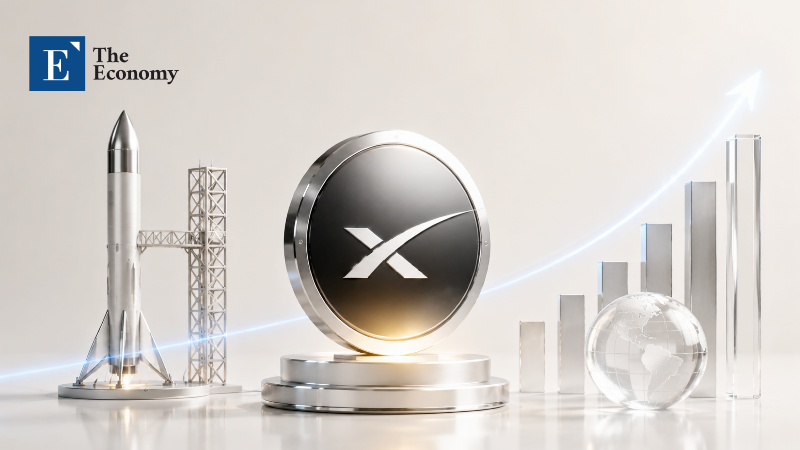
Elon Musk’s space venture SpaceX is attracting extraordinary investor attention ahead of its initial public offering (IPO). Record-breaking subscription demand has driven application deposits to unprecedented levels, while even an unusually large retail allocation has proven insufficient to absorb investor appetite, creating a situation in which vast amounts of market liquidity are rapidly flowing into SpaceX. Market participants believe that, given the company’s already dominant position within the global space industry, SpaceX could maintain strong momentum well beyond the initial volatility typically associated with newly listed stocks.
SpaceX IPO Frenzy
According to CNBC and other media outlets on June 10, SpaceX is scheduled to list on the Nasdaq on June 12. The company is targeting a valuation of between $1.75 trillion and $2 trillion, with an offering price of $135 per share. The IPO consists of 555.6 million shares, seeking to raise $75 billion, more than double the size of Saudi Aramco’s previous record-setting $29.4 billion offering. Subscription deposits have already exceeded $250 billion, surpassing the target fundraising amount by more than threefold and setting a new benchmark for global IPO book-building demand.
The allocation process is expected to rely on a pro-rata distribution mechanism under which investors receive only a fraction of their requested shares. Unlike conventional IPOs, where retail allocations typically account for a single-digit percentage of available shares, between 20% and 30% of the initial free float has been earmarked for retail investors. Even so, demand has far outstripped supply. An institutional investor seeking $10 billion worth of shares is expected to secure only about $3 billion in allocations, while retail investors subscribing at the fixed offering price will likely receive stock equivalent to roughly 25% of their subscription capital, with the remainder refunded. Funds returned to unsuccessful or partially allocated investors are projected to approach $175 billion.
The key issue is that much of this refunded liquidity could ultimately flow back into SpaceX. Despite intense demand, the offering price was set below many market expectations. Investors unable to secure sufficient allocations are therefore expected to return to the market and purchase shares after listing.
Additional passive inflows are also expected to amplify share-price volatility. MSCI recently announced that SpaceX would qualify for its accelerated inclusion framework for large IPOs. As a result, the company could enter MSCI indexes within approximately 10 trading days of listing. According to Reuters, passive funds tracking MSCI benchmarks collectively manage approximately $5.79 trillion in assets. Once included, those funds will be required to purchase SpaceX shares in accordance with index weightings. When combined with capital tracking the Nasdaq-100 and FTSE Russell indexes, the scale of post-listing demand could expand substantially.
SpaceX’s Competitive Position in the Space Industry
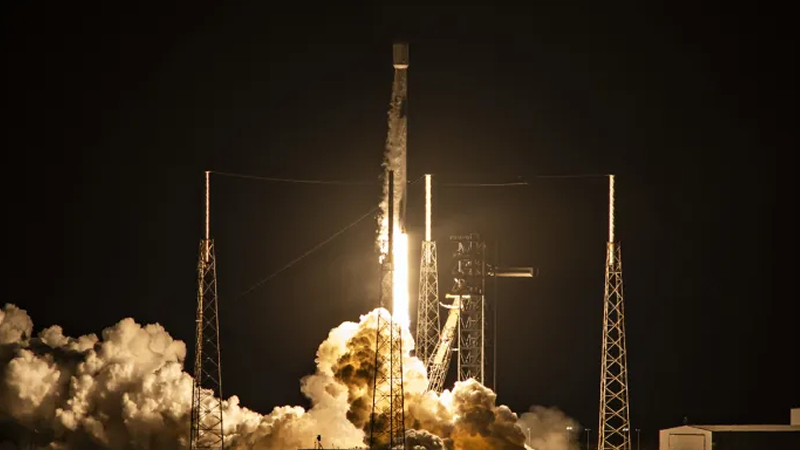
Markets expect SpaceX’s strength to persist even after the initial listing frenzy subsides. Analysts argue that the company’s commanding competitive advantages across the space sector could support its valuation over the long term. SpaceX currently controls more than 80% of the global commercial satellite launch market. Since its founding, the company has launched over 12,000 satellites into orbit, with roughly 10,000 believed to remain in low Earth orbit today. Last year, it averaged one launch every 2.2 days and accounted for more than 70% of all global rocket launches.
The primary purpose of these satellites is to build a low-Earth-orbit communications network. Such infrastructure enables high-speed, low-latency connectivity in regions lacking terrestrial communications systems and during disaster scenarios. More recently, capabilities have expanded beyond traditional internet access to include direct-to-cell connectivity and secure communications services for military and government customers through Starshield. In effect, SpaceX is constructing a space-based infrastructure network with global reach.
The company is also accelerating efforts to establish space-based data-processing infrastructure. In January, SpaceX submitted an application to the U.S. Federal Communications Commission (FCC) seeking authorization for a space data center initiative. The proposal envisions deploying a constellation of one million satellites and building a solar-powered data-processing network capable of handling surging artificial intelligence-driven demand. More recently, SpaceX unveiled plans to construct “Gigasat,” a facility spanning approximately 11 million square feet in Bastrop, Texas, to mass-produce AI satellites for space-based data centers. The company intends to manufacture AI1 satellites at the site and achieve 1 gigawatt of space-based AI computing capacity annually by the end of 2027, with plans to expand processing capacity to 100 gigawatts annually by 2030.
Advantages in Technology and Capital
SpaceX’s ability to aggressively pursue large-scale satellite deployment stems largely from its success in dramatically reducing launch costs through reusable rocket technology. The company pioneered the recovery and reuse of Falcon 9 first-stage boosters after launch. These boosters return to Earth through controlled descent and landing procedures before undergoing inspection and refurbishment for subsequent missions. One Falcon 9 booster, designated B1067, completed its 33rd flight in February following a launch from Cape Canaveral Space Force Station in Florida.
The company is also pursuing the Starship program, which aims to extend reusability to the entire launch system. The ultimate objective is the recovery and reuse of both first- and second-stage components. Should this vision become operationally viable, the manufacturing costs that account for the majority of launch expenses could theoretically be reduced to near-zero levels. In practical terms, commercial space launches would transition from a manufacturing business into a service-based industry. Competing space companies have continued efforts to challenge SpaceX’s lead, but the company’s entrenched position appears likely to endure. Blue Origin, widely viewed as its most credible rival, has recently encountered setbacks following an explosion during testing of its New Glenn heavy-lift rocket. Other firms, including Rocket Lab, have established commercially viable reusable launch operations, yet continue to trail SpaceX in launch frequency, payload capacity, and overall performance.
SpaceX’s capital-generating capabilities are equally formidable. Through Starlink, the company generates billions of dollars in annual cash flow, providing the financial foundation to pursue multiple large-scale projects simultaneously. The IPO has now opened an additional channel for substantial capital formation, creating the potential for even greater investment spending in the years ahead. By contrast, traditional aerospace and defense contractors such as Boeing, Lockheed Martin, and Northrop Grumman remain heavily dependent on government contracts, while Blue Origin continues to rely primarily on funding from founder Jeff Bezos. This combination of large-scale internal cash generation and unmatched access to private capital is why many observers regard SpaceX as the only company in the space industry capable of sustaining both simultaneously.
As one of the youngest members of the team, Tyler Hansbrough is a rising star in financial journalism. His fresh perspective and analytical approach bring a modern edge to business reporting. Whether he’s covering stock market trends or dissecting corporate earnings, his sharp insights resonate with the new generation of investors.
Similar Post