"U.S. Manufacturing on Alert" China’s State-Backed Industrial Surge Keeps Advancing Despite Western Restrictions

Aoife Brennan is a contributing writer for The Economy, with a focus on education, youth, and societal change. Based in Limerick, she holds a degree in political communication from Queen’s University Belfast. Aoife’s work draws connections between cultural narratives and public discourse in Europe and Asia.
Authored On
Modified
U.S. manufacturers remain defenseless against China’s state-driven industrial competitiveness
Washington continues to restrain China’s growth through tariffs, with fresh restrictions still mounting
The EU’s regulatory barrage against China faces questions over effectiveness amid internal divisions
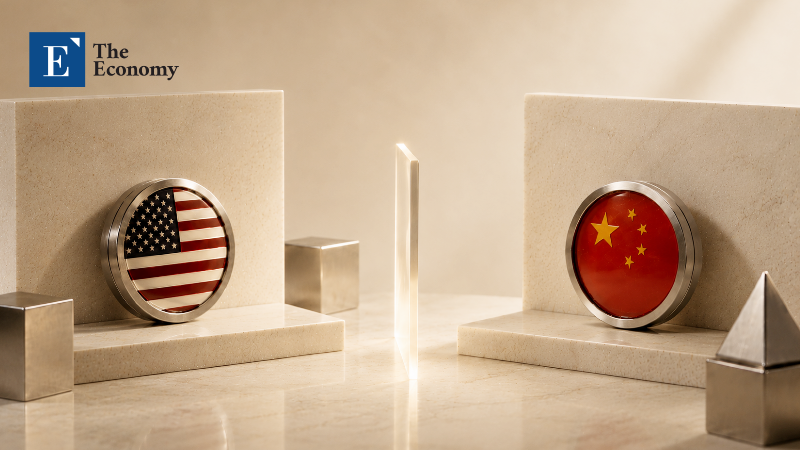
A new analysis has found that China’s long-term national blueprint, the Five-Year Plan, has accelerated the decline of U.S. manufacturing. The assessment argues that as China rapidly expanded its global manufacturing competitiveness through state-led industrial development policies, employment and investment in comparable U.S. industries contracted sharply. The United States, the European Union and other major Western economies have rolled out a series of restrictive measures to contain China’s rise, but Beijing has instead vowed retaliation, showing little sign of retreating from its industrial ascent.
China’s Pressure on U.S. Manufacturing
According to a South China Morning Post report on the 8th, citing a joint research paper by Zhang Wei, a finance professor at Emory University, China’s Five-Year Plans have exerted substantial pressure on the U.S. manufacturing ecosystem. After tracking data from 1.6 million U.S. plants and 1.1 million Chinese companies during China’s 10th Five-Year Plan from 2001 to 2005 and 13th Five-Year Plan from 2016 to 2020, the researchers found that when Beijing provided full-scale national support to specific industries through the plans, U.S. plants in corresponding sectors saw employment decline by an average of about 5% and investment fall by roughly 6%. The probability of plant closures in those industries rose by 1 percentage point. The result stands in stark contrast to the surge in employment, investment and gross output in comparable Chinese industries over the same period.
This trajectory is likely to persist for some time. The latest macroeconomic strategy cycle, the 15th Five-Year Plan, began in earnest early this year, raising signs of a new “China shock.” Despite Washington’s aggressive tariff policy, China recorded a trade surplus approaching $1.2 trillion last year, underscoring its market presence. This reflects more than China’s role as a traditional manufacturing base; it shows its growing position in technology-intensive industries where it now competes with advanced economies. Chinese exports are capturing global markets by leveraging low selling prices established through domestic competition and government support, while the expansion of intermediate goods and capital goods industries has further strengthened China’s self-contained ecosystem. In effect, its dependence on imports has fallen sharply.
The shift is also evident in analytical indicators. According to the Information Technology and Innovation Foundation’s recently released Hamilton Index 2026, China accounted for 24.9% of global advanced-industry output. That marks the highest share for any single country and represents a 5.9 percentage-point increase from 19% in 2012. The Hamilton Index compares and analyzes production capacity in advanced industries that determine national competitiveness, including electronics and semiconductors, electrical equipment, machinery, automobiles, chemicals, pharmaceuticals and information services, based on OECD industrial data. Specifically, China outpaced the United States in most sectors, with shares of 42.1% in basic metals, 38.5% in electrical equipment, 33.4% in machinery and equipment, 28.2% in chemicals, 25.3% in automobiles and 24.9% in computers and electronics.
U.S. Maintains Tighter China Sanctions
Major Western economies have been seeking to restrain China’s rapid ascent for years. In the United States, large-scale tariffs on Chinese goods began in 2018, followed in 2024 by an increase in tariffs on Chinese electric vehicles from 25% to 100% and additional duties on semiconductors, batteries and solar products. The second Trump administration sharply raised tariffs across a broad range of Chinese imports last year, at one point pushing the average tariff rate above 100%. Although the two countries later agreed through negotiations to reduce tariffs on some items, overall tariff rates on Chinese goods remain elevated.
Pressure is also intensifying across supply chains linked to China. According to a Financial Times report on the 5th, the United States is pursuing a trade agreement aimed at reducing the share of Chinese-made components in vehicles assembled in Mexico and imported into the U.S. Under the proposed framework, automakers would need to source more auto parts, including electronic components, from North America for finished vehicles to receive tariff-free treatment under the United States-Mexico-Canada Agreement. Electronic components are widely regarded as a category with heavy reliance on imports from China. The current USMCA stipulates that 75% of a vehicle’s parts and materials by value must be sourced from North America to qualify for tariff benefits.
In addition, Washington recently designated major Chinese technology companies as “Chinese military companies.” On the 8th, the U.S. Department of Defense said in a press release that it had updated and published in the Federal Register its list of Chinese military companies under Section 1260H of the National Defense Authorization Act. Section 1260H authorizes the Pentagon to compile and manage a list of companies deemed to directly or indirectly support the Chinese military. Among the 188 companies on the list, newly added names include Alibaba, China’s leading e-commerce company; Baidu, the country’s largest internet search portal; and BYD, a major electric-vehicle manufacturer. Inclusion on the list does not trigger immediate sanctions or export controls, but it significantly raises the likelihood that the companies will be excluded from future Pentagon procurement programs.
EU Stakes Its Future on Industrial Protection
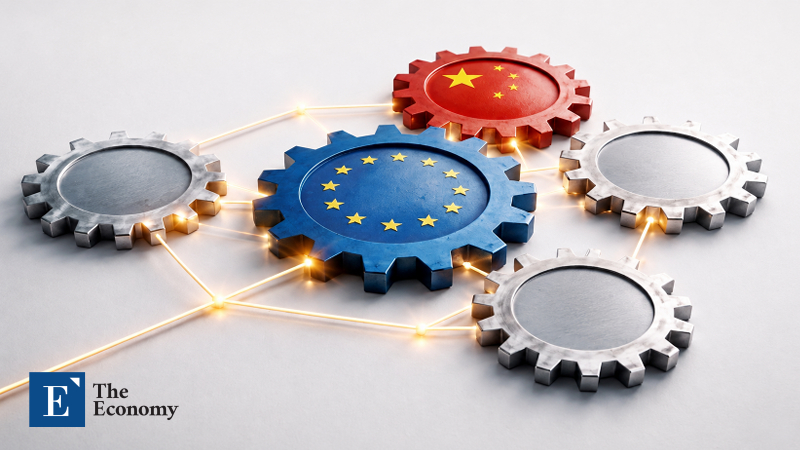
The EU has also maintained forceful sanctions against China to protect its own industries. The starting point was the anti-subsidy investigation into Chinese electric vehicles launched in 2023. After a roughly yearlong probe, the EU concluded that Chinese government subsidies distorted competition in the bloc’s market and imposed provisional countervailing duties on Chinese EVs in July 2024. It was the first large-scale trade measure targeting Chinese electric vehicles. In October of the same year, following approval by member states, the EU finalized additional tariffs of up to 35.3% on Chinese EVs by company. The two sides are currently reviewing a possible arrangement under which tariffs would be partially eased if Chinese companies guarantee minimum selling prices above a certain level, but no substantive agreement has yet been reached.
Institutional restrictions are also tightening by the day. A representative example is the draft Industrial Accelerator Act unveiled in March. The core of the draft IAA is to strengthen criteria for public procurement, state subsidies and foreign investment controls in strategic industries. Under the foreign investment rules, if a single non-EU country accounts for more than 40% of global production capacity in a strategic industry, investments of $116 million or more by companies from that country would be subject to prior review. The provision is widely interpreted as effectively aimed at China. Companies subject to review would be required to ensure that at least 50% of their total workforce consists of EU citizens and meet conditions including integration into European supply chains, technology transfer and contributions to local research and development.
The effectiveness of these measures, however, remains uncertain. Analysts say the EU still lacks a comprehensive vision for addressing China through the lens of economic security. In a piece published on the 2nd titled “Europe lacks a coherent strategy toward China,” the Peterson Institute for International Economics criticized political leaders across EU member states for speaking in divergent voices without a unified approach, noting that disagreements over the IAA also remain unresolved. The institute argued that because China’s unfair export strategy is inflicting tangible damage on EU industries, the bloc urgently needs a comprehensive and updated common strategy toward China.
China’s continued hard-line response to EU pressure is also seen as a major problem. Beijing has steadily hinted at retaliation whenever the EU announces new regulatory measures. On the 29th of last month, Yuyuantantian, a social media account affiliated with China Central Television, warned that “China can launch anti-discrimination investigations and industrial and supply-chain security investigations in response to the EU’s actions.” The warning came as an immediate response to EU discussions on introducing new trade-defense tools to counter China’s overproduction. Yuyuantantian stressed that “if the EU stubbornly pushes ahead with its so-called ‘overproduction tool,’ China will immediately act and take comprehensive countermeasures,” adding that “China is neither unfamiliar with trade friction nor afraid of it, and will fight to the end.”
Aoife Brennan is a contributing writer for The Economy, with a focus on education, youth, and societal change. Based in Limerick, she holds a degree in political communication from Queen’s University Belfast. Aoife’s work draws connections between cultural narratives and public discourse in Europe and Asia.
Similar Post